Beauty Blitz 2030: Mapping India’s Ascent to a $40 Billion Powerhouse
 Kushal Bhatnagar
Pick any mall, high street, e-commerce website or quick commerce app – beauty is the clear breakout in today’s retail landscape. With growth rates zooming past most categories, it has become a primary magnet for consumer attention and institutional investment alike.
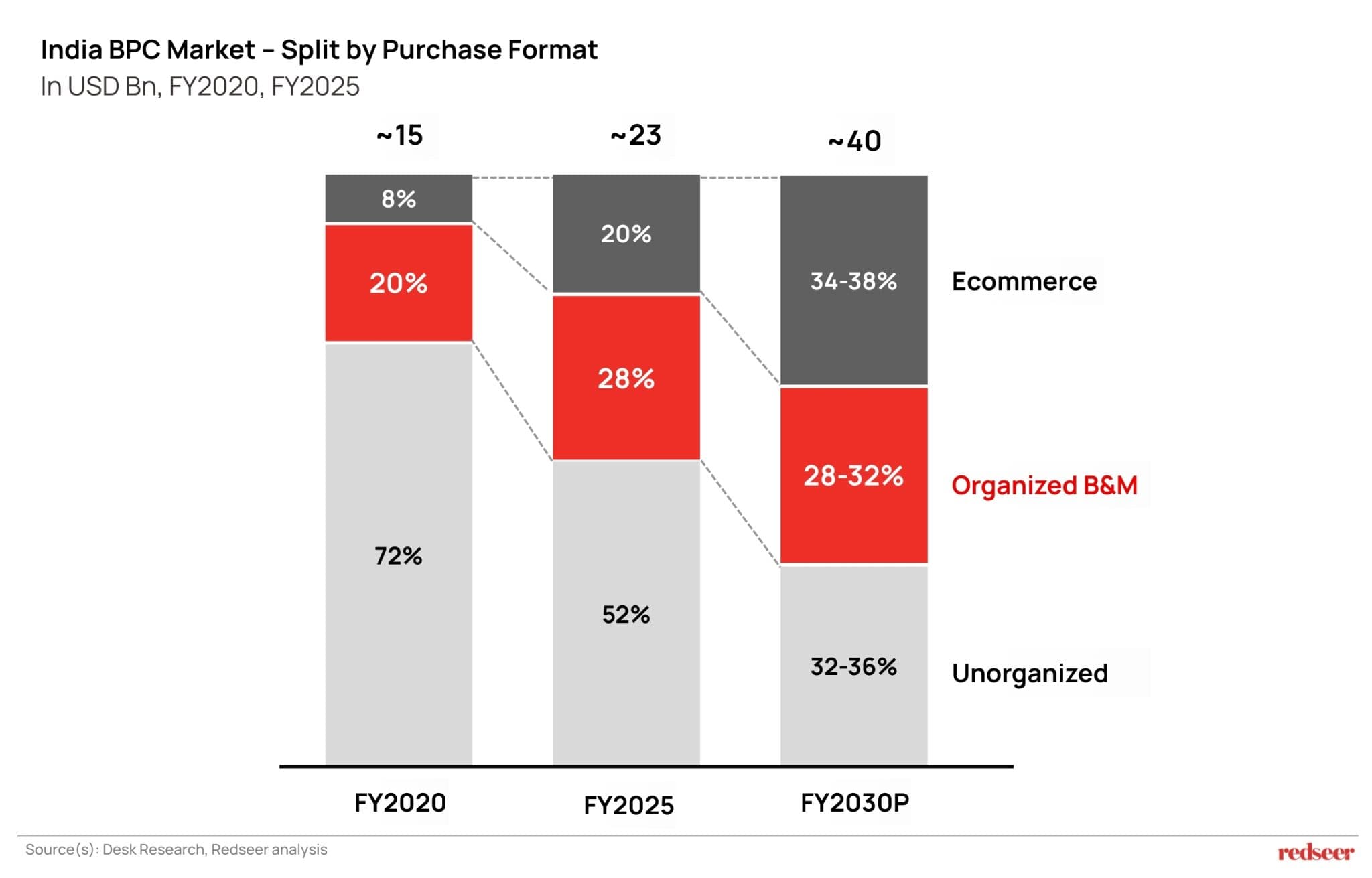
An industry once navigating fragmented distribution, limited wallet share, and a culturally conservative consumer base now has the odds in its favour. The Beauty and Personal Care (BPC) market in India is valued at USD 23 billion (FY25), growing at a 12% CAGR. However, despite this growth, only a handful of individual brands have been able to scale meaningfully.
What is shifting behind the scenes, and who will make the cut as the market matures?
The USD 40 Billion Horizon
By 2030, India’s BPC market could reach USD 40 billion. This will propel India to become the fourth-largest BPC market globally, trailing only the US, China, and Japan.
The following factors drive this surge:
- India crossed the USD 2,000 GDP per capita threshold in 2019 – a historical marker beyond which discretionary spending across retail categories accelerates exponentially. By 2030, ~155 million households are expected to earn more than USD 9,500 annually (INR 8 LPA), significantly shoring up spending power.
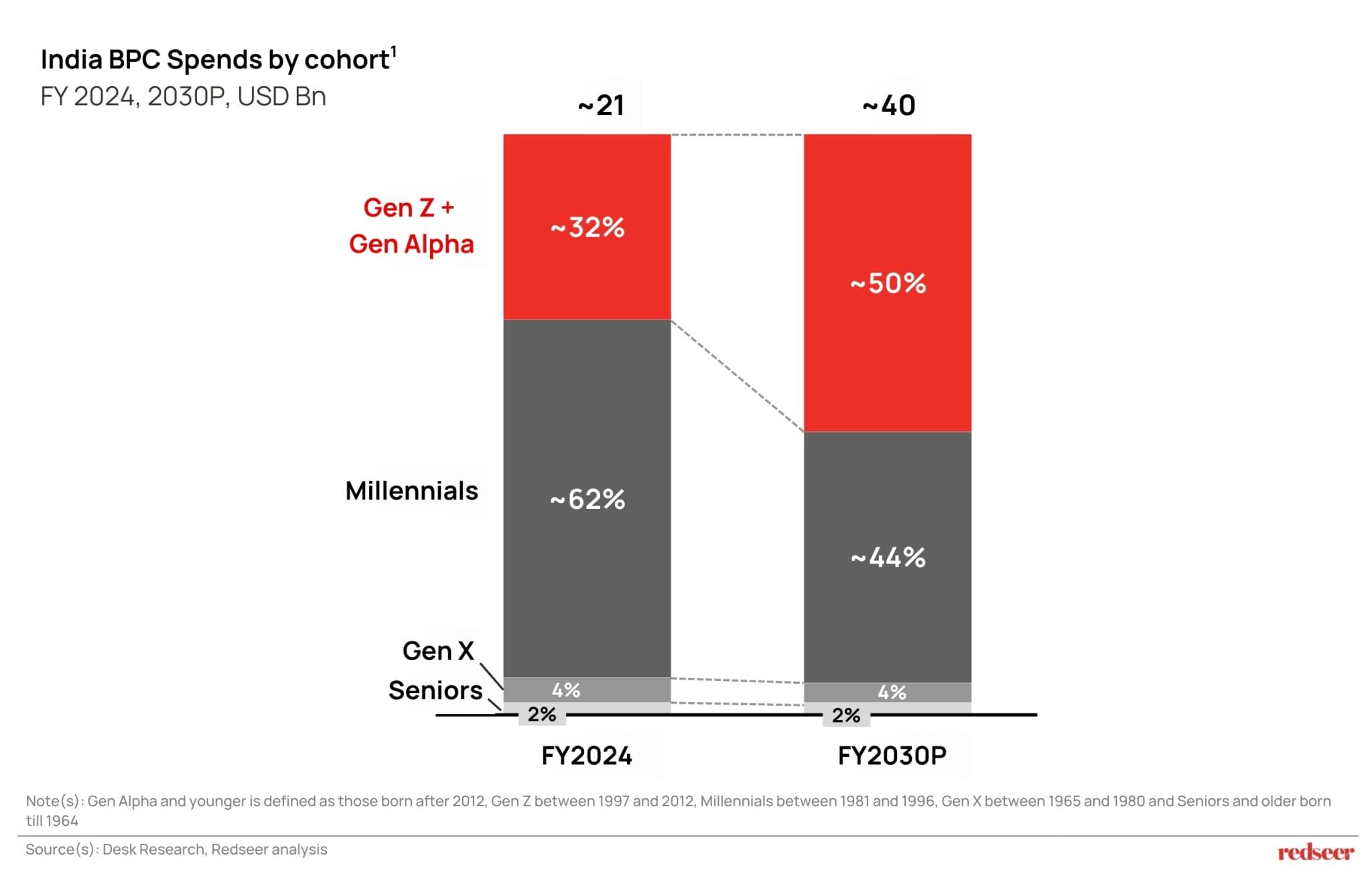
- Female workforce participation is projected to reach ~50% by 2030, increasing the financial independence of the primary BPC consumer base. Gen Z and Gen Alpha are set to become the dominant spenders, redefining the “right to win” through their preference for indulgence-led consumption and ingredient transparency.
- Social media users are expected to grow to over 850 million by 2030. This network, supported by an influencer base that will more than double to 7 million+, is setting the stage for large-scale consumer education and product discovery.
E-commerce will drive a big part of this growth, bringing in 34-38% of all BPC spends by 2030. Just five years ago, it managed to get a mere ~8%.
Interestingly, within e-commerce, a multi-format pattern is emerging, in which no single model dominates. By 2030, at least five different online formats will each hold at least a 10% market share.
- Quick Commerce: This is the immediate priority for brands. It is projected to become the largest online format by 2030, capturing 30-40% of the online BPC market.
- Horizontals: Expected to command a 20-30% share as they cater to a broad-based choice.
- Vertical Platforms: Focusing on curated discovery with a 15-25% share.
- D2C and Value Commerce: Both maintaining significant presence at ~10% and 10-15% respectively.
This shift means that a careful balance will have to be struck between instant convenience, long-term loyalty, and mass-market reach. For leadership, the focus must move beyond just chasing market share to maintaining a rigorous eye on channel-specific costs.
The New Guard
Over the past few years, new-age brands have been catching on to these shifts – tweaking strategies, rapidly launching products, and making a meaningful dent in the market. Over 150 such brands are expected to cross the INR 100 crore revenue mark by 2030, collectively driving ~25% of total BPC spend.
Their “Right to Win” is built on a finger-on-the-pulse connection with Gen Z and Gen Alpha, who will become the majority of BPC consumers by 2030. Unlike older consumers who relied on brand legacy, these cohorts focus on solutions, which explains their attention towards ingredient transparency (e.g., Niacinamide, Salicylic acid), derma-backed formulations, and “clean beauty”.
The Way Ahead
To capture this opportunity, companies must evolve their operational playbooks.
- Adopt a multi-format strategy: Brands cannot rely on a single channel. They must design a strategy that balances D2C for loyalty, Quick Commerce for replenishment, and Verticals for discovery without destroying unit economics.
- Focus on “Right to Win” segments: Investors and brands should prioritise high-growth sub-segments like clean beauty and ingredient-led products that align with the shifting consumer mindset.
- Bridge the cohort loyalty gap: Gen Z and Gen Alpha are fundamentally different buyers from millennials and other cohorts. They expect price-experience parity, and a strong “voice” on social media.
For leadership, the mandate has shifted from simple expansion to a high-stakes balancing act: bridging the gap between rapid digital scale and sustainable unit economics. To survive, brands must reinvent themselves for a future that is dynamic, digital-first, and led by indulgence.
These insights are derived from our report on India’s $40Bn Beauty & Personal Care Market: Growth, Shifts and Opportunities for 2030. Reach out to our experts to chart your strategy in India’s emerging BPC space.

Written by
Kushal Bhatnagar
Associate Partner
Kushal has worked with funds as well as corporates across the eHealth, Hyperlocal, eGrocery, Fintech and beauty & personal care verticals. He gained immense experience in global healthcare consulting and has been able to bring that knowledge to build the digital healthcare practice here.
Talk to me

Bite into growth: Uncovering SEA Dental Opportunity

From Gifting to Cravings: How Quick Commerce Is Changing Chocolate Consumption

UAE property market is entering a pause, not a panic

Beauty & Personal Care in Quick Commerce: From Convenience to Everyday Relevance


