
Dark Stores Can Be Profitable. GCC Is Where It Happens First.
 Sandeep Ganediwalla
Quick commerce is not slowing down. Food delivery continues to grow across the GCC, and quick grocery is expanding even faster.
But investor conversations have shifted. Growth is no longer the only question on the table. Profitability is. And in markets where dark store models have been tried before, the track record has not been encouraging.
GCC is different. The conditions here, urban density, consumer behaviour, and the structure of the retail market, make a credible path to dark store profitability more achievable than most markets that have tried and struggled.
Quick commerce is growing, and it is expanding well beyond grocery
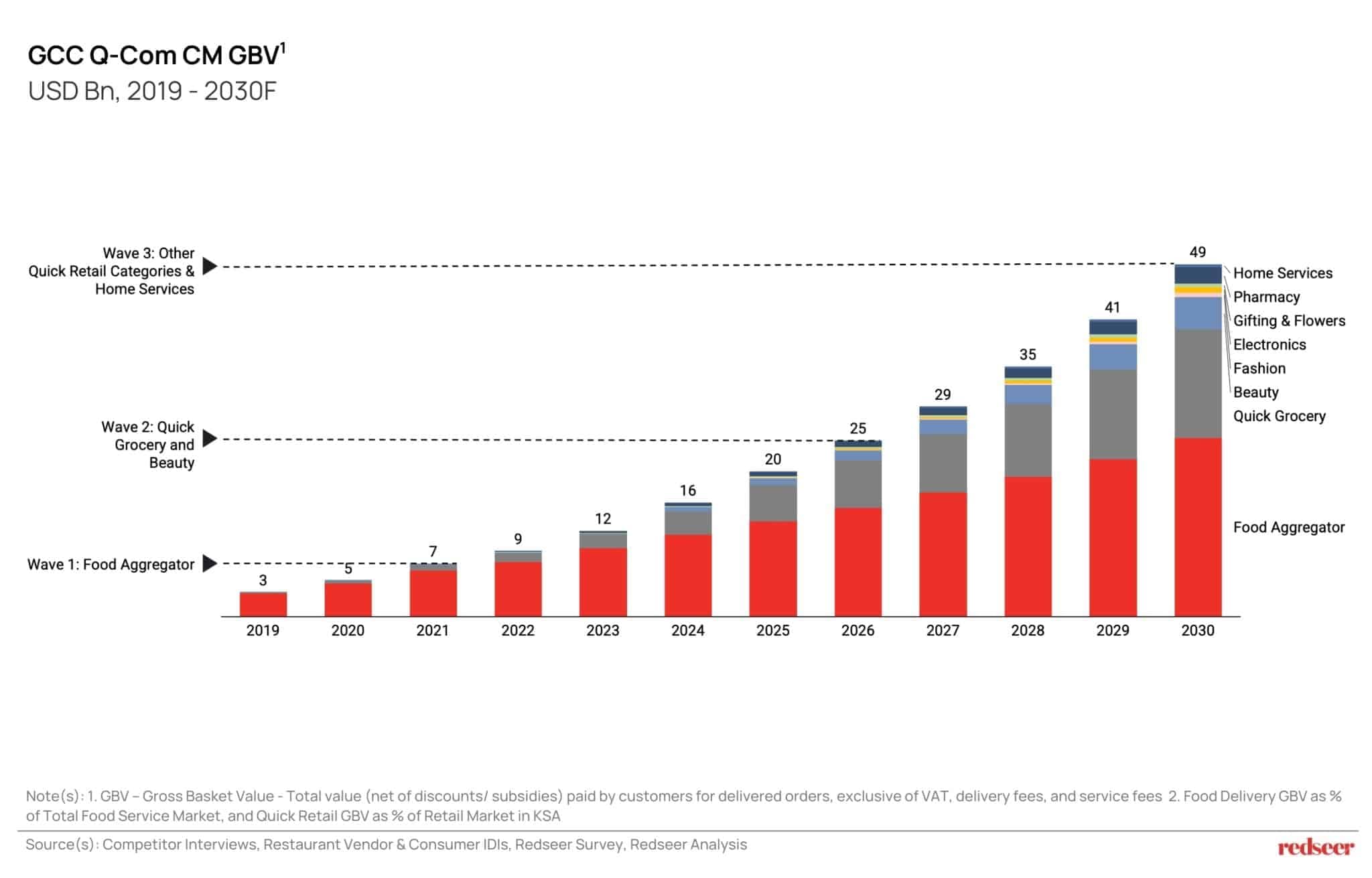
Food delivery has built quick commerce into a serious sector across the GCC, and it continues to grow. But within quick commerce, the fastest-moving segment right now is quick retail, and the category is broadening rapidly.
Grocery was the entry point. But dark stores are increasingly expanding into health and wellness products, beauty and personal care, and prescription pharmacy. The proposition is shifting from fast grocery delivery to something bigger: everyday convenience, on demand, in under 30 minutes.
This matters because it changes the addressable market meaningfully. A platform that can reliably deliver groceries, medicines, and personal care items in one order is not just a grocery channel. It is a daily utility. That drives frequency, increases basket value, and builds the kind of repeat behaviour that makes the economics work.
Online grocery already contributes 12% of grocery retail in the UAE and 5% in Saudi Arabia. Consumer preference for online grocery channels has increased 38% compared with 2024. Impulse buying through quick delivery is rising, with 42% of users preferring it in 2026 versus 36% in 2024.
By 2030, we expect Quick grocery to account for 89% of online grocery and around 14% of total grocery retail across the UAE and KSA. Consumer preference for online grocery channels has increased 38% compared with 2024. Add health, beauty, and pharmacy on top of that, and the total addressable market for quick retail expands considerably.
Quick retail is not replacing food delivery. It is adding a new, faster-growing layer on top of it, and it is expanding its own scope category by category.
Three types of players compete, but dark stores are the unanimous path to growth
Three types of players compete for the quick grocery opportunity. Each solves a different part of the problem.
What is striking about the competitive landscape is not that one type of player is winning. It is that every type of player is entering, each from a different point of strength.
- Aggregators:
- Talabat holds the largest customer base in the region and has built a leading retail aggregation position through its marketplace offering, now extending that into dedicated dark store infrastructure.
- Ninja built a quick retail-native offering that set the standard for sub-30 min SLAs in the Kingdom, combined with SKU depth ahead of peers (eg, first among KSA players to deliver OTC pharma products from dark stores).
- The Jahez and Noon partnership in Saudi Arabia is one of the more interesting structural moves in the market. It combines Jahez’s deep food delivery penetration and loyal KSA user base with Noon’s dark store and retail marketplace infrastructure. Neither player has the full picture alone. Together, they cover more of the stack.
- Omnichannels:
- Carrefour Rapid and AlOthaim’s Speedi bring something online-native players take years to build: shopper trust, physical presence, and assortment credibility. Their challenge is delivering genuine speed without compromising what makes their brand worth trusting in the first place.
- E-commerce Horizontals:
- Amazon and Noon, coming from the marketplace side, have a different edge: SKU depth built through years of core retail operations. Translating that breadth into a fast, reliable, quick commerce experience is their conversion opportunity.
While players hold differing advantages, one constant holds across all of them: the unanimous convergence toward dedicated dark store infrastructure, a strong signal of where the market is heading.
By 2030, we expect dark-store-led models to account for more than two-thirds of the quick grocery market across the GCC.

The profitability question has a real answer in GCC
Globally, dark store economics have been difficult. Many early players expanded too fast, operated at low density, and leaned heavily on discounts to build habits. That shaped a widely held view that dark stores cannot make money.
That view is understandable. But it is not the full picture.
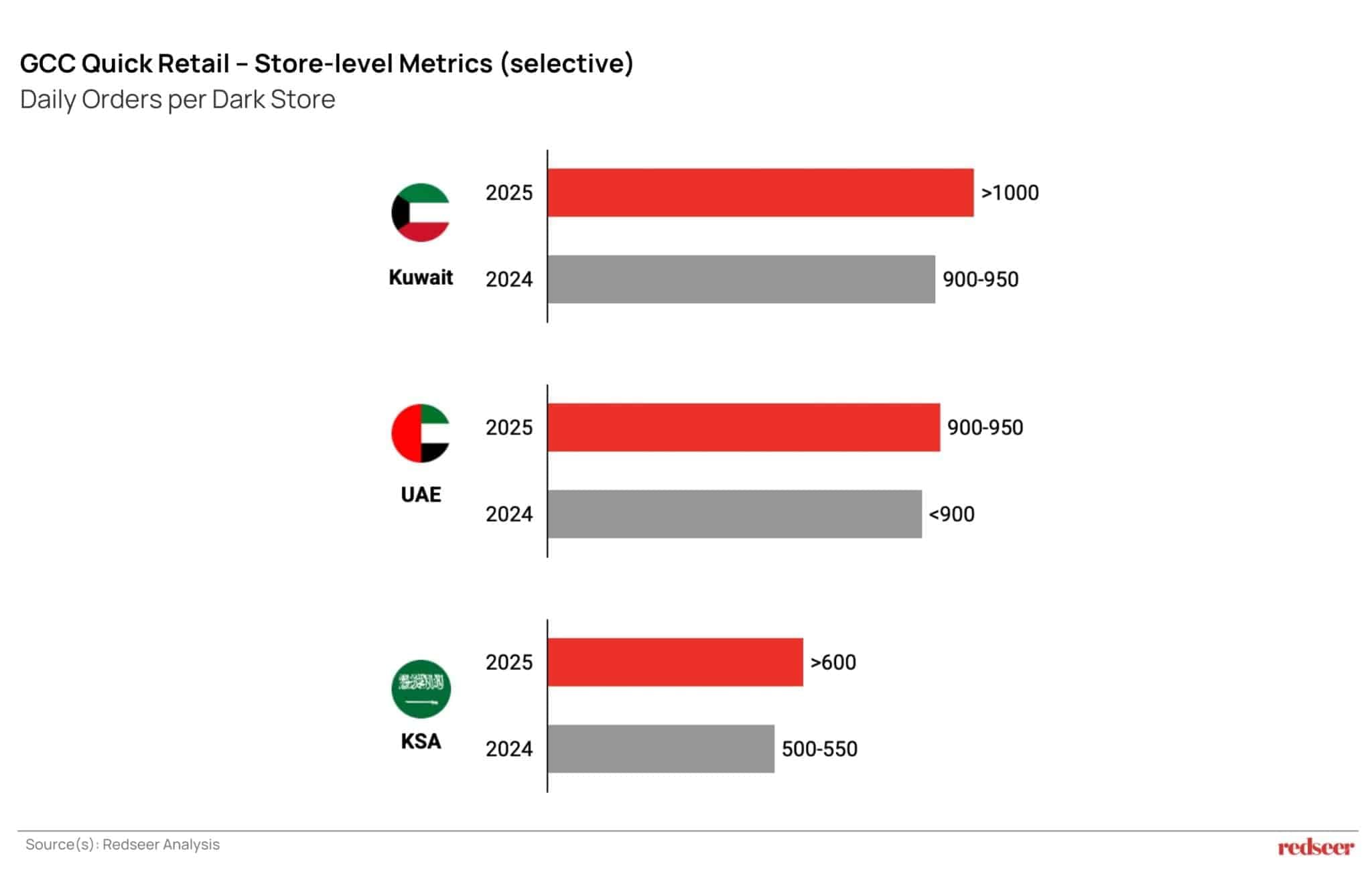
Dark store economics improve significantly once a store crosses roughly 1,000 orders per day. At that point, fixed costs absorb better, baskets grow larger, fill rates improve, and monetisation from digital advertising and broader category mix starts to contribute meaningfully. At mature operating conditions, we believe GCC dark stores can reach 5 to 6% EBITDA at steady state.
Urban density in Kuwait, Dubai and Riyadh makes last-mile economics workable in a way that sprawling or low-density cities do not. Consumer willingness to pay for convenience is high and growing, which reduces dependence on heavy discounting to sustain demand. And the retail landscape, which still has real headroom beyond large-format stores, supports the high-frequency, smaller basket behaviour that dark stores are built to serve.
The model is operationally demanding. Not every player will get there. But for operators who build the right density, assortment depth, and repeat behaviour, GCC is one of the most credible environments globally to achieve sustainable dark store economics. Kuwait shows it is achievable. UAE and KSA are following the same curve.
Three things stand out from where the market is heading: First, quick commerce is still growing. Food delivery continues to expand, and quick grocery is growing faster. The profitability conversation is not a growth story in reverse. It is the sector that is maturing. Second, dark stores are becoming the dominant fulfilment model for quick grocery. The competitive field is broad, but the direction is clear. Players from different starting points are all moving toward dedicated dark store infrastructure. Third, GCC profitability is achievable. The urban structure, consumer behaviour, and retail landscape here are more favourable than the markets where dark store economics have historically struggled. The question is not if GCC dark stores can reach profitability. It is which players get there first. If you would like to discuss implications for your market position or portfolio, we would be happy to chat.

Written by
Sandeep Ganediwalla
Partner
Sandeep is the Partner with 20+ years of experience in consulting and technology. He has expertise in multiple sectors including ecommerce, technology, telecom and private equity.
Talk to me

India’s Most Reliable Financial Cohort Is Also Its Most Underserved
Trolley’s IPO on Boursa Kuwait: Building the Market Case for Gulf Convenience Retail
Kuwait’s Convenience Retail Moment: What Trolley’s IPO Says About Where Gulf Retail Is Heading

Beauty Blitz 2030: Mapping India’s Ascent to a $40 Billion Powerhouse


