India’s Ride-Hailing: Growth Shifts from Premium to Utility
 Nikhil Dalal
India’s ride-hailing market is expanding, but the nature of that growth has quietly changed.
Incremental trips are no longer being led by premium cab formats or metro-heavy demand. Instead, the expansion engine now sits firmly in autos and two-wheelers, particularly across non-metro markets.
Cabs continue to grow in absolute terms. But they are steadily losing share as lower-ticket, high-frequency rides form a larger part of the mobility mix. What were once secondary ride formats are now driving incremental volume.
This is more than a mode shift. It signals a structural pivot in demand.
How India’s Ride Mix Is Shifting
Our analysis breaks down where growth is coming from, how it is scaling, and how platforms are adapting their monetisation models in response.
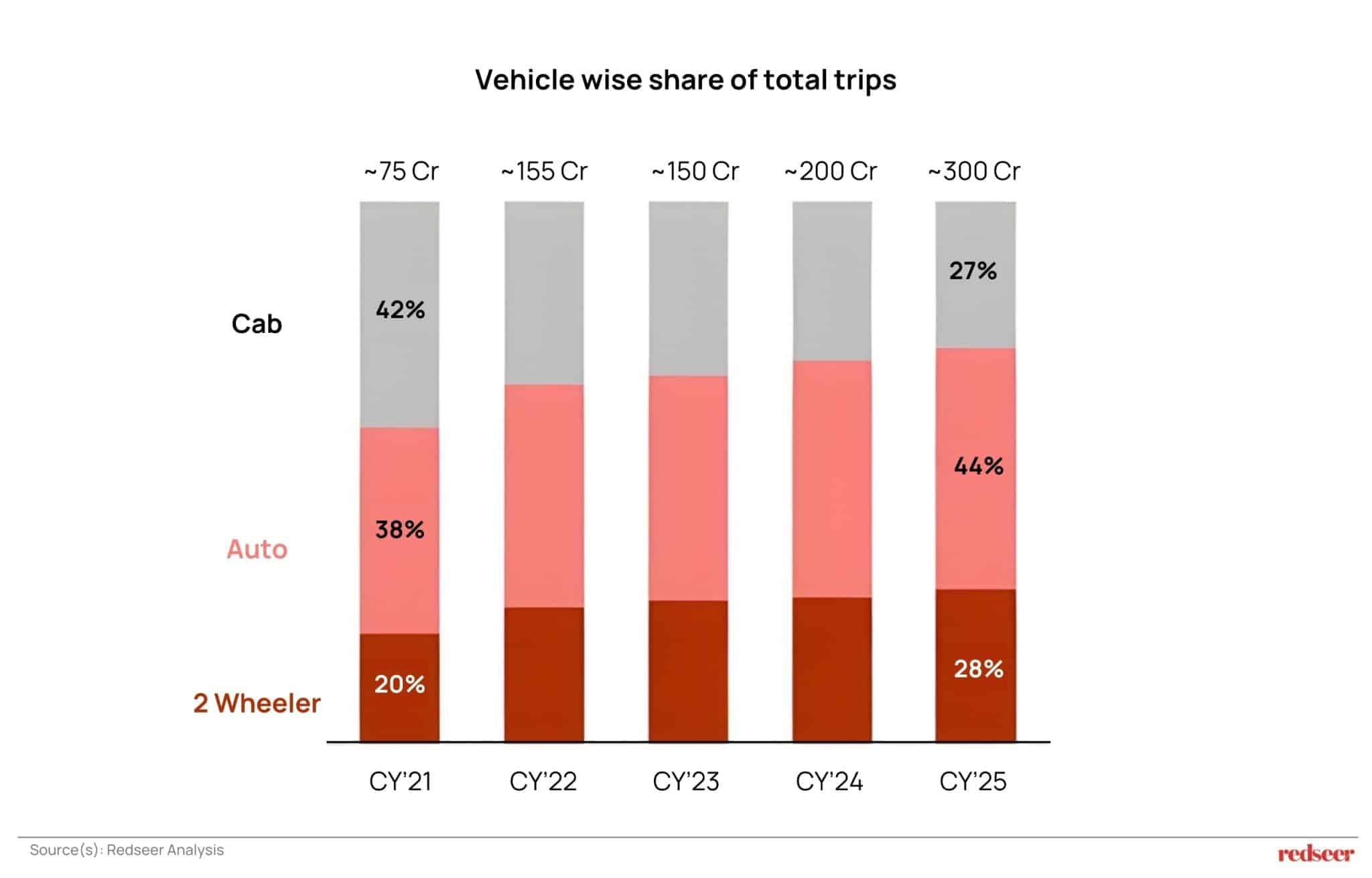
Autos and two-wheelers are taking up a growing share of total rides, while cabs – though still growing in absolute terms – are steadily losing share.
This marks a structural shift in how mobility demand is forming. Growth is increasingly coming from affordable, short-distance, and frequent rides that serve everyday needs, rather than from higher-value, occasional trips.
How fast is the shift happening?
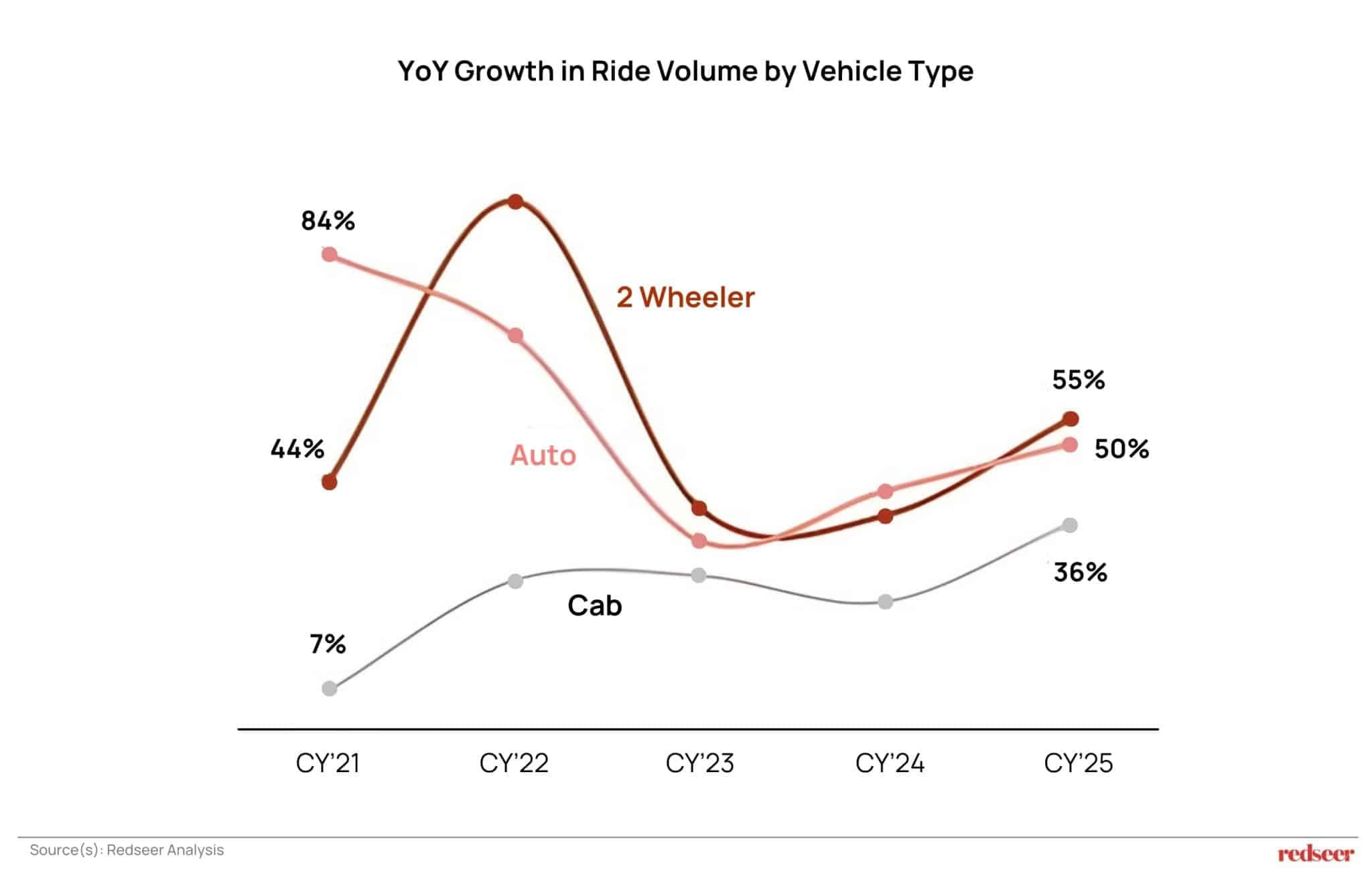
Year-on-year growth rates are consistently higher for autos and two-wheelers than for cabs.
This confirms that leadership in mobility growth has moved away from premium formats. What were once secondary modes are now the primary drivers of incremental trips.
Where growth is coming from?
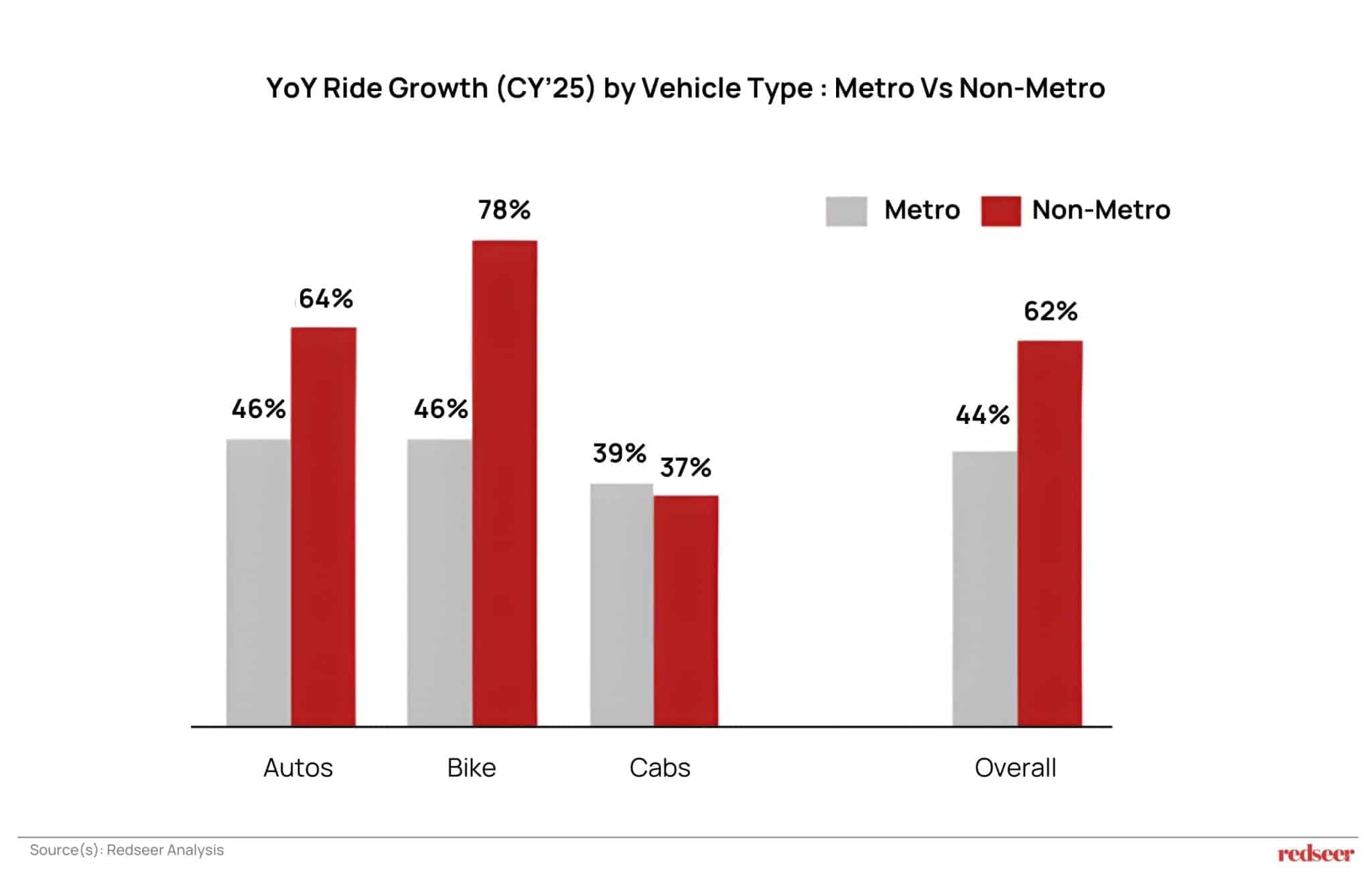
Across vehicle types, non-metro markets are growing faster than metros, with particularly strong acceleration in autos and two-wheelers.
As demand expands beyond large cities, affordability and availability matter more than premium experience – naturally favouring lower-cost, flexible transport modes.

The monetisation reset: How platforms are responding
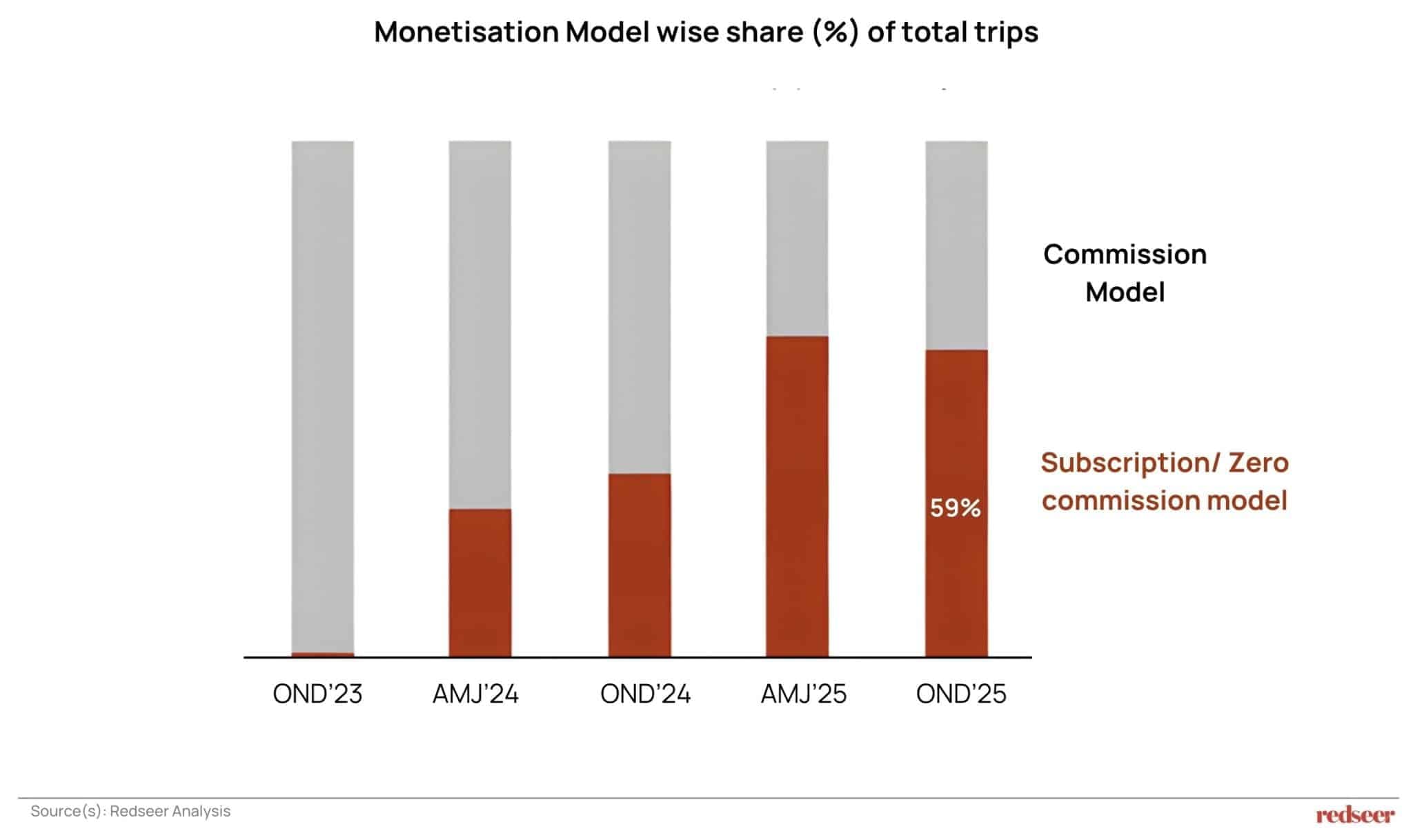
Subscription models are being used to strengthen and stabilise driver supply in key segments.
Auto is now fully subscription/zero commission-led, and Cabs are gradually adopting the model to improve earnings predictability and reduce churn, while Bikes/2W remain commission-based due to lower ticket sizes and more elastic supply.
This targeted approach helps platforms ensure consistent availability and smoother driver incomes where reliability is critical.
What This Means for Investors
India’s mobility market is structurally tilting toward utility-led growth. This has direct implications for underwriting assumptions.
Premium-led expansion offered pricing leverage and margin expansion potential. Utility-led growth, by contrast, is volume-heavy, price-sensitive, and operationally intensive. Returns will be determined less by fare inflation and more by execution discipline.
For investors, this means:
- Stress-testing pricing power assumptions
- Underwriting supply density and driver retention as core assets
- Evaluating geographic penetration and city-level unit economics
- Prioritising platforms with proven operational resilience over those reliant on take-rate expansion
The market is expanding, but value creation will accrue disproportionately to platforms that convert density into efficiency.
The insights have been derived from Redseer ‘Benchmarks’, the most trusted insights platform on the Indian internet landscape. Its proprietary consumer internet data allows us to make granular and long-term comparisons that reveal underlying trends and shifts in consumer behaviour.
Benchmarks track city-level utilisation, expansion mix, and maturity trends across major quick commerce and consumer internet companies, offering its investors, brands, and platforms a clearer lens on how reported growth aligns with underlying economics.

Written by
Nikhil Dalal
Associate Partner
Nikhil has experience working with Cognizant in business development and strategy roles for the US healthcare sector. He appreciates analysing issues, solving complex problems, and case studies.
Talk to me

India’s Most Reliable Financial Cohort Is Also Its Most Underserved

Trolley’s IPO on Boursa Kuwait: Building the Market Case for Gulf Convenience Retail

Kuwait’s Convenience Retail Moment: What Trolley’s IPO Says About Where Gulf Retail Is Heading

Beauty Blitz 2030: Mapping India’s Ascent to a $40 Billion Powerhouse


