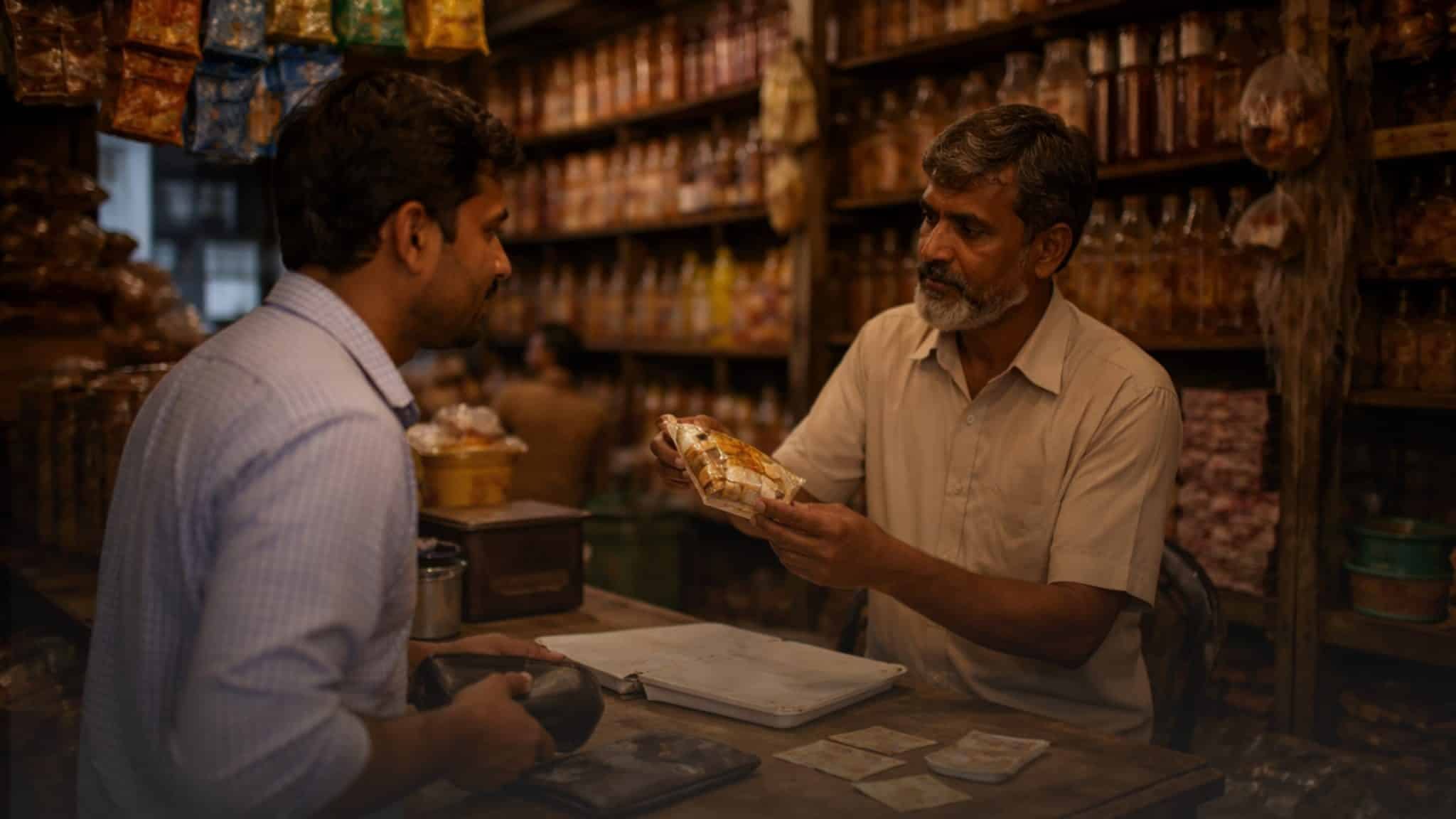
Why India’s Mass Grocery still leans on Kirana Stores
 Chhavi Singh
Executive Summary: Even as big box and online (e-commerce and quick commerce) formats expand, kirana stores will remain the primary touchpoint for most Indian households. Their model, built on owned or low-rent stores, family-managed operations, and rapid inventory cycles, is suited to an environment where low AOVs make scale-heavy formats unviable. This alignment between kirana economics and India’s prevailing consumption behaviour ensures their continued leadership.
Table of Contents
- India’s Grocery Reality Check
- The AOV Trap Explained
- The Great Indian Grocery Triangle – Kiranas, Big Box, and Online
- Who Actually Drives Grocery Spend in India – A cohort-level breakdown.
- Quick Commerce vs Mass Grocery
- Why Hypermarkets Hold—And Supermarkets Don’t
- Kirana Economics Deconstructed
- How Kiranas Are Quietly Modernising
- What Will Not Change in Indian Grocery
- Implications for the Next Decade of Retail
India’s grocery ecosystem is shaped by three primary formats – each distinguished by its value, convenience, and reach.
India’s retail ecosystem spans big-box stores, online commerce, and kirana stores – each serving distinct needs. Online commerce offers convenience, and big-box retail provides value and assortment.
However, kirana stores remain the backbone of daily grocery consumption with their neighbourhood reach, personalised service, and trusted credit. These stores hold ~91% share in CY2025 and are expected to retain a dominant ~86% by CY2030.
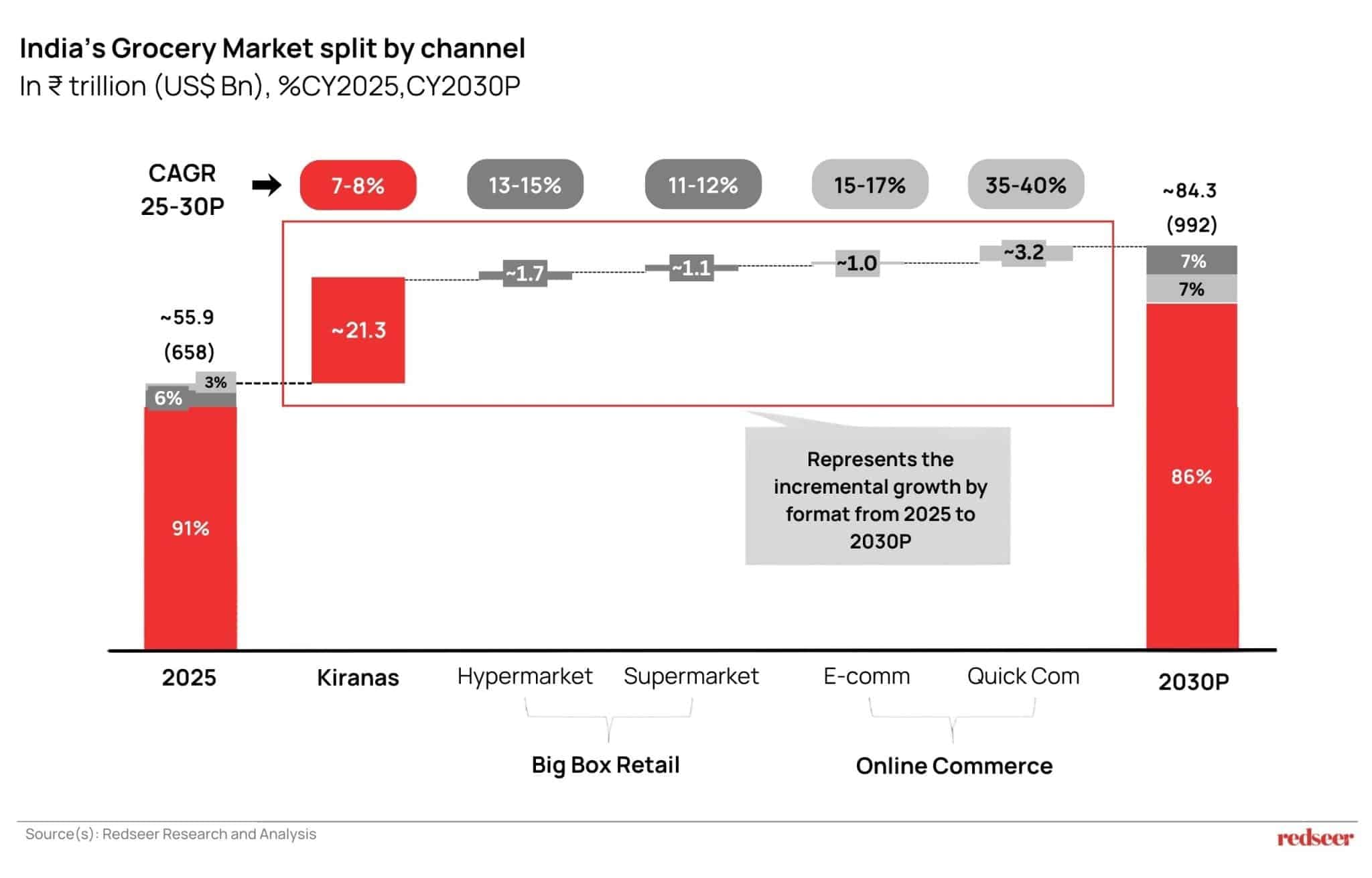
The secret to kirana stores’ prominence is their alignment with the spending patterns of India’s largest demographic – made up primarily of 230+ million low-to-middle income households that rely on kirana stores for their frequent, small-ticket purchases. Usually run by individuals or families in owned or low-rent spaces, kirana stores operate in the INR100-200 AOV space, which remains unviable for online grocery or big-box retailers. They are also uniquely positioned to offer localised assortments and credit options for their buyer base – value-driven households operating on daily/weekly cash flows.
Despite the emergence of new retail formats, the neighbourhood kirana store is anything but finished. How will they sustain their edge in India’s soon-to-be $1 trillion grocery landscape?
Probably, winning the next decade means designing for coexistence. Download our report to learn more.

Written by
Chhavi Singh
Associate Partner
Associate Partner at Redseer with 14+ years across consulting, health-tech, e-commerce, and entrepreneurship. Previously at Bain & Company, Flipkart, and THB. MBA from IIM Ahmedabad.
Talk to me
Related Redsights
Value Grocery Commerce: The Bharat Unlock
State of India’s Food Services Market
Reinventing Packaged F&B with Quick Commerce
The Indian Consumer at 2030: Redefining Aspirations, Choices, and Markets
The Rise of Convenient Eating: How Urban India Balances Speed and Health
India’s Got Retail: A Tale of Fragmented Supply & Consolidating Distribution
The Rise of eB2B Platforms: Powering the Next Wave of Retail Transformation

Demystifying Kirana eCommerce in India

Online grocery: What brands need to know?
Smart clicks to win India’s online groceries & general merchandise basket
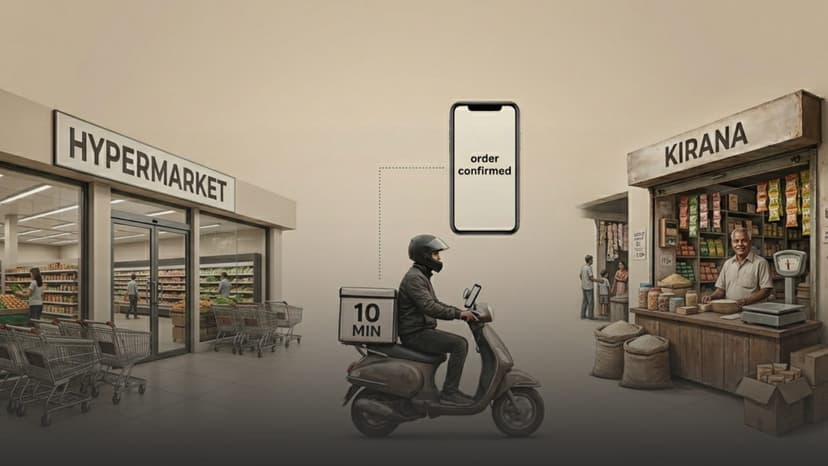
Quick Commerce vs Kiranas vs Hypermarkets, who will win the Indian Grocery Market?
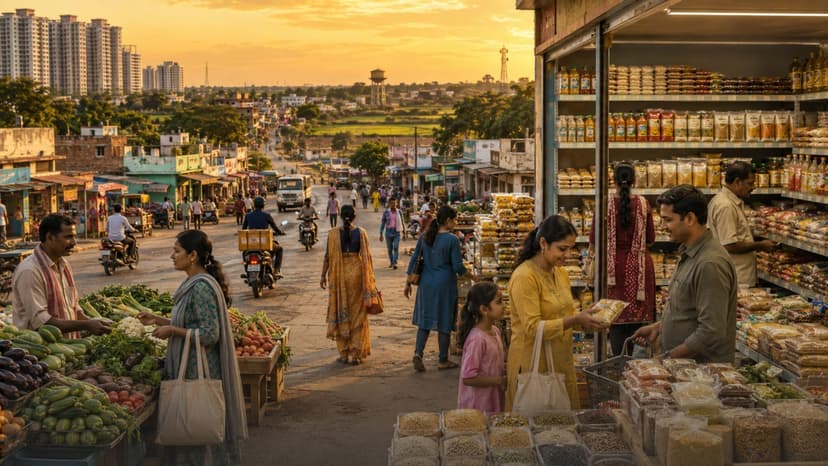
The Bharat Unlock: India’s Next Grocery Growth Engine Lies Beyond Quick Commerce