From Gifting to Cravings: How Quick Commerce Is Changing Chocolate Consumption
 Nikhil Dalal
Indians are consuming more chocolate, but the way people are buying it is changing faster than ever.
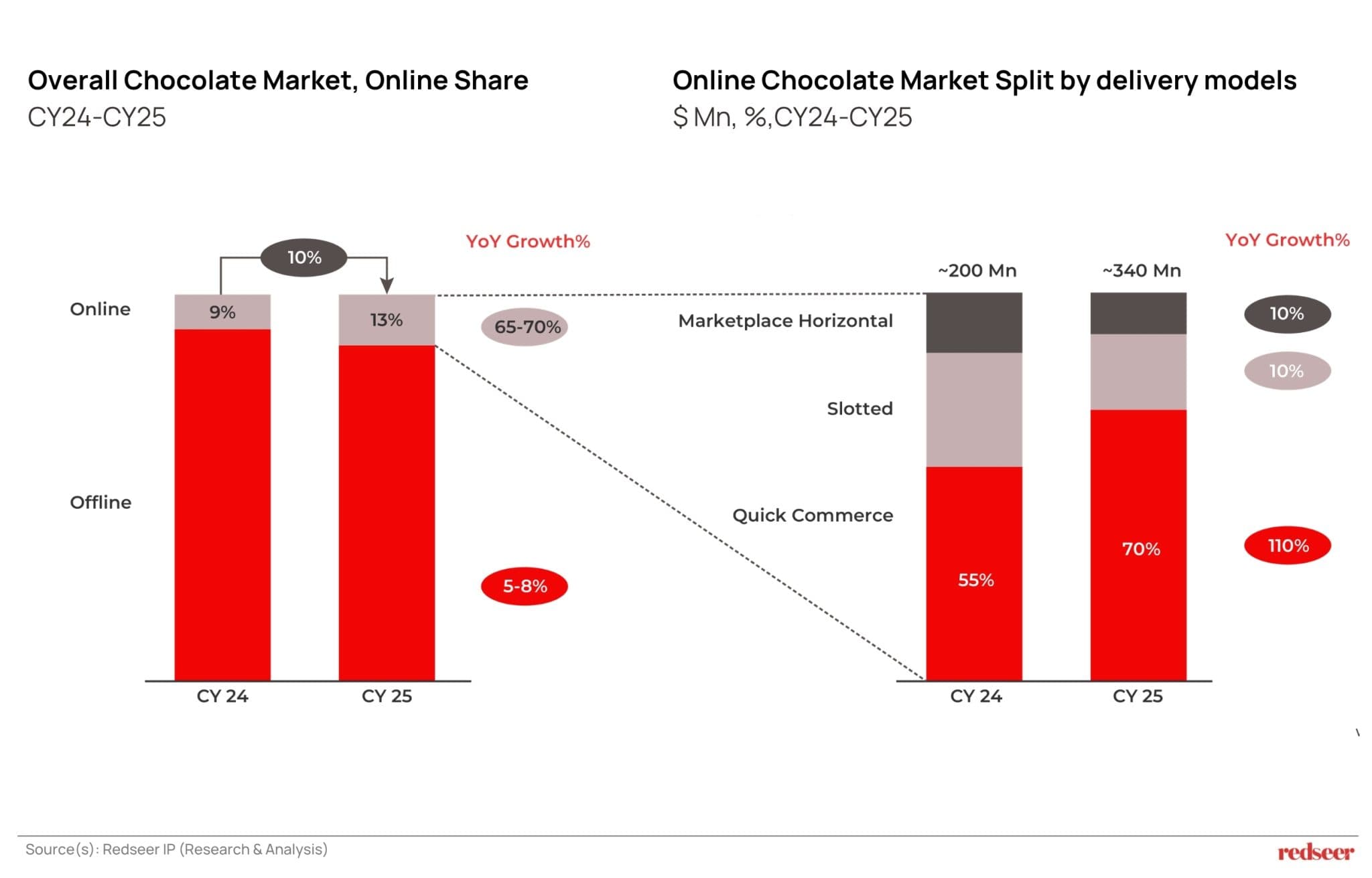
The online chocolate segment is scaling rapidly, with its share rising from ~9% in CY24 to ~13% in CY25 and growing ~65–70% year-on-year, surpassing offline growth at ~5%. But the bigger shift is happening within online itself.
India’s $100Bn+ packaged F&B market is projected to expand to ~$150 billion+ by 2030. Within this evolving landscape, the quick commerce channel alone is expected to scale from $4 billion today to more than $25 billion in GMV by 2030.
This makes it clear that most of the incremental growth in chocolates is being captured here.
Chocolate sales have traditionally been driven by gifting and special occasions. That continues to be an important use case, and quick commerce is strengthening it by enabling last-minute purchases – a pattern seen across several packaged food and beverage categories. But alongside this, a new behaviour is emerging. Chocolate is increasingly being bought for everyday indulgence.
This becomes especially clear when we look at when people are buying.
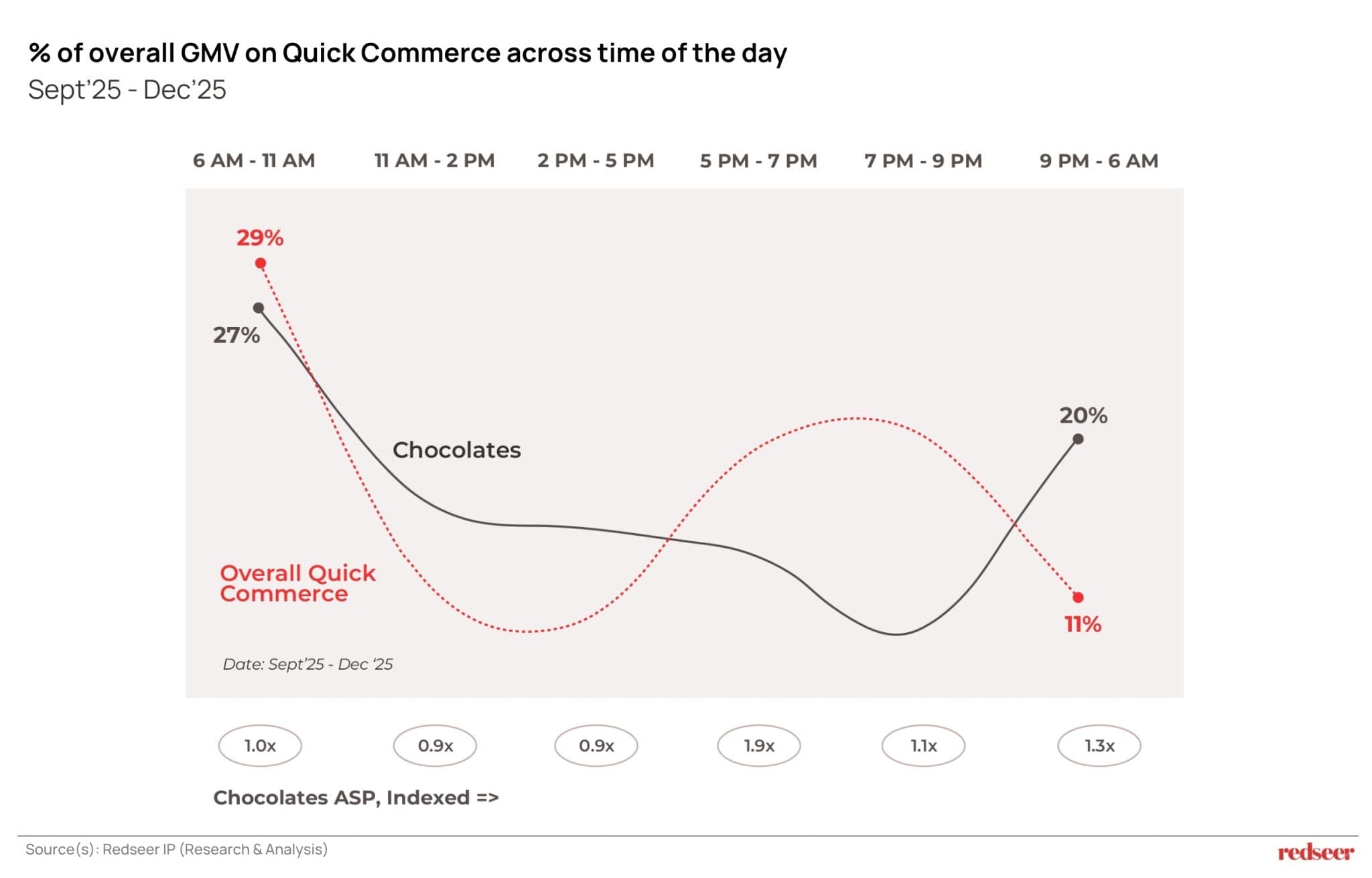
Nearly 20% of quick commerce chocolate sales happen after 9 PM, making late night a structurally important window. These purchases are typically unplanned, driven by cravings or small moments of self-reward. During this time, people are also more willing to spend up to 1.3 times the usual amount in their bid to satisfy their sweet tooth, often choosing higher-value products compared to the rest of the day.
In contrast, morning purchases are more planned – usually part of a larger grocery basket, more functional and price-sensitive.
What people buy also reflects this shift.
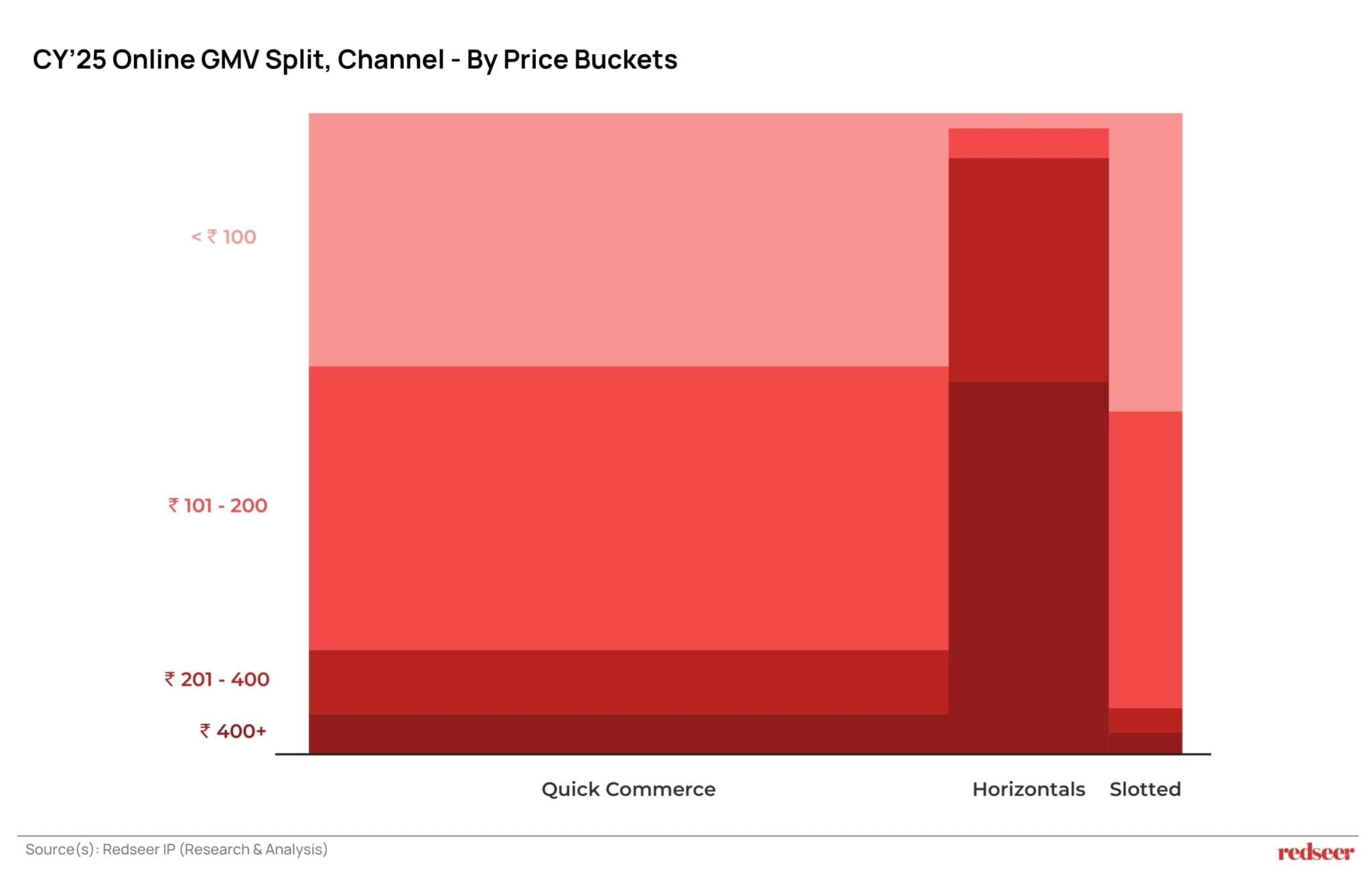
A large share of quick commerce demand is concentrated in products priced below ₹200. These are easy-to-buy formats, single bars or small packs that fit naturally into frequent, everyday consumption. Instead of buying larger packs occasionally, consumers are now buying smaller packs more often.
Considered together, these behaviours point to a clear structural shift. Chocolate is no longer just an occasion-led category; it is increasingly becoming part of everyday consumption, with quick commerce acting as the primary enabler of this change.
As this shift plays out, growth in the category is becoming more frequency-led, with smaller packs, higher repeat behaviour, and stronger time-of-day demand patterns shaping performance. This also makes visibility during key moments, availability of the right formats, and alignment with consumption occasions critical to winning in the category.
As quick commerce expands and reshapes consumption patterns, chocolate is steadily moving from being something people plan for to something they act on instantly, often within minutes of a craving.
What’s your strategy?
Chocolates is just one category. There are many more categories where consumption patterns and buying behaviour are changing, especially due to quick commerce. Brands and platforms need to plan and rethink their strategy beyond visibility to maximise their reach. They have to now assess the various consumer patterns on different channels and what influences sales or specific products that are premium or masstige. This will help them assess and build micro product and channel strategies for faster scalability and grabbing a bigger piece of the market share.
Our report on Reinventing Packaged F&B with Quick Commerce, leveraging insights from our Benchmarks platform, unpacks the role of quick commerce as a disruptor in indulgence categories like chocolates, as well as convenience and functional F&B, like ready-to-eat/cook foods and non-alcoholic beverages. rages.

Written by
Nikhil Dalal
Associate Partner
Nikhil has experience working with Cognizant in business development and strategy roles for the US healthcare sector. He appreciates analysing issues, solving complex problems, and case studies.
Talk to me

UAE property market is entering a pause, not a panic

Reinventing Packaged F&B with Quick Commerce

What Does the Current Geopolitical Situation Mean for the UAE Consumer Economy?

Beauty & Personal Care in Quick Commerce: From Convenience to Everyday Relevance


