Gen Z: Defining Trends, Influencing Spends
 Mrigank Gutgutia
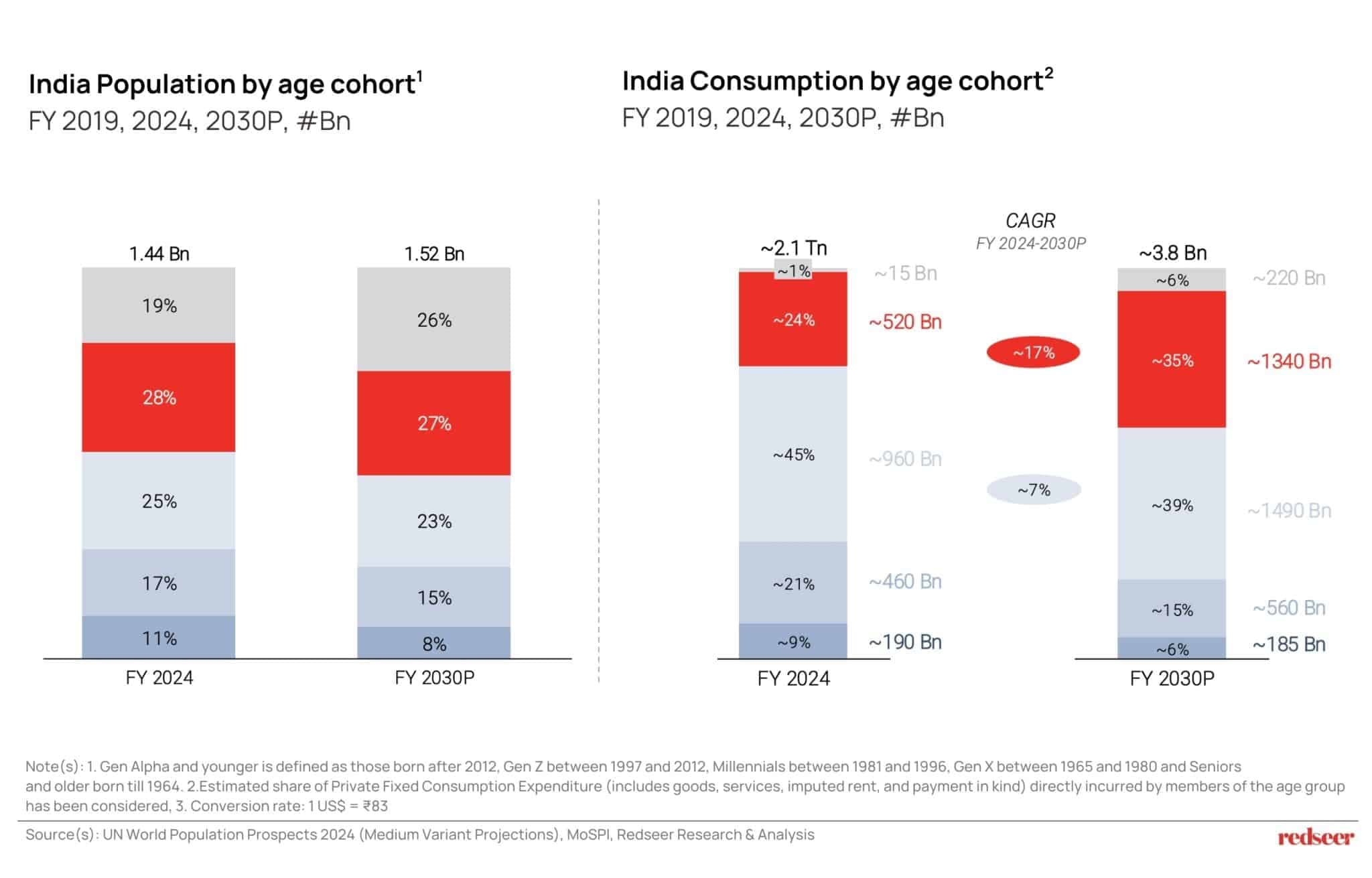
Gen Z are reshaping India’s consumer landscape as the “Reverse Generation,” driving massive spending power and family purchasing influence. By 2030, this generation will comprise 27% of India’s population, and drive nearly USD 1.3 trillion in spending.
What defines Gen Z?
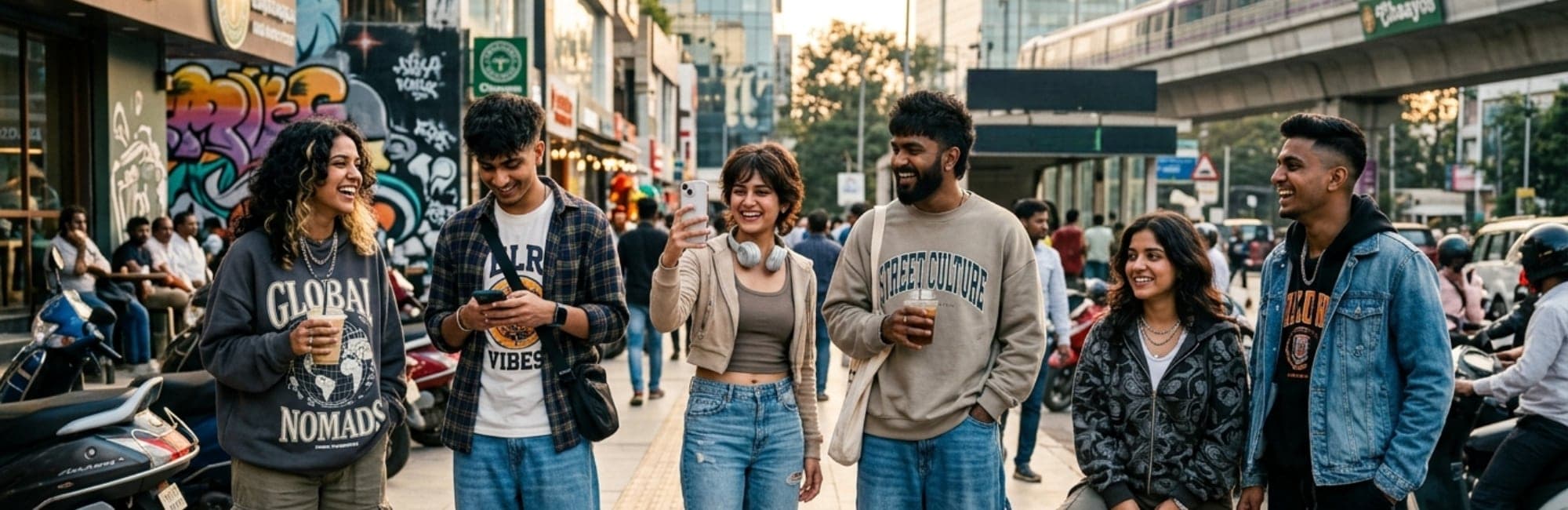
Gen Z have grown up with internet access and smartphones as the norm. The Covid-19 pandemic and the resulting virtual-first landscape shaped their formative years, instilling a sense of comfort with being online that older cohorts do not typically demonstrate.
Gen Z will occupy a greater share of population, and command $1.3 tn in consumption by 2030
As recent entrants to the workforce, the older Gen Z population uses their income to gather markers of their distinct identity. Beyond their own judgment, their inner circle influences their decision-making the most. This generation shuns labels, valuing inclusivity, self-expression and authenticity. Through this phase of self-discovery, they prioritize aesthetics and new experiences – all of which reflect in their behaviour as consumers.
Let’s unlock Gen Z behavioural and consumption patterns across sectors.
Trend-driven, individual-focused, genderless – Beauty and Personal Care
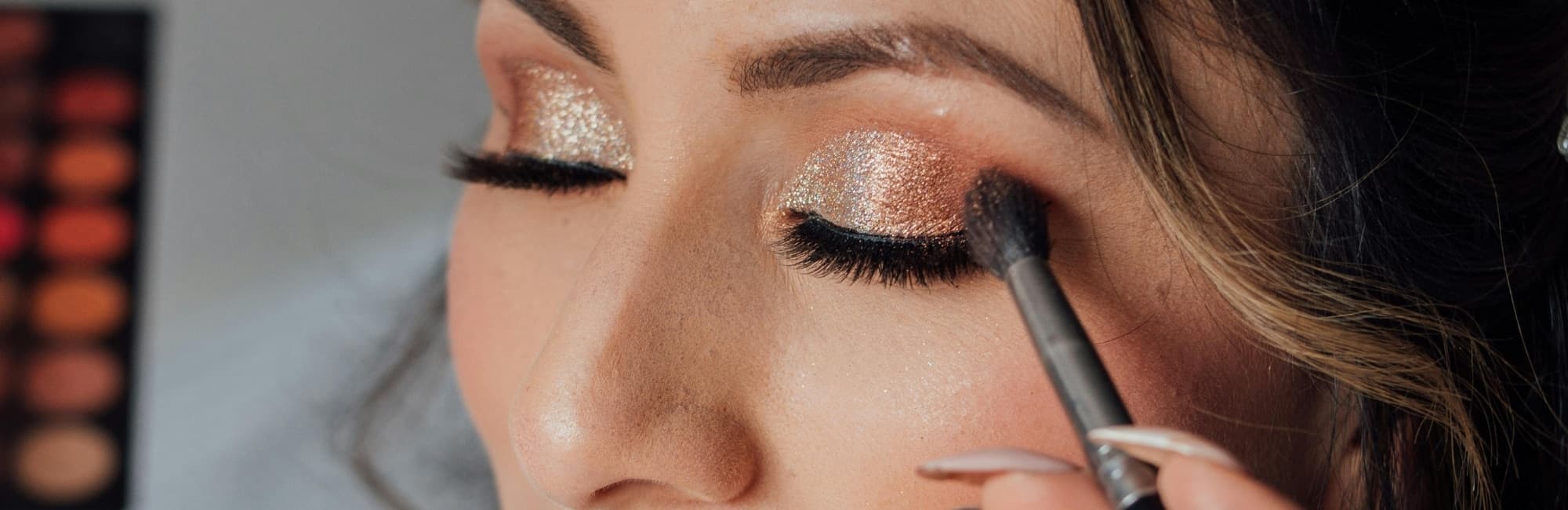
The Gen Z focus on aesthetics is clear from their activity in the beauty and personal care (BPC) space. By 2030, Gen Z will command a nearly USD 19bn share in India’s BPC market.
In their bid to achieve new-age beauty markers like “glass skin”, Gen Z women do not use the same products their mothers trusted – they are building routines that work for them. One in two Gen Z women spends over 20% of their disposable income on BPC. The average number of products used by this cohort has doubled, with distinct routines being followed for skin, hair, and body. Their discovery is more solution-led than ingredient-focused; brand loyalty, as a result, is down as this group experiments with products that feel made for them.
Beauty has also become genderless, with more Gen Z men adopting makeup and personal care routines. It is evident from the growing interest in men’s skincare – searches for “men’s skincare routine” have gone up 850% in the past five years. The men’s grooming market is also growing significantly, with the number of brands in this space quadrupling in the last ten years.
Men’s cosmetology and makeup is an emerging space, as more Gen Z men enhance their appearance through acne concealment, fillers, hair removal, and brow work.

Value-driven, trend-forward: Fashion
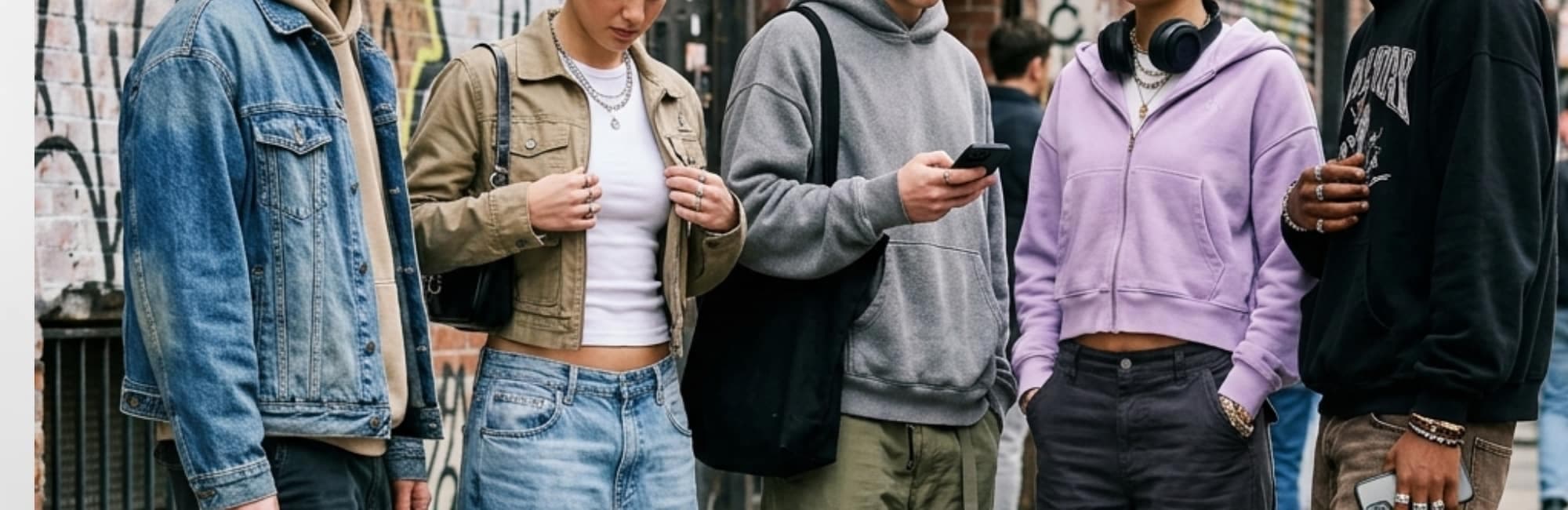
Gen Z will drive half of the fashion (apparel, footwear and accessories) industry by 2030. Style for this cohort is deeply linked with social media trends and pop culture, particularly soft power mainstays like K-pop and Y2K aesthetics. Fast fashion, dominated by sub-INR 1000 pieces, is their go-to. While they have outpaced millennials as the largest cohort on India’s leading fashion ecommerce platforms, their average purchase price is about half of the latter, indicating a clear inclination towards budget-friendly trendiness. Similar to BPC, trendy fashion isn’t limited to Gen Z women either. The use of fashion accessories has doubled among Gen Z men, with a clear surge in sneaker ownership.
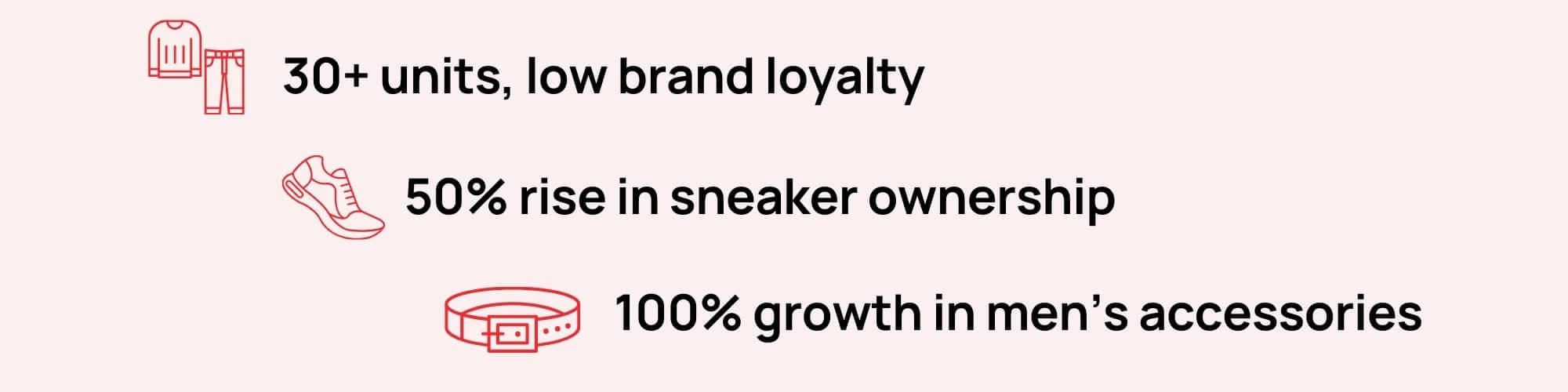
Comfort reigns supreme for Gen Z. “Work-to-play” is the guiding style tenet, as two-thirds of Gen Z prefer semi-formal or casual attire for the workplace.

Looking and feeling good: Health and fitness

This cohort’s preference for aesthetics is evident in their spending on physical well-being. Half of them work out every day, while a third spend at least 20% of their income on fitness and sports. Across metropolitan and Tier-II India, this coincides with a growing number of sporting arenas and clubs, as more people pick up pickleball, futsal and badminton for health and community building. Consequently, the sales of athleisure have also doubled year-on-year. This is boosted by the availability of affordable sportswear on marketplaces – 6 out of 10 bestselling sports footwear brands fall in the INR 500-1,000 range.
80% of Gen Z see protein intake as non-negotiable. Trends in healthy eating are propelling an alternate protein surge – 40% of Gen Z who exercise regularly prefer having alternate sources of protein. Between 2024 and 2025, the SKU assortment for protein supplements on quick commerce grew 230%, signalling a considerable interest in balanced diets. By 2030, Gen Z will drive USD 40 bn in fitness and sports consumption.

Journey over destination: Travel

Gen Z is on track to command over 45% of the travel and tourism market by FY2030, growing at nearly twice the category average.
Social media shapes where they go and what they book, with travel influencer communities growing threefold in just four years. Luggage brand and design quality rank among their top purchase considerations, a sign that travel identity extends well beyond the trip itself. Increasingly, they’re travelling alone, booking budget-conscious stays, and gravitating toward hostels, apartments, and unique accommodations over traditional hotels.
Experience is the consistent thread. Group bookings centred on shared activities are rising sharply, and demand for camping, hiking, and staycations continues to grow. For Gen Z, therefore, travel is more about the journey than the destination, quite literally.
The travel ecosystem is responding to this in kind. Hostel bookings are up 40%, while the demand for apartments has risen by 30%. Between 2021 and 2024, the Government of India issued more than 3 crore passports; by 2030, India itself could have 220 domestic and international airports.

Finding kinship online: Gaming and Dating

Gen Z may be chronically online – but not isolated. A whopping 70% of Gen Z boys play mobile games, logging over 6 hours on their phones daily. More than a sport, gaming is seen as a blend of entertainment and community. As a result, Gen Z accounts for a sizeable $12.5 bn (41%) of India’s new media market.
While Gen Z sees online gaming as a way to build their circles, online dating is perceived much less favourably. Less than one in three Gen Z users use matrimony or dating apps, viewing them as too casual or inauthentic.
How brands and platforms can build resonance
The Gen Z consumption story is not limited to themselves. This group influences what the entire household adopts, especially for new-age brands. In many ways, they are the most powerful internal marketers for consumer brands and could decide the fate of over half of all incumbent brands in the coming decade. While new-age brands have the opportunity to build category-defining businesses that “speak to” Gen Z, they must design their strategies mindfully to find and retain currency with this cohort.
Gen Z respond to identity, authenticity, and peer validation. Around 52% buy products that resonate with who they are, and nearly half discover brands through digital content. This means that channel and message need to work in tandem.
Gen Z consumption is fundamentally an act of self-expression. Brands must move from aspirational positioning (who you could become) to identity-affirmation positioning (“this is who you are”). Product personalization, community building, and cultural alignment are the new brand-building levers. Campaigns that reflect real Gen Z lives – in their cities, peer groups, and aesthetic universes – will outperform polished, distant brand imagery.
Influencer commerce needs to be structured. Brands winning Gen Z have co-built their stories with creators across beauty, fashion, travel, and fitness, making that content central to their media mix. Sustained creator partnerships build category authority that campaign-by-campaign briefs cannot.
Gen Z are value-conscious, but does not trade efficacy for frugality. The pattern holds across every major spending category: accessible pricing paired with genuine product performance. Brands that deliver on this consistently and on the platforms where Gen Z actually spend their time are more likely to gain credibility and advocacy through this cohort.
The window to establish brand preference with Gen Z is not infinite. As this cohort solidifies its spending habits, category associations, and brand loyalties through their twenties, the brands that build affinity now will compound that relationship into one of the most durable advantages of the decade.
These insights are derived from our report, The Indian Consumer at 2030, developed with Fireside Ventures, which details the changing consumer landscape by the close of the decade.

Written by
Mrigank Gutgutia
Partner
Mrigank leads business research and strategy engagements for leading internet sector corporates at Redseer Strategy Consultants. He has developed multiple thought papers and is regularly quoted in media and industry circles.
Talk to me

Trolley’s IPO on Boursa Kuwait: Building the Market Case for Gulf Convenience Retail

Kuwait’s Convenience Retail Moment: What Trolley’s IPO Says About Where Gulf Retail Is Heading

Beauty Blitz 2030: Mapping India’s Ascent to a $40 Billion Powerhouse

From Gifting to Cravings: How Quick Commerce Is Changing Chocolate Consumption


