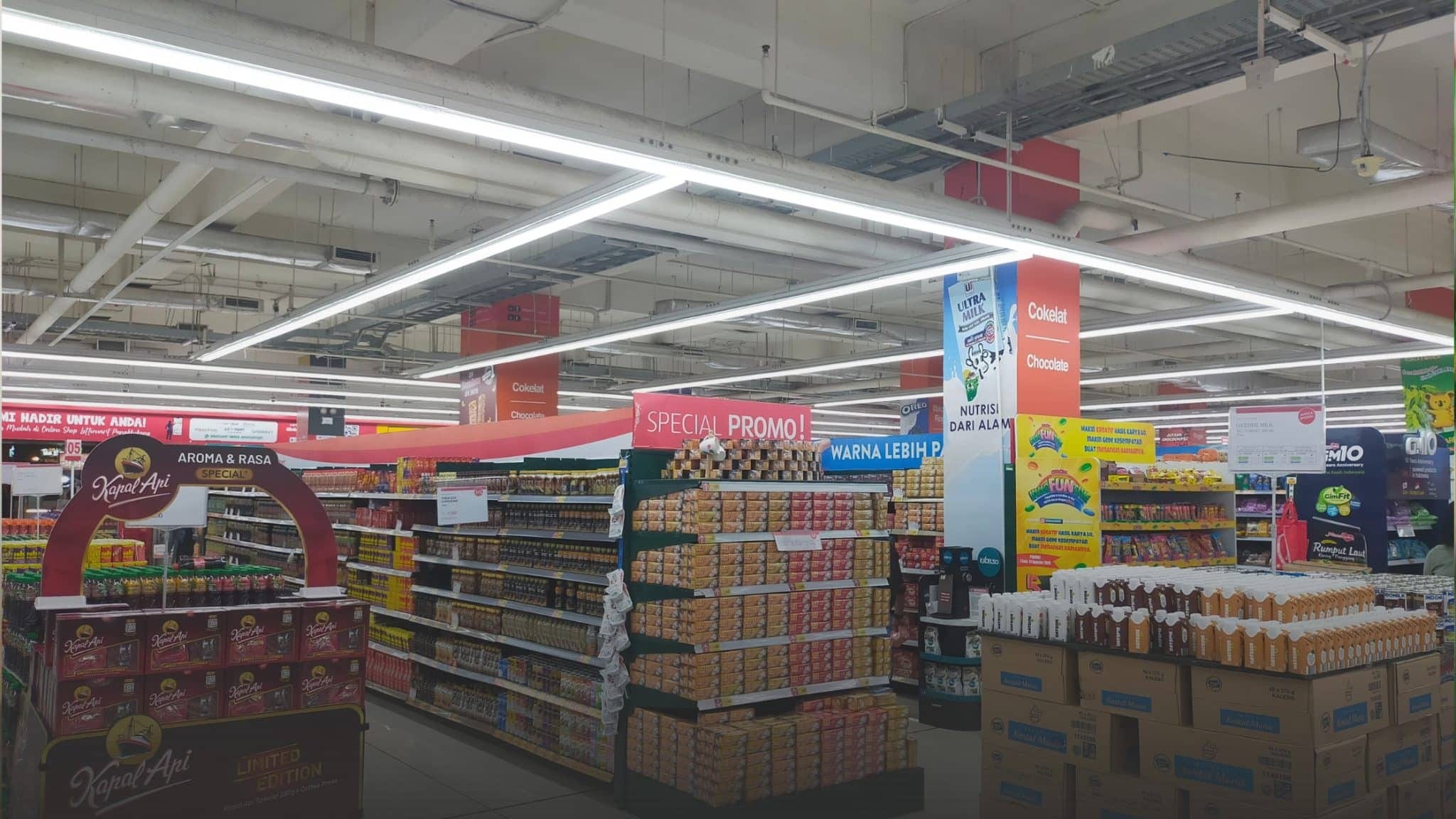
Inside discount retail: Winning on thin margins
 Roshan Behera
Discount retail has reshaped the developed markets in Europe, particularly for essential, high-frequency FMCG and grocery products. This model is now gaining popularity in Southeast Asia as well, where players like Dali and O! Save have seen store counts grow from 1 in 2020 to 888 by the end of 2024 and 0 in 2020 to 750 by the end of 2025, respectively. Once trust is built, customers show strong loyalty, repeat purchases, and consistent demand.
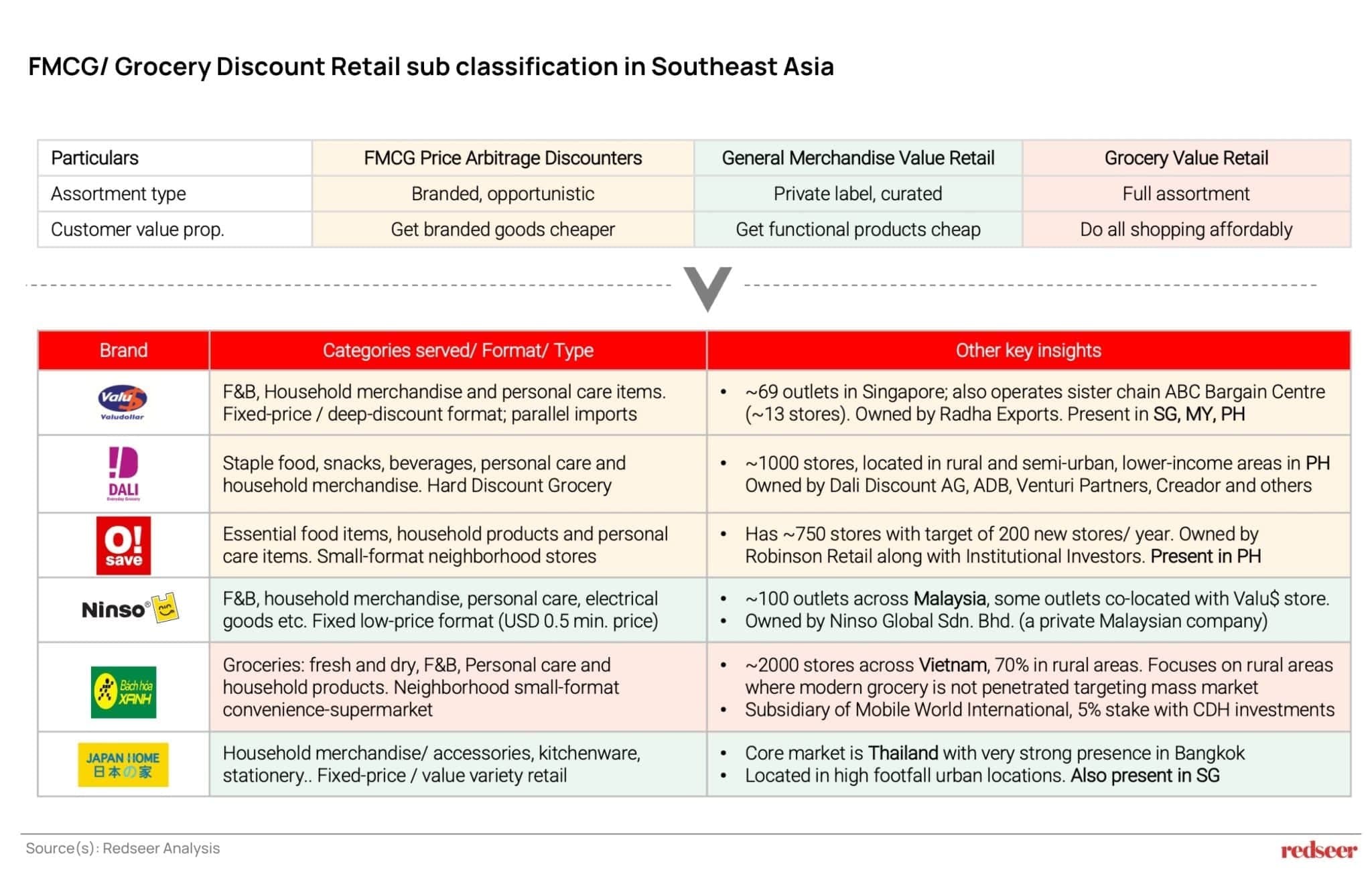
Here, we explore the rise of value and discount retail players such as Value$ Store, Dali, and O! Save, unpacking the core tenets of their business models. These retailers are achieving strong growth driven by disciplined cost execution, lean operations, and a deep understanding of value-conscious consumers.
As inflationary pressures and evolving consumption patterns continue to reshape the retail landscape, discount retail is poised to play an even more critical role across the region.
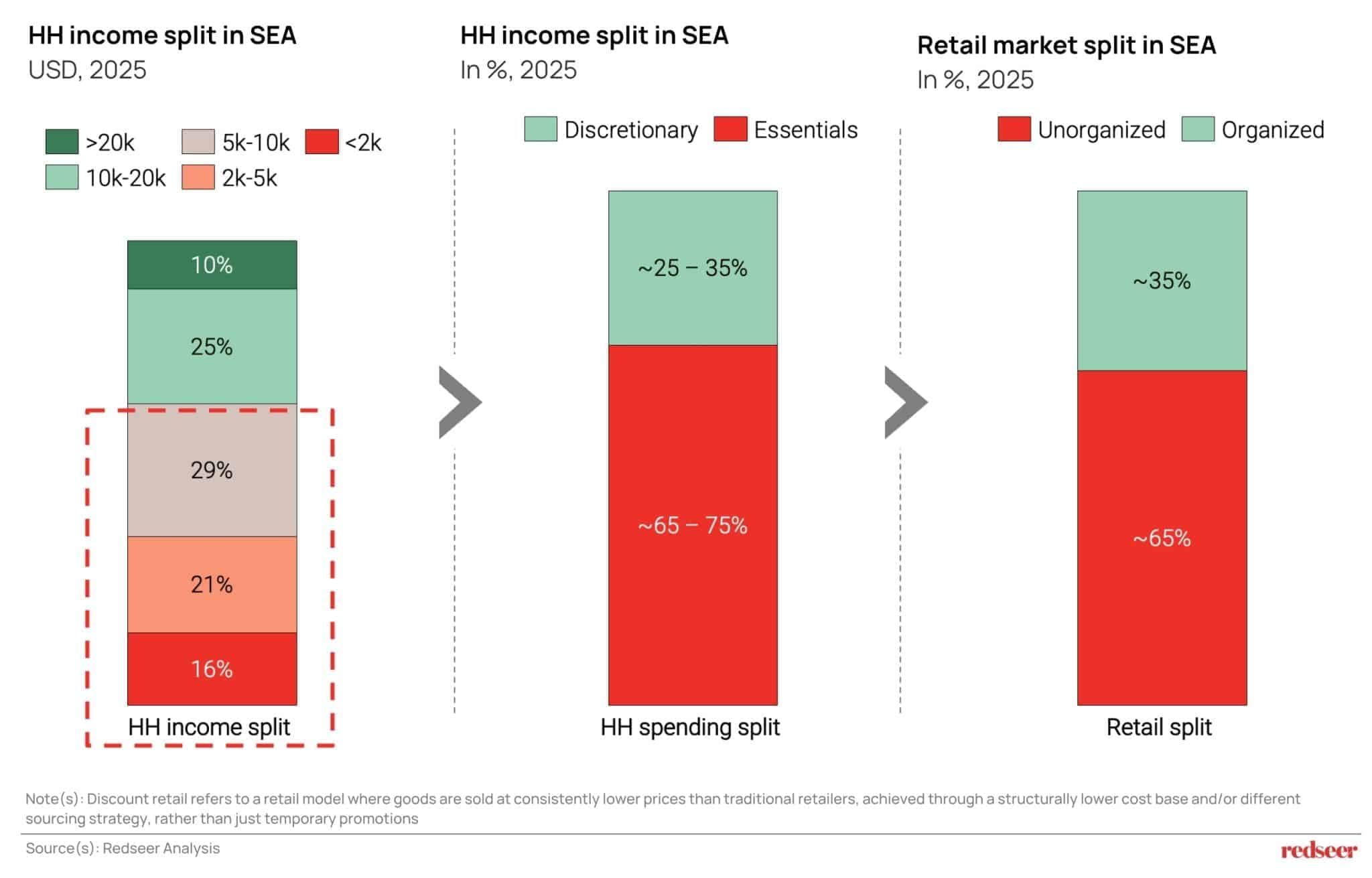
Income constraints, limited discretionary buffer, and fragmented traditional retail create structural demand for discount retail across SEA
A large proportion of households in SEA sit in the lower-to-middle income brackets, with about ~25-35% spending is on essentials, making consumers sensitive to price increases in core categories like food, household products, etc. Even modest inflation in core categories is materially compressing disposable income. At the same time, fragmented traditional retail leads to inefficiencies that discount retailers can solve for.
Together, constrained consumers and fragmented supply create a clear structural gap that discount retail formats are well-positioned to capture.
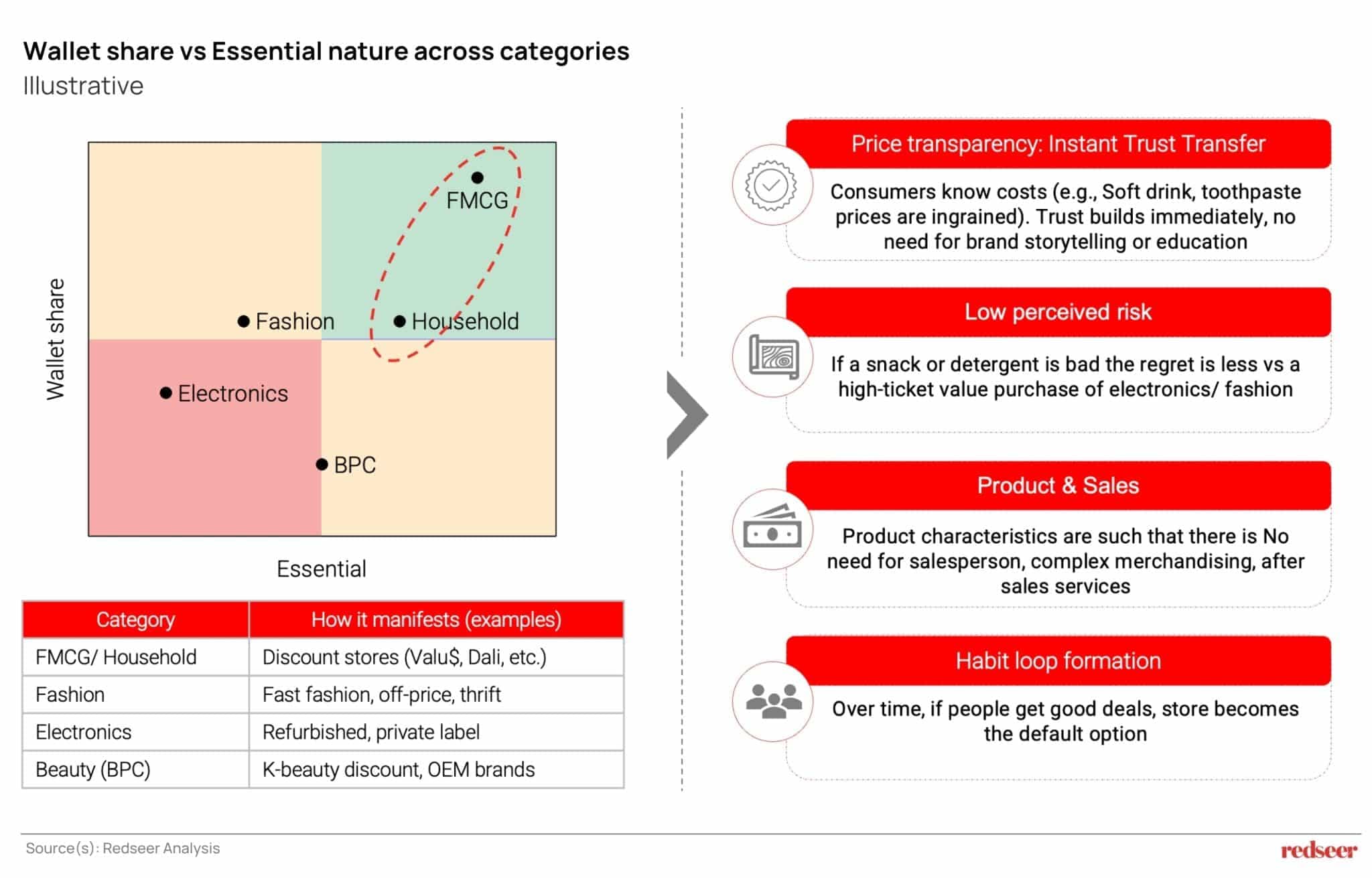
And within retail, FMCG and household products are appropriate categories for discount retail owing to the essential/ staple product nature and high wallet share
Want to get strategic guidance?
FMCG and household categories stand out due to high wallet share and the essential nature of the product, making them ideal for retail scale and repeat engagement. Their price transparency and low perceived risk enable quick trust-building and reduce the need for heavy marketing or assisted selling. Simple product characteristics allow efficient operations with minimal reliance on sales staff or after-sales service. Over time, consistent value drives habit formation, turning these categories into reliable traffic and revenue anchors for retailers.
Discount retailers in SEA are varied, some targeting branded bargains, while some looking at groceries
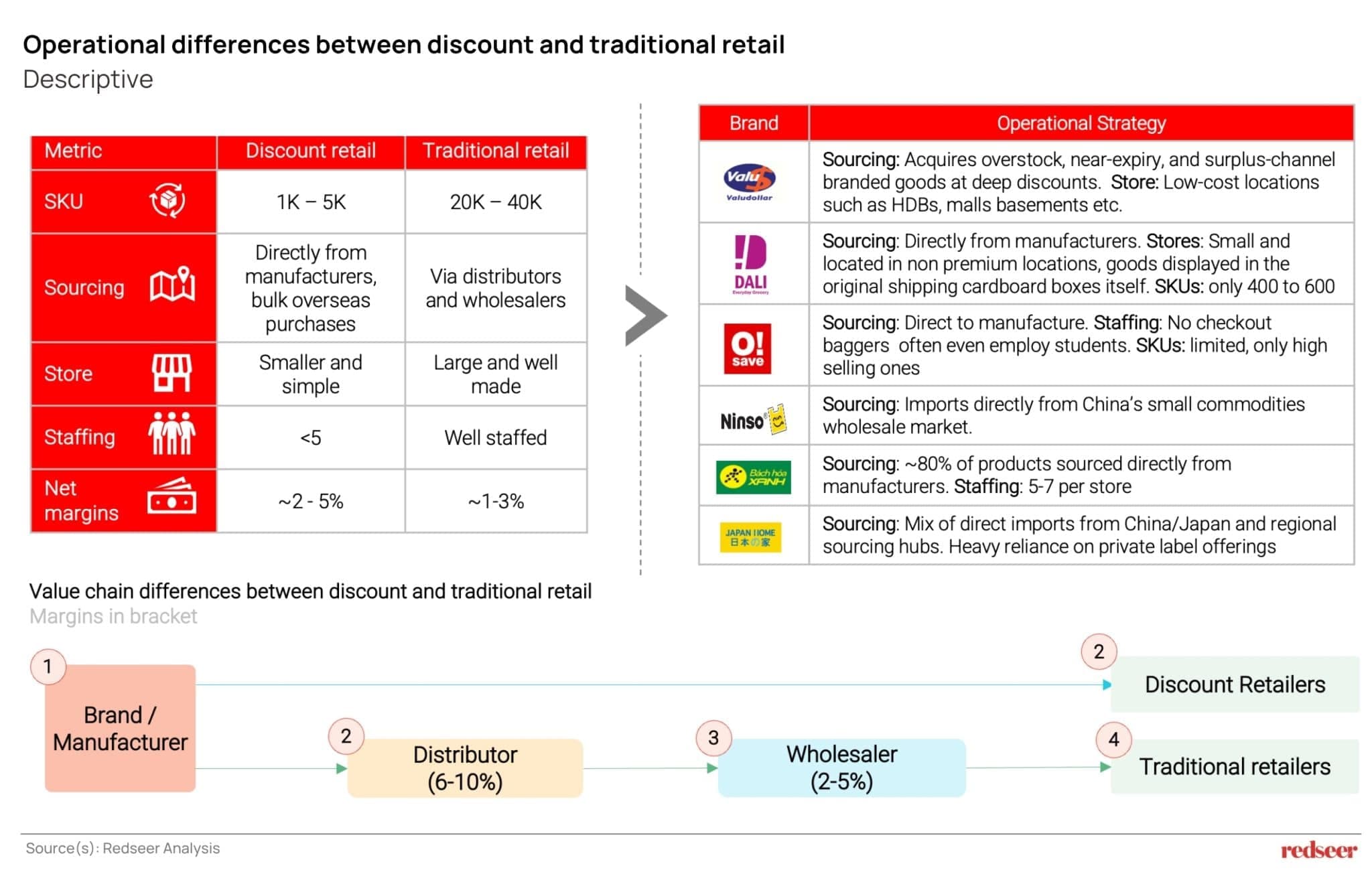
Discount retailers work across 4s (SKU, store, staffing and sourcing) to have better gross and net margins
Discount retailers systematically strip out middlemen through direct sourcing and private labels, creating a structural cost advantage versus traditional grocers. They complement this with ultra-lean operations—minimal staffing, low-cost store formats, and limited SKUs focused on high-turn products. The model prioritizes efficiency over experience, often leveraging “no-frills” merchandising (e.g., box displays) to reduce handling costs. Winning players balance this efficiency with enough assortment and quality to sustain repeat traffic without diluting margins.
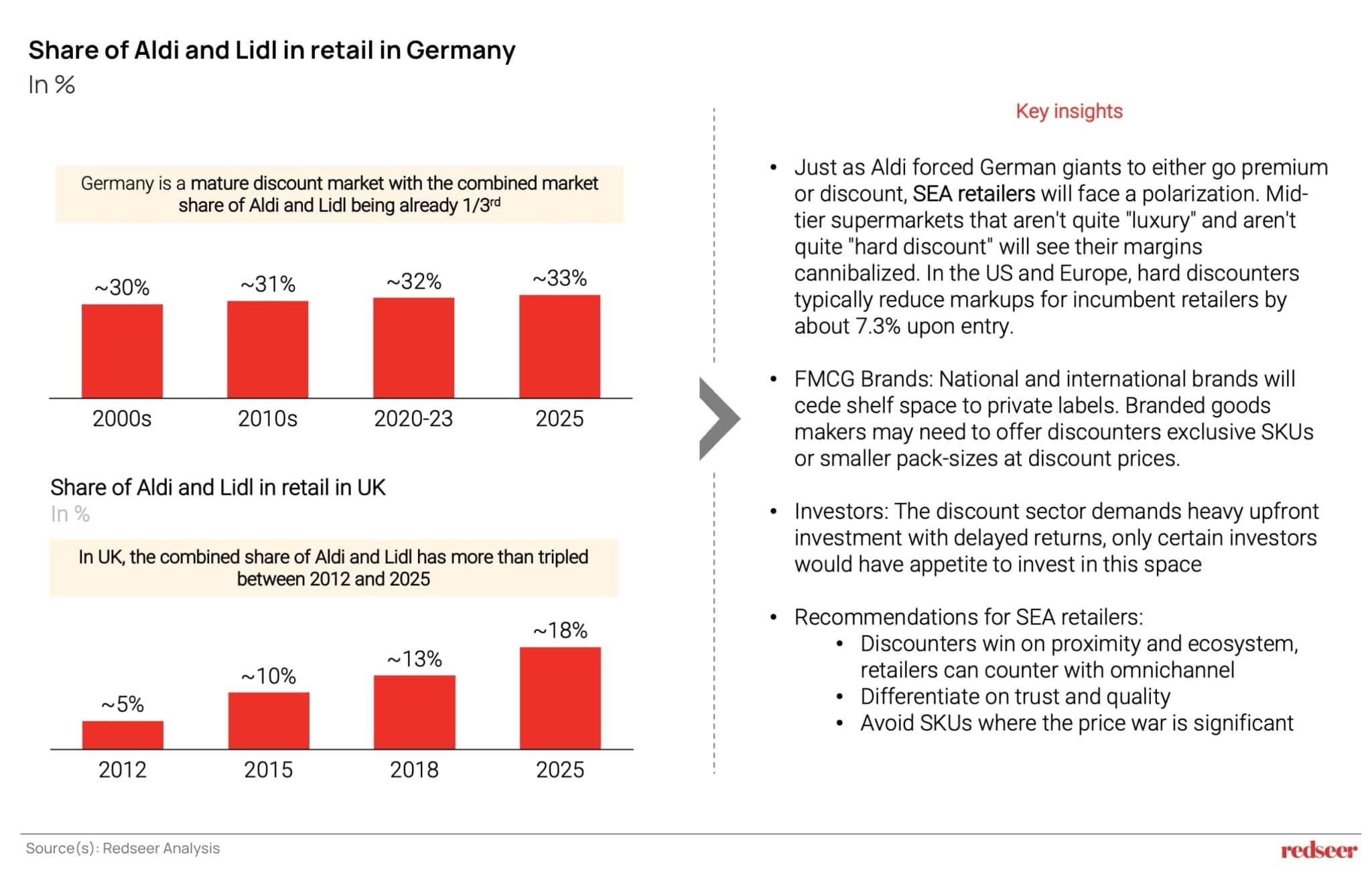
The success of Aldi and Lidl in developed markets of Europe shows the potential discount retail has in developing Southeast Asia
SEA retailers can learn much from Aldi’s playbook, but must adapt to local market features. By embracing lean cost structures and private labels, while innovating around local preferences (e.g., adding fresh produce corners, digital payments), value-focused grocers can capture underserved segments. Suppliers and stakeholders should prepare for a more price-competitive ecosystem: collaborate for efficiency gains or target niches that discounters don’t serve. With disciplined execution and local tweaks, the “Aldi effect” can boost affordability and growth across Southeast Asia’s retail sector.

Written by
Roshan Behera
Partner
Roshan is a Partner based in Singapore and focuses on Southeast Asia. His sector coverage includes e-commerce, logistics, fintech, eB2B, on-demand services, and other emerging sectors.
Talk to me

Viet-Nomics: Southeast Asias Rising Economic Star

USD 30 Bn Market in Motion: New Revenue Models Shaping Mobility & Delivery in SEA

Trolley’s IPO on Boursa Kuwait: Building the Market Case for Gulf Convenience Retail

Kuwait’s Convenience Retail Moment: What Trolley’s IPO Says About Where Gulf Retail Is Heading