USD 30 Bn Market in Motion: New Revenue Models Shaping Mobility & Delivery in SEA

Southeast Asia’s USD 30 billion ride-hailing and food delivery market has grown primarily on the back of a commission-based monetization model. However, we notice ride-hailing platforms worldwide explore subscription and fixed-fee pricing. While these models have mostly been introduced by challengers, some established players are now testing them in select markets and categories.
Have a question?
Our experts are just a click away.
The promise? Higher driver earnings and a potential solution to food merchants’ concerns over high take rates. If successful, these alternatives could reshape the industry’s economics provided the players manage the monetization gaps between the models well.
Join us as we explore key global ride-hailing trends and their impact on Southeast Asia’s mobility and food delivery landscape.
Traditionally commission-based, the ride-hailing industry is now seeing the rise of subscription and fixed-fee revenue models
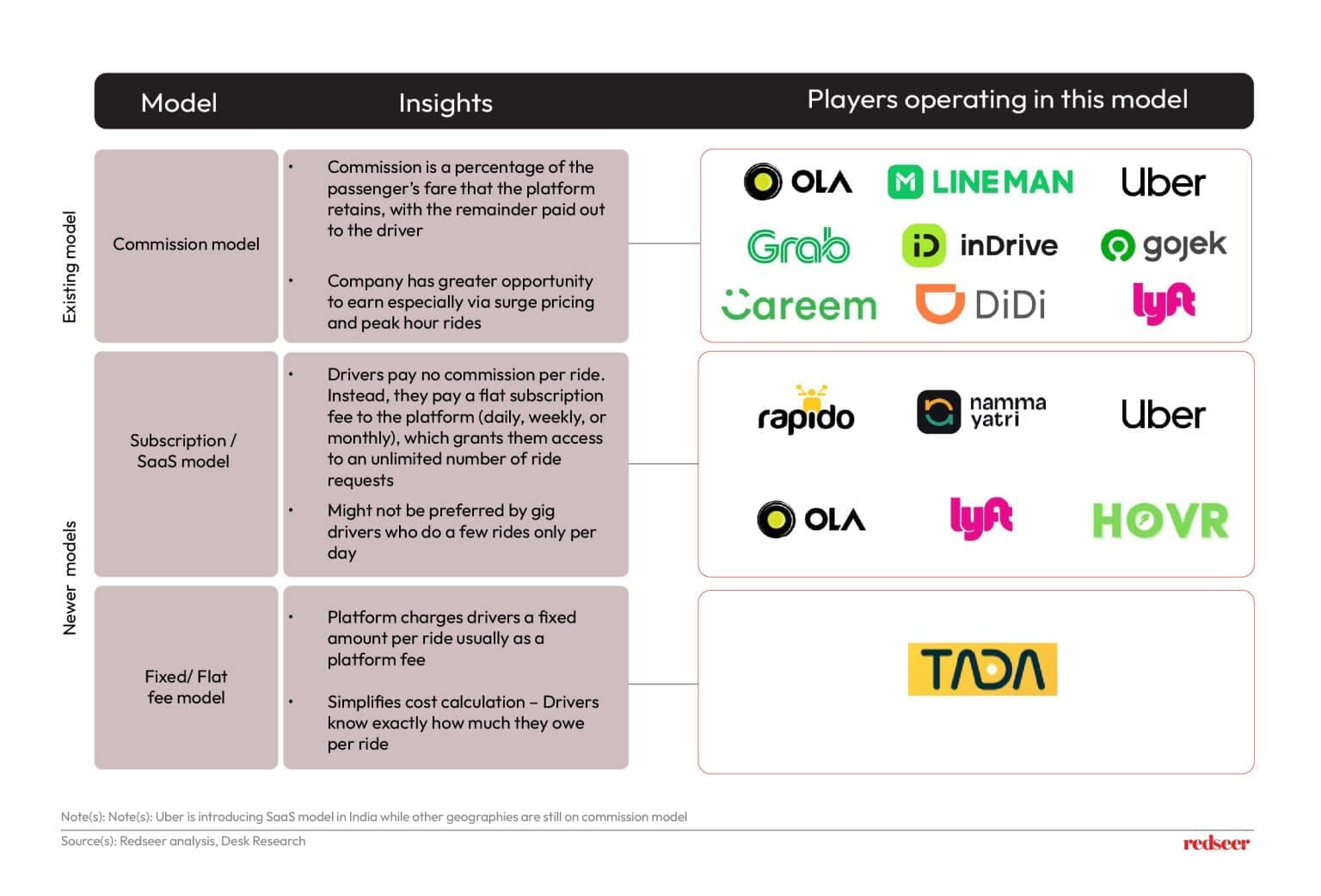
Globally, the commission-based model remains the dominant revenue structure. However, growing driver dissatisfaction over earnings and rising competition have spurred the emergence of alternative models. To address these challenges, some platforms have introduced SaaS and fixed-fee models aimed at boosting driver earnings and lowering average fares.
However, as new revenue models emerge, bridging monetization and incentive gap remains crucial
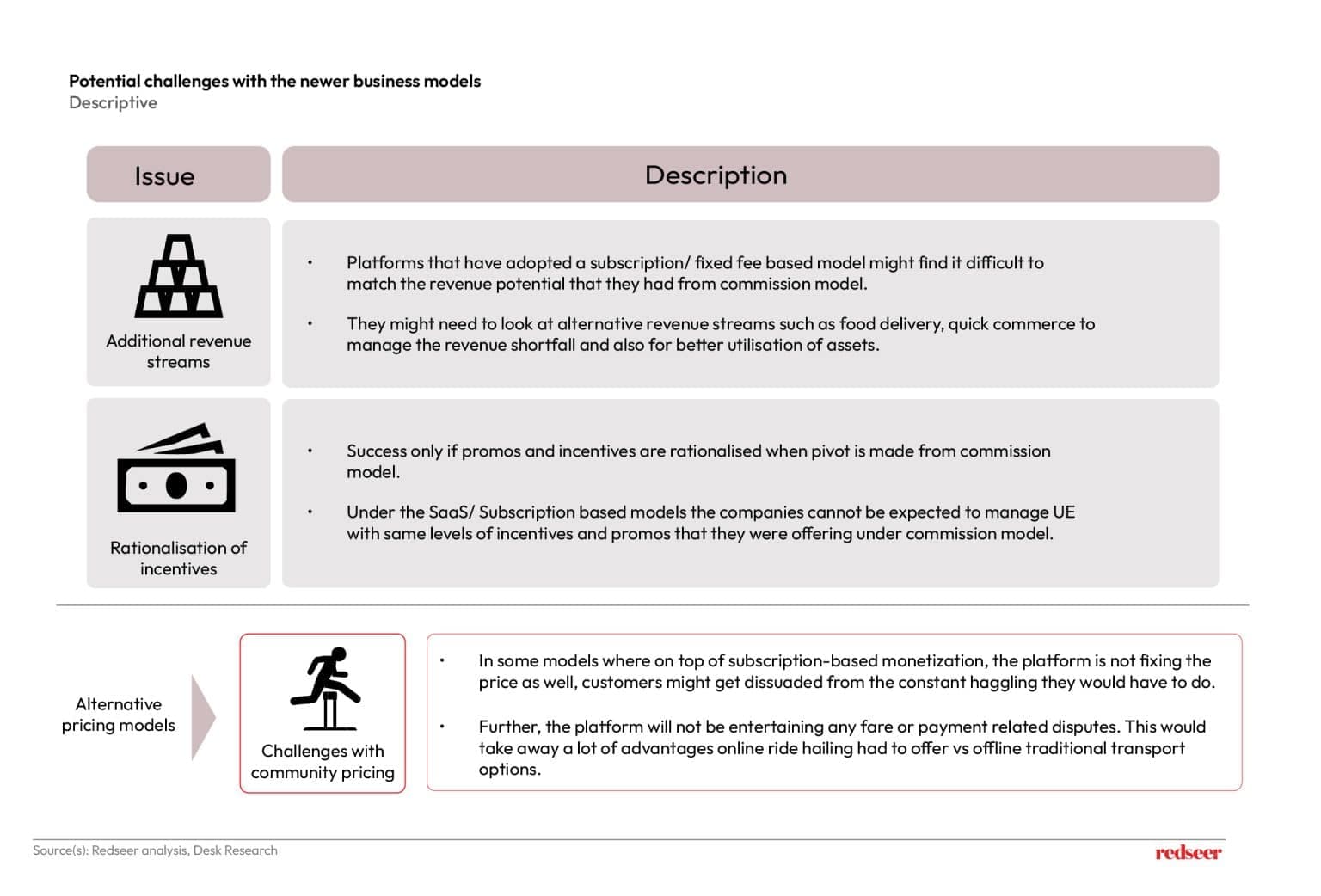
Players moving away from the commission-based model may face challenges in bridging the monetization gap. However, they can extend the SaaS model to food delivery and other allied sectors to maximize asset utilization. Success in this model will depend on effectively managing marketing and incentive costs.
Legacy players like Ola, Uber (India), and Lyft, along with challengers like Rapido, Hovr, and Tada, are experimenting with non-commission-based models
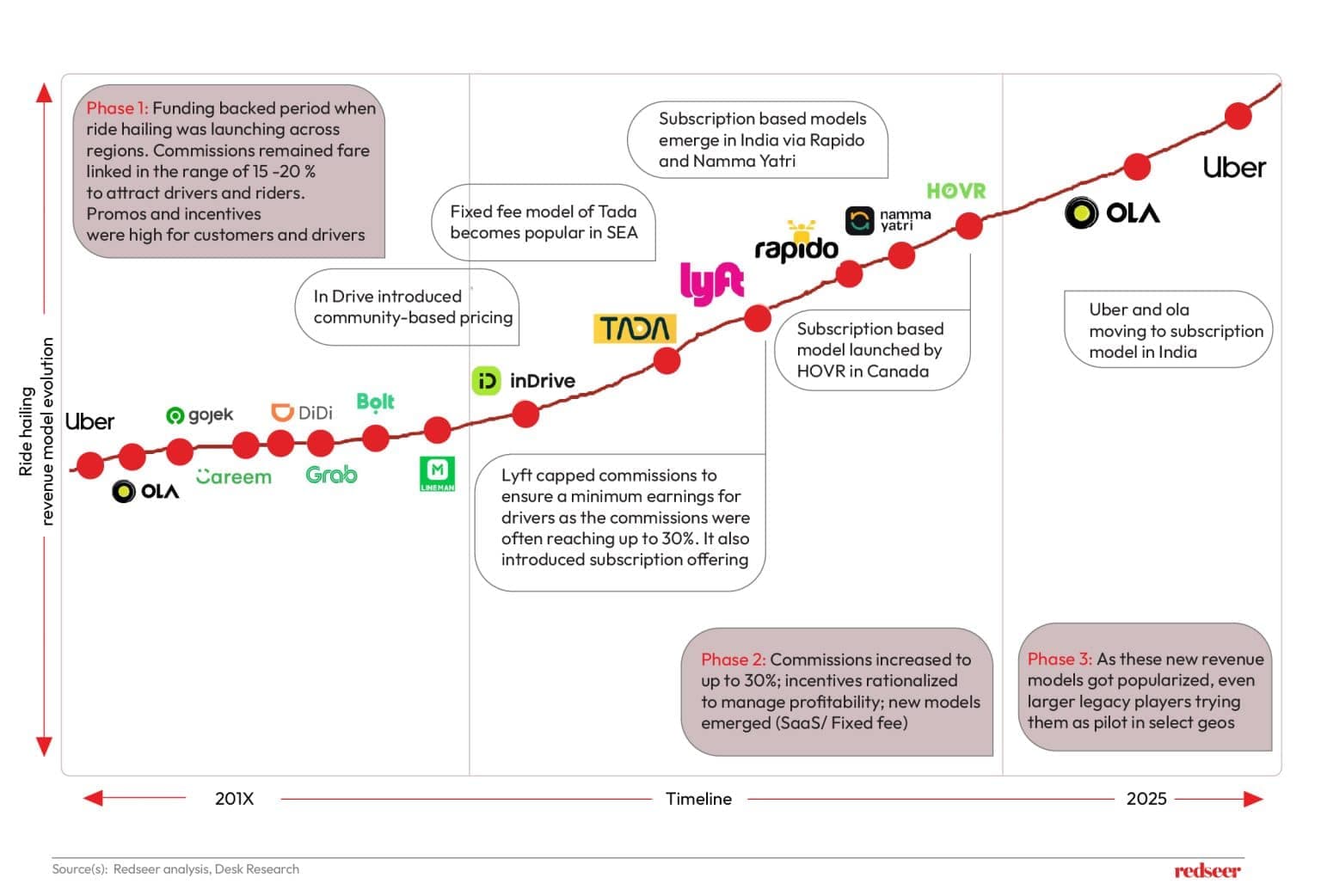
The chart shows that outside India, non-commission models are primarily driven by new challengers. However, in India, even major incumbents are experimenting with SaaS and fixed-fee models.
Interestingly, subscription/SaaS-based models are gaining rapid traction in India following its introduction by a challenger brand
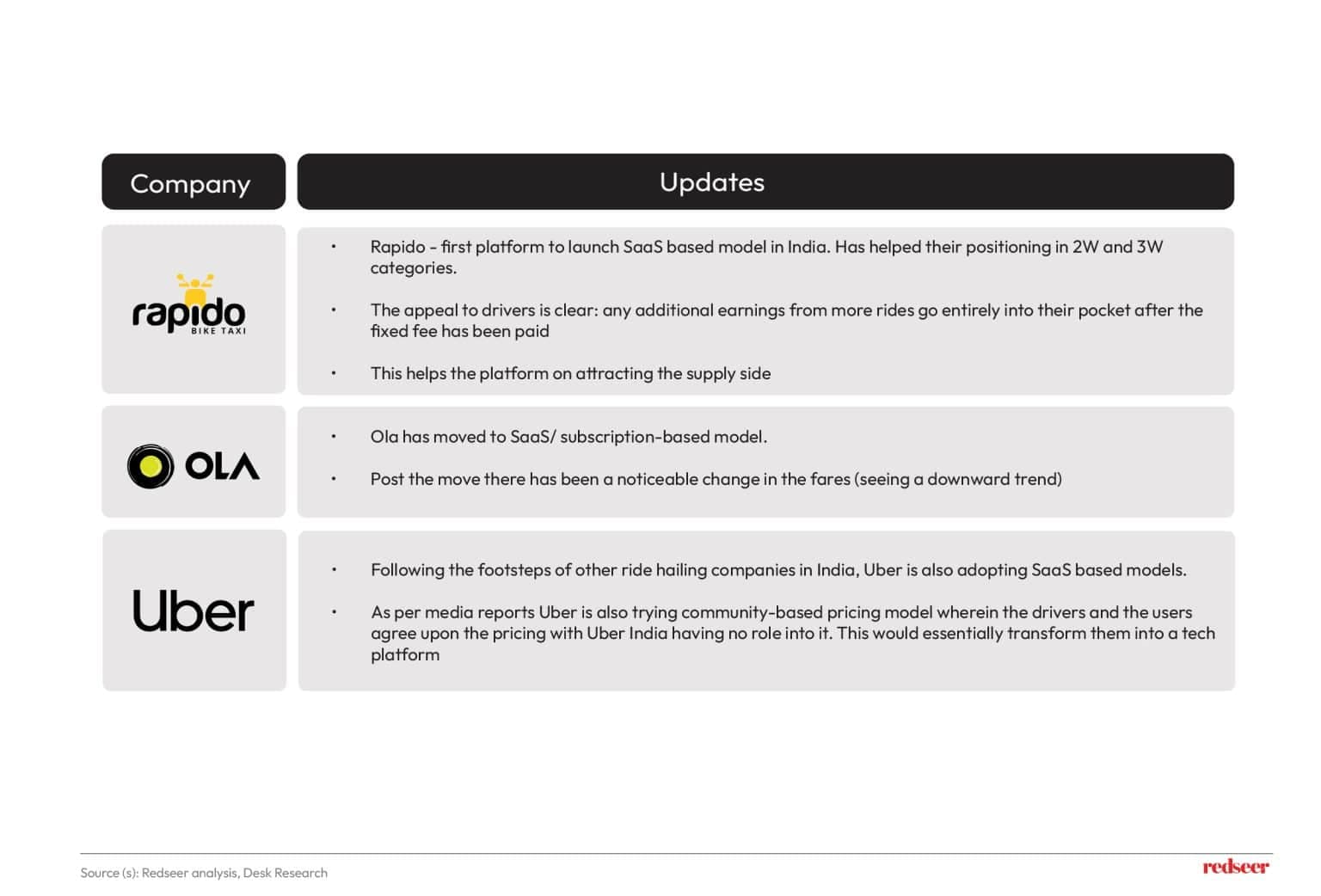
India presents a unique case with all players rapidly moving towards a complete SaaS/ subscription-based model away from a commission-based model. SaaS model has worked well for Rapido. The company has made gains in market share across categories as of Feb 2025. Ola has also moved to SaaS model, and now Uber has also announced plans of offering SaaS/ Subscription based model.
But alternative revenue models are still untested in SEA, with Tada being the only player adopting a non-commission model
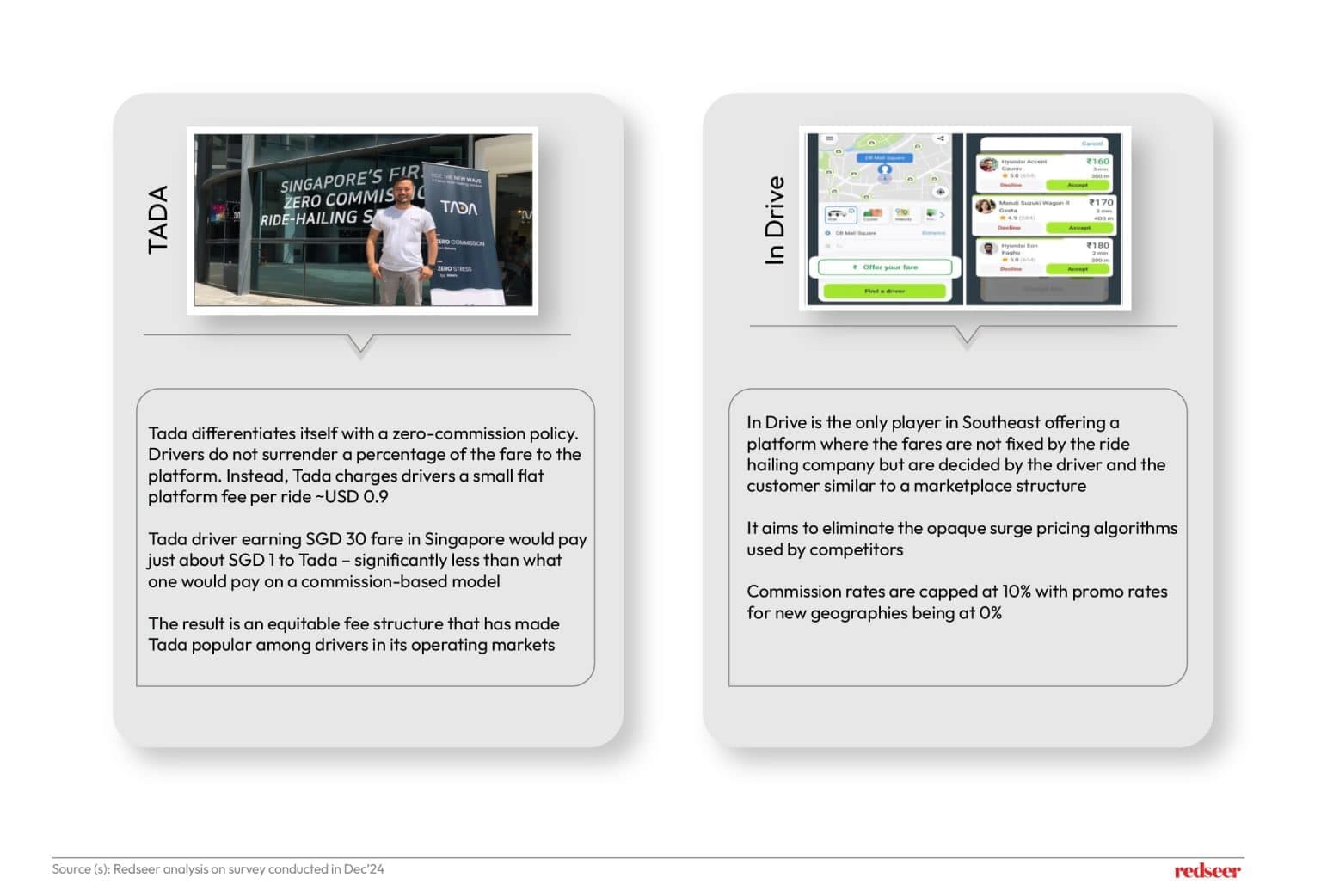
There hasn’t been a significant pivot in Southeast Asia’s ride-hailing market yet. Tada remains the only player operating on a non-commission model, while InDrive is experimenting with a community-based pricing approach. It will be interesting to see if larger players in SEA follow suit and adopt SaaS or fixed-fee models

Written by
Roshan Behera
Partner
Roshan is a Partner based in Singapore and focuses on Southeast Asia. His sector coverage includes e-commerce, logistics, fintech, eB2B, on-demand services, and other emerging sectors.


Indonesia Online Beauty and Personal Care – Local Charms

SEA Auto Classifieds 2030: GTV set to double to USD 200 Bn by 2030

SEA’s USD 121 Bn food-service resurgence: lessons from regional leaders

The $6 Tn Question: Who Wins SEA’s Digital Payment War?

TikTok-isation of retail? Quick Commerce in Southeast Asia – the USD 35 Bn future of retail waiting to be unlocked!

Quick Commerce: Winning SEA through Categories, Channels and Occasions

Rebuilding the Restaurant P&L: Reimagining Southeast Asian F&B

SEA’s USD 123 Bn Remittance Market: Fragmented Landscape, Focused Winners

SEA BNPL: Superior Unit Economics Powering Sustainable Growth

2025: The Mean Matters

SEA 2026 IPO market: Powered by profitability

From Mop to Mobile: The Digitization of Home Services in Southeast Asia
Indonesia Online Beauty and Personal Care – Local Charms
SEA Auto Classifieds 2030: GTV set to double to USD 200 Bn by 2030
SEA’s USD 121 Bn food-service resurgence: lessons from regional leaders
The $6 Tn Question: Who Wins SEA’s Digital Payment War?
TikTok-isation of retail? Quick Commerce in Southeast Asia – the USD 35 Bn future of retail waiting to be unlocked!
Quick Commerce: Winning SEA through Categories, Channels and Occasions