
The Sorted Generation: Gen X as India’s Hidden Consumer Powerhouse
 Mrigank Gutgutia
India’s Gen X cohort, aged roughly 45-60 today, represents one of the most significant yet overlooked opportunities in the consumer landscape. While much of consumer retail centres around the digitally native Gen Z and upgrade-focused millennials, Gen X is reshaping premium consumption in India with higher spending power, discretion, and an evolving set of priorities that demand strategic attention from corporate decision-makers.
Despite constituting only 15% of India’s population by 2030, their per capita consumption is rising steadily, demonstrating how secure finances translate into sustained consumption.
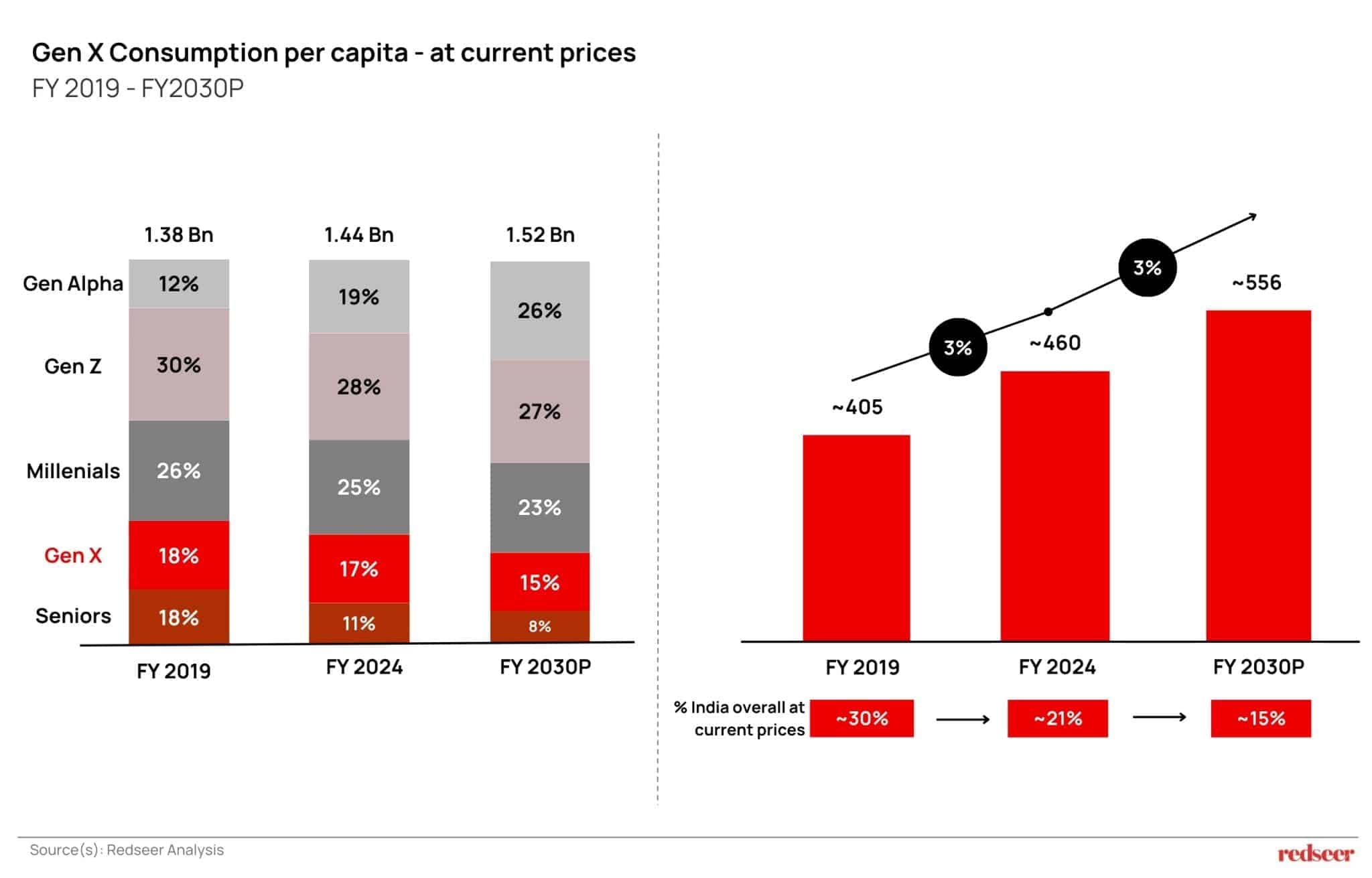
Unlike millennials, who are just beginning to experience stability, Gen X is distinguished by their state of arrival. They are clear about their priorities and how to pursue them. Having moved past the rush of ambition, Gen X seeks indulgence with intention. It has thus formed a distinct consumption philosophy – compelling brands to rethink how they approach this cohort.
“I’ve earned this. Now, I want comfort, quality, and elegance – without the noise.”
– Dia, early 50s.
Opportunity across sectors
The Gen X imperative of prioritising their quality of life opens avenues for brands across sectors that can offer premium products and services to this discerning customer base.
The Preventive Healthcare Revolution

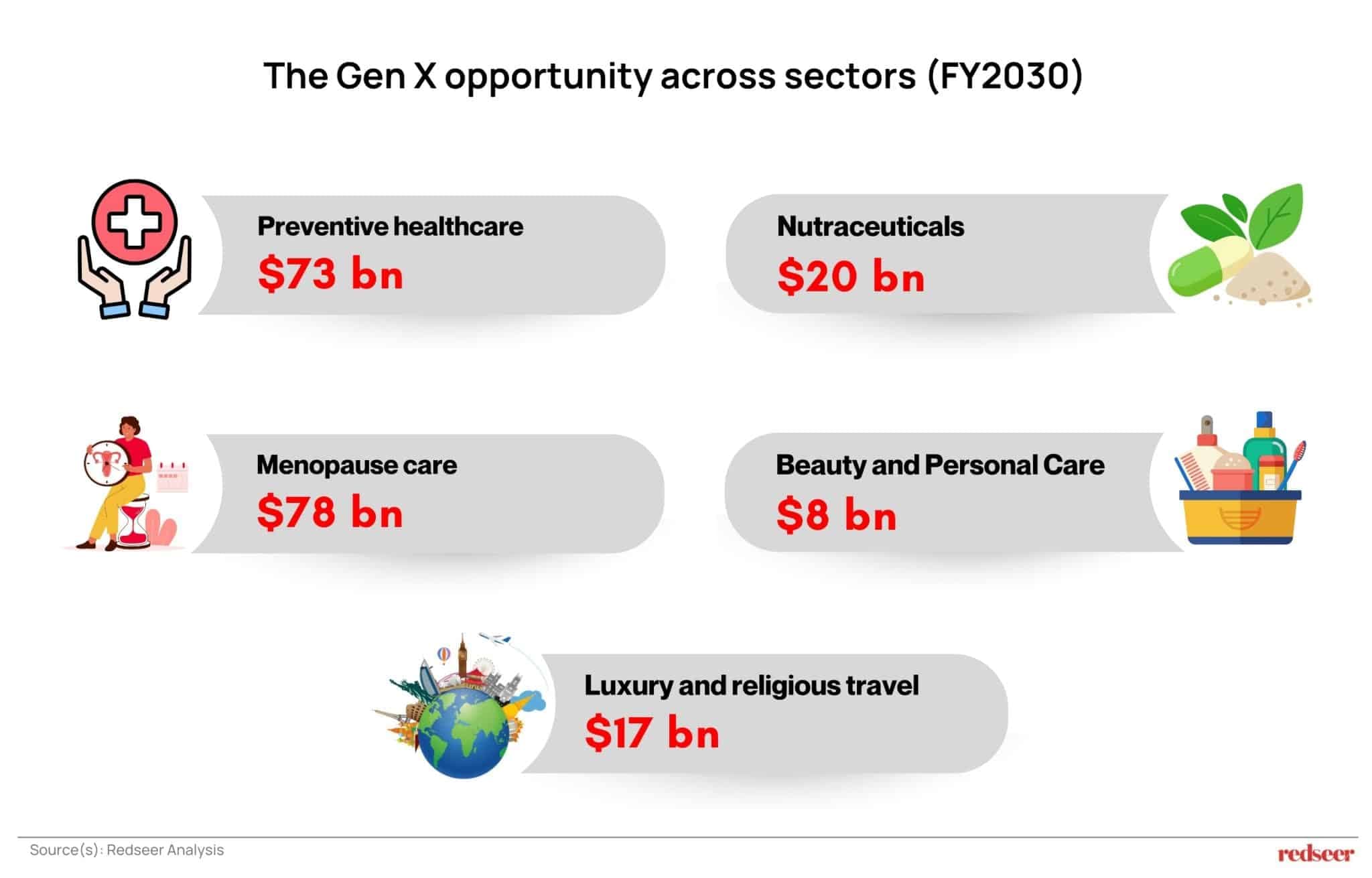
Gen X preventive healthcare spend is projected to reach USD 73 billion by 2030, growing at 17% CAGR
The most dramatic shift in Gen X spending is the redefinition of health from reactive to proactive. Three in five urban Indian Gen X consumers are now spending more on genetic testing, bio-age analysis, and wearables as tools for daily optimisation. This marks a departure from infrequent medical checkups to health monitoring and personalised routines.
Gen X preventive healthcare spend is projected to reach USD 73 billion by 2030, growing at 17% CAGR. Nutraceuticals spending alone will hit USD 20 billion in this period, while healthcare devices spending is expected to reach USD 2.5 billion. These are markers of a cohort that is willing to pay a significant premium for science-backed, proactive health management.
Companies in healthcare, wellness, and technology must move beyond basic health monitoring to address these priorities. This means developing products and services that combine advanced diagnostics, personalised nutrition, fitness tracking, and preventive interventions into an integrated wellness experience.
The Female Gen X Opportunity: Addressing the 40+ Health Shift

One of the most underserved segments within Gen X is women navigating the post-40 health transition. Indian women typically experience menopause at an average age of 46 years, earlier than the global average of 51 years, leading to a longer post-menopausal phase. This, in turn, means a wider window of health vulnerability and a longer runway of unmet need. It also means the conversations around post-40 wellness are happening sooner in a cohort that is more health-literate and more willing to invest in solutions than any previous generation of women at this life stage.
Once restricted to gynaecologist clinics, conversations around menopausal care are slowly entering the mainstream. This is evident in growing investment in post-menopausal healthcare among urban Gen X women. Approximately one in two Gen X women now actively choose preventive care, including screenings, diagnostics, and check-ups, while one in three actively seeks hormone balance or gut health solutions. About 400 femtech startups in India are solving challenges across symptom management, personalised dietary plans, and exercise programmes.
The market, however, is fragmented, with few players integrating the clinical, nutritional, technological, and community dimensions of this transition into one seamless offering. Brands must approach this market with sensitivity and sophistication. The opportunity extends beyond medical interventions to encompass customised dietary solutions, targeted fitness programmes, and holistic wellness.
Luxury Redefined: From Flash to Substance
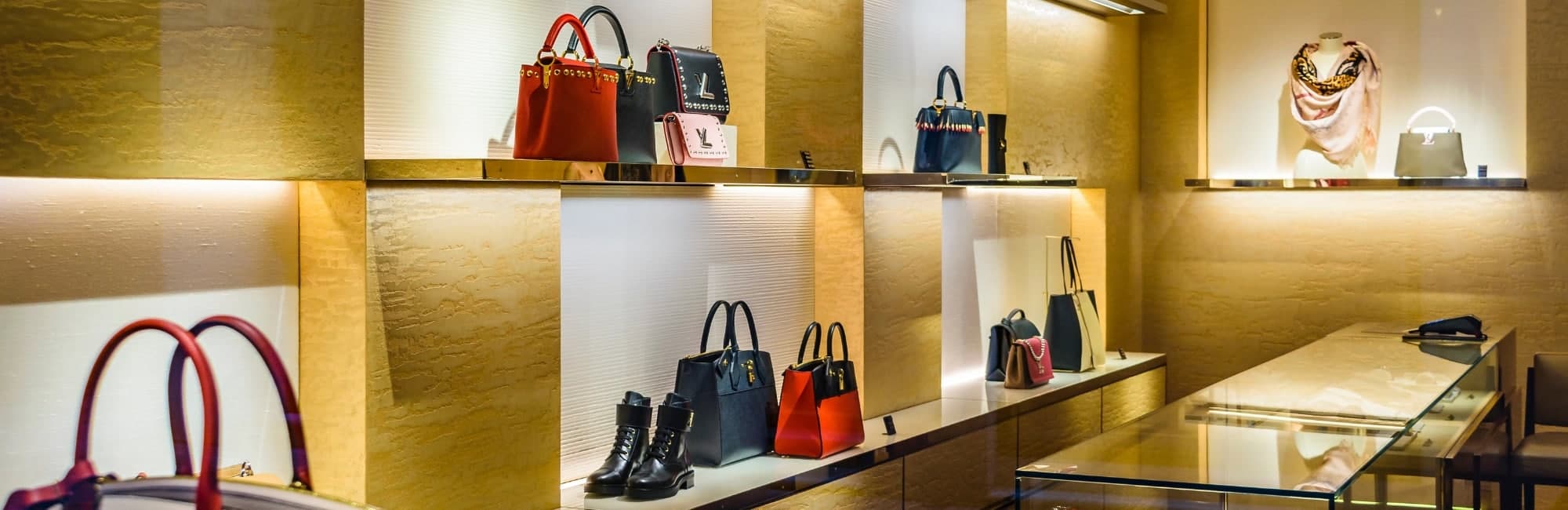
Purposeful prestige is the hallmark of Gen X luxury consumption. This cohort views iconic pieces from heritage houses as investments, with Hermès scarves, Zegna suits, Chanel bags, or Loro Piana cashmere as some of the most sought-after pieces.
Between 2024 and 2030, the market for men’s formal wear and women’s luxury wear is expected to grow by 8%. The BPC (Beauty and Personal Care) market for Gen X, meanwhile, will reach USD 8 billion by the end of the decade.
Growing demand for cosmeceuticals, high-performance skincare, and tailored grooming services reflects this shift. Dermatologist-led beauty clinics and personalised skincare plans are becoming essential for this demographic.
Luxury brands must emphasise heritage, craftsmanship, and timeless design over seasonal trends. The focus should be on building long-term relationships through exceptional service, personalisation, and discretion. For BPC companies, the way forward lies in efficacy-driven products backed by dermatological know-how, delivered through premium experiences. Corporate decision-makers should invest in training staff for consultative selling, developing exclusivity-focused loyalty programmes, and curating private shopping experiences.
Market for men’s formal wear and women’s luxury wear for Gen X is expected to grow by 8% and the BPC marketing expanding to USD 8 billion by 2030.
Travel With Meaning: Thoughtful Experiences Over Cookie-Cutter Vacations

Intentionality is emerging as a key tenet in Gen X travel preferences. With travel being regarded as rediscovery, rather than escape, the focus is shifting to slow, indulgent experiences. This is reflected in a 25% year-on-year rise in alternative accommodation such as luxury villas and boutique stays.
Four out of five Gen X consumers fly first class for leisure travel and book five-star hotels, prioritising comfort and service. There is also a marked rise in bookings for wellness resorts, Ayurvedic healing centres, and off-grid digital detox trips.
Travel companies, hospitality brands, and experience providers must move beyond standard packages to offer deeply personalised, transformative journeys for this cohort. This means developing partnerships with wellness practitioners, cultural experts, and local communities to create authentic, meaningful experiences. The focus should be on curation over choice, offering thoughtfully designed itineraries that reflect a deep understanding of Gen X values around privacy, comfort, cultural depth, and personal growth.
Legacy Building: The Education Investment Imperative

Children’s education remains non-negotiable for Gen X, driven by legacy thinking and global ambition. Urban Indian families spend up to INR 10-20 lakhs per child annually. The emphasis on high-quality education is evident; Gen X parents are choosing Cambridge/IB schools and overseas summer programmes, with a two-fold increase in the number of Indian students going abroad.
Urban Indian families spend up to INR 10-20 lakhs per child annually on education
Premiumisation Meets Personalisation
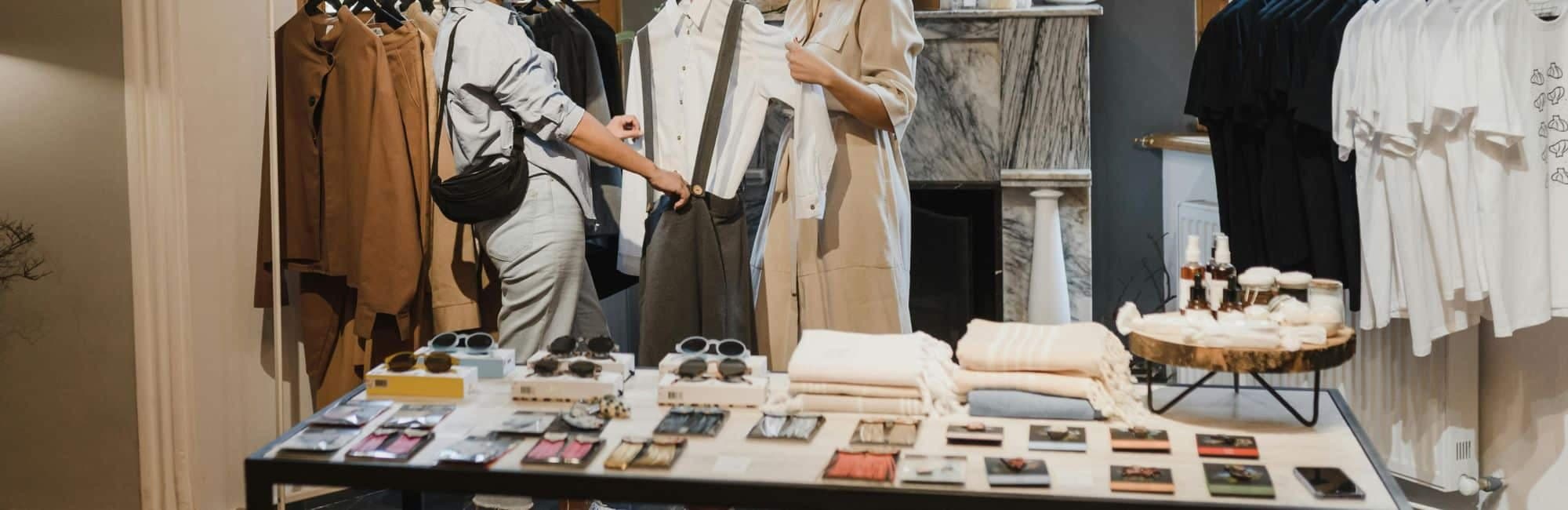
Across all categories, it is clear that Gen X responds to brands that understand curation. They value quality and seek products that blend sophistication with substance. They are willing to invest in experiences that reflect personal discernment – from legacy fashion to custom-made itineraries, and from derma-led skincare to productivity-focused solutions.
The opportunity extends to pain management and recovery solutions, menopause solutions, longevity-based solutions, fortification across meal occasions, weight management, and premium furniture and home furnishings. Each of these represents a white space where thoughtful brands can capture a substantial niche.
Building for the Sorted Generation
For corporate decision-makers, the Gen X opportunity demands a fundamental rethinking of how products and services are developed, positioned, and delivered:
- Shift from acquisition to retention: Gen X values long-term relationships. Brands must invest in service excellence, personalisation, frictionless experiences and exclusive benefits that reward loyalty.
- Embrace the trust circle: Recognise that Gen X makes decisions based on recommendations from trusted doctors, advisors, and peers. Credibility must be built through expert endorsements and word-of-mouth.
- Design for refinement: Brands must emphasise substance, heritage, and understated elegance, and avoid flashy marketing.
The Indian Gen X consumer of 2030 is rewriting what it means to grow older, trading retirement for reinvention. For brands willing to offer taste, substance, and seamless experiences, the USD 500 bn+ Gen X opportunity represents one of India’s most compelling consumer plays of the decade.
These insights are derived from our report, The Indian Consumer at 2030, developed with Fireside Ventures, which details the changing consumer landscape by the close of the decade.

Written by
Mrigank Gutgutia
Partner
Mrigank leads business research and strategy engagements for leading internet sector corporates at Redseer Strategy Consultants. He has developed multiple thought papers and is regularly quoted in media and industry circles.
Talk to me

India’s Most Reliable Financial Cohort Is Also Its Most Underserved

Trolley’s IPO on Boursa Kuwait: Building the Market Case for Gulf Convenience Retail

Kuwait’s Convenience Retail Moment: What Trolley’s IPO Says About Where Gulf Retail Is Heading

Beauty Blitz 2030: Mapping India’s Ascent to a $40 Billion Powerhouse


