India’s Gated Communities Are Becoming the Next High-Value Consumer Clusters
Across India’s major cities, gated communities are becoming a larger share of new urban housing development.
Originally developed as secure residential enclaves offering better infrastructure and amenities, gated communities are now emerging as dense, digitally connected consumer clusters. Redseer’s analysis indicates that these communities are set to house nearly half of all urban households across India’s top 50 cities by 2031, making them a significant force shaping consumption patterns in urban India.
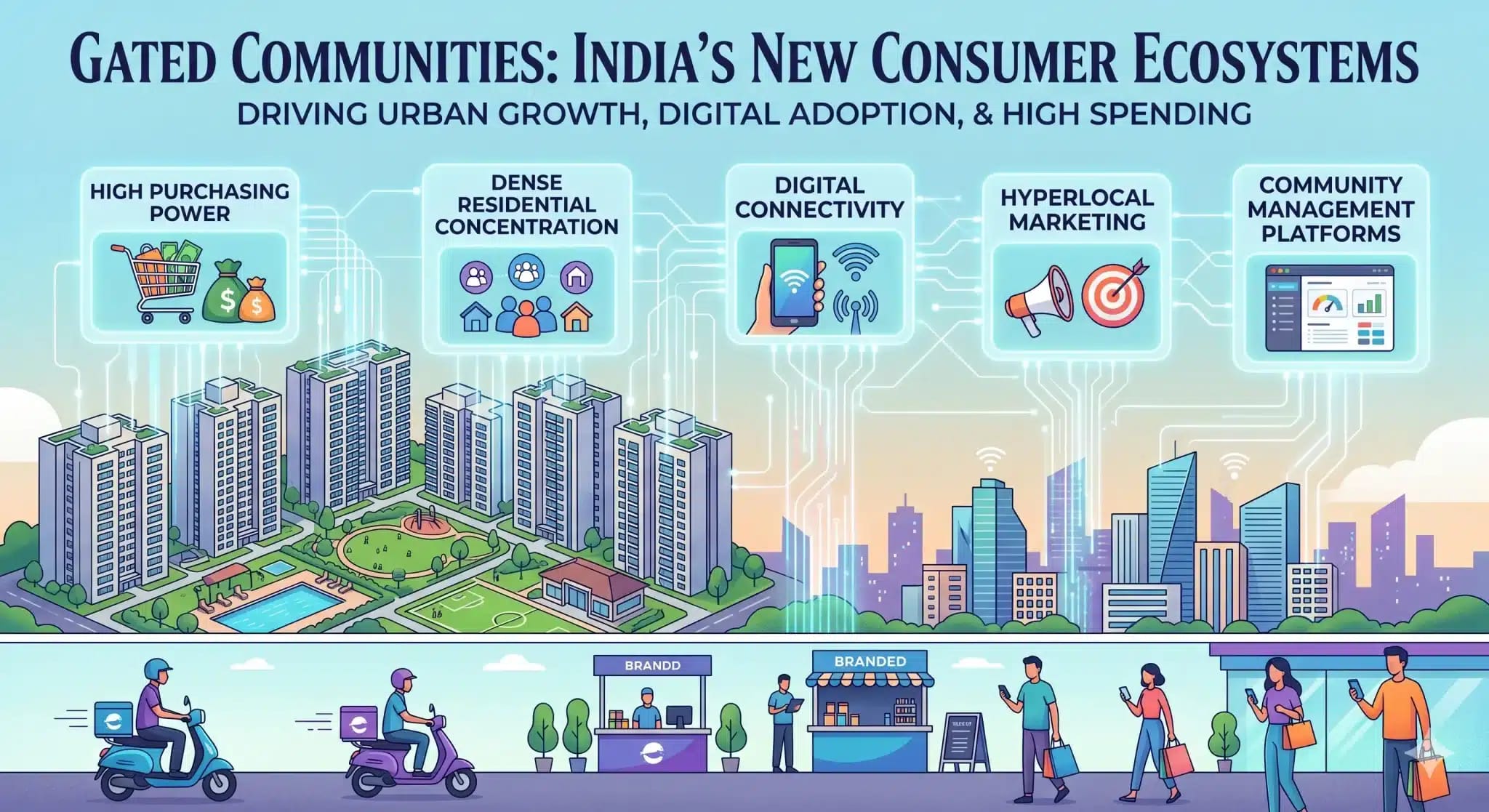
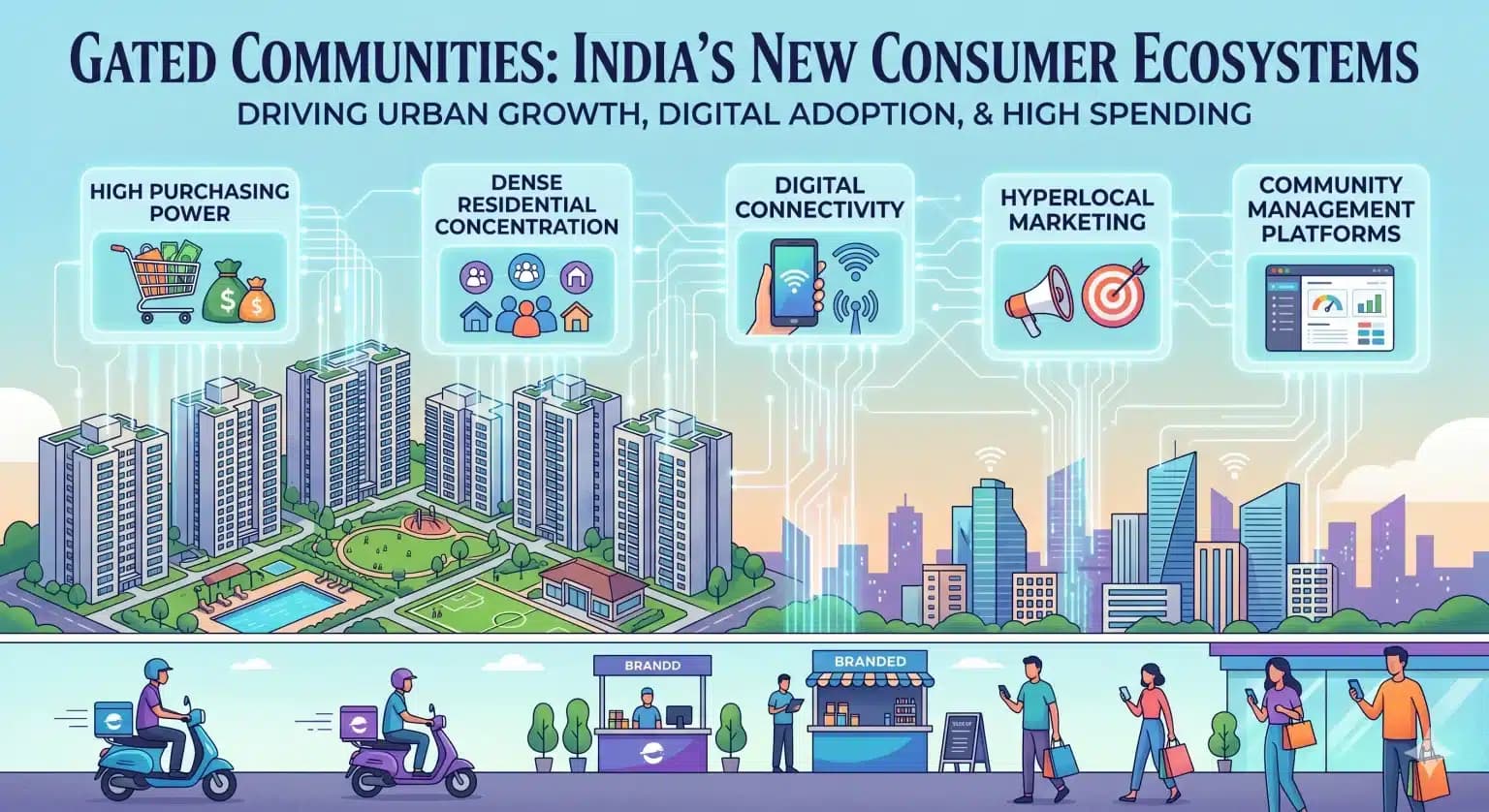
For consumer brands, platforms, and retailers, this shift creates a new type of market environment. Gated communities combine three characteristics that rarely exist together at scale in Indian cities: high purchasing power, concentrated residential density, and increasing digital infrastructure.
As companies rethink their urban growth strategies, many are working with a strategy consulting firm in India to understand how these residential clusters can influence demand generation, distribution planning, and hyperlocal marketing strategies.
Gated Communities Are Becoming Structured Urban Ecosystems
The growth of gated communities is closely tied to broader changes in India’s housing market. As urbanisation accelerates and middle- and upper-income households prioritise security, infrastructure, and amenities, gated developments have become one of the fastest-growing formats within India’s USD 60 billion housing market. (download report)
Within these developments, community management platforms are increasingly digitising everyday residential operations. These platforms streamline functions such as access control, maintenance management, payments, communication, and facility administration.
Adoption of these platforms is expected to expand significantly. Today, roughly 25% of gated communities in India (around 40,000 communities) use digital community management platforms. By FY2031, this figure is projected to rise to over 40%, covering more than 70,000 communities.
For businesses evaluating urban consumer behaviour, these platforms create structured data layers around residential populations that previously existed in fragmented offline environments. This is one reason why companies are increasingly engaging with a business consulting firm in India specialising in consumer internet and urban market strategy to evaluate how gated communities fit into future growth models.
A Concentrated Consumer Segment With High Spending Power
One of the defining characteristics of gated communities is the concentration of higher-income households within relatively dense residential clusters.
Residents of these developments typically have higher-than-average disposable incomes and stronger digital adoption, making them a particularly attractive segment for consumer businesses. The aggregation of these households within defined residential spaces also creates a targeting environment that differs significantly from traditional urban marketing channels.
In open urban environments, brands often rely on broad geographic targeting and digital advertising impressions to reach potential consumers. Within gated communities, however, brands can reach verified residents within clearly defined micro-markets.
This structural shift is beginning to influence how companies approach customer acquisition and localised engagement strategies in India’s urban markets.
Hyperlocal Marketing Is Emerging as a New Channel
As gated communities become digitally organised residential ecosystems, they are also evolving into measurable hyperlocal advertising channels.
Campaign performance metrics reported by brands operating in these environments highlight the potential efficiency of this channel. Integrated campaigns within gated communities have delivered digital click-through rates of approximately 12-15% and return on advertising spend (ROAS) of around 8-12x, significantly higher than what many open digital channels typically achieve.
For consumer brands, the advantages stem from the nature of the audience. Residents are verified, geographically concentrated, and often share similar consumption profiles.
This has led companies across several industries to experiment with community-level engagement strategies. FMCG brands are using gated communities for targeted product sampling and habit formation. Quick commerce platforms use residential density to guide dark-store placement. Real estate developers run awareness campaigns within nearby premium micro-markets.
As these use cases expand, the addressable advertising opportunity within gated communities is projected to reach roughly USD 800 million by FY2031.
Understanding how these channels fit into broader marketing and distribution strategies is increasingly becoming a key question for companies working with a strategy consulting firm in India focused on consumer markets and digital commerce.
Community Management Platforms Are Expanding Their Role
While community management platforms initially focused on operational efficiency within residential complexes, their role is gradually expanding.
Today, most platforms support basic administrative functions such as payments, visitor management, maintenance requests, and communication between residents and facility managers. However, the scale of these digital ecosystems creates opportunities beyond operational management.
Platforms are beginning to explore services such as local commerce integration, premium property management tools, and hyperlocal engagement features for residents and brands. This evolution could significantly expand the commercial potential of the ecosystem.
According to Redseer’s analysis, the broader opportunity spanning SaaS solutions and ancillary services linked to gated communities could reach approximately USD 1.8 billion in the coming years.
For technology providers and investors, this signals a shift from purely operational software to platforms that support broader urban consumer ecosystems.
Implications for Consumer Businesses
The rise of gated communities introduces a new layer to India’s urban consumption landscape.
For consumer brands, these environments provide concentrated access to digitally connected households with strong purchasing power. For platforms operating in categories such as quick commerce, electronics, and home services, these communities offer density that supports efficient service delivery.
At the same time, the structured nature of these residential clusters creates opportunities for targeted engagement, experimentation with hyperlocal campaigns, and improved measurement of marketing performance.
Many companies are now working with a consumer strategy consulting firm in India to evaluate how gated communities should influence their distribution strategies, customer acquisition models, and urban market expansion plans.
Conclusion
Gated communities will not replace the broader urban fabric of Indian cities. However, their growing scale and digitalisation are reshaping how businesses approach urban consumers.
By combining residential density, purchasing power, and digital infrastructure, these developments are creating a type of consumer cluster that has few direct parallels in India’s traditional retail landscape.
For companies operating in consumer internet, retail, and digital services, understanding how demand is forming within these clusters is becoming increasingly important.
As India’s urban markets evolve, businesses that align their strategies with emerging consumption environments, including gated communities, will be better positioned to capture the next phase of growth.
Working with an experienced strategy consulting firm in India can help translate these structural shifts into actionable market strategies for brands, platforms, and investors navigating India’s rapidly changing consumer economy.