
The World’s Largest Advertisers Now Spend Like Investors


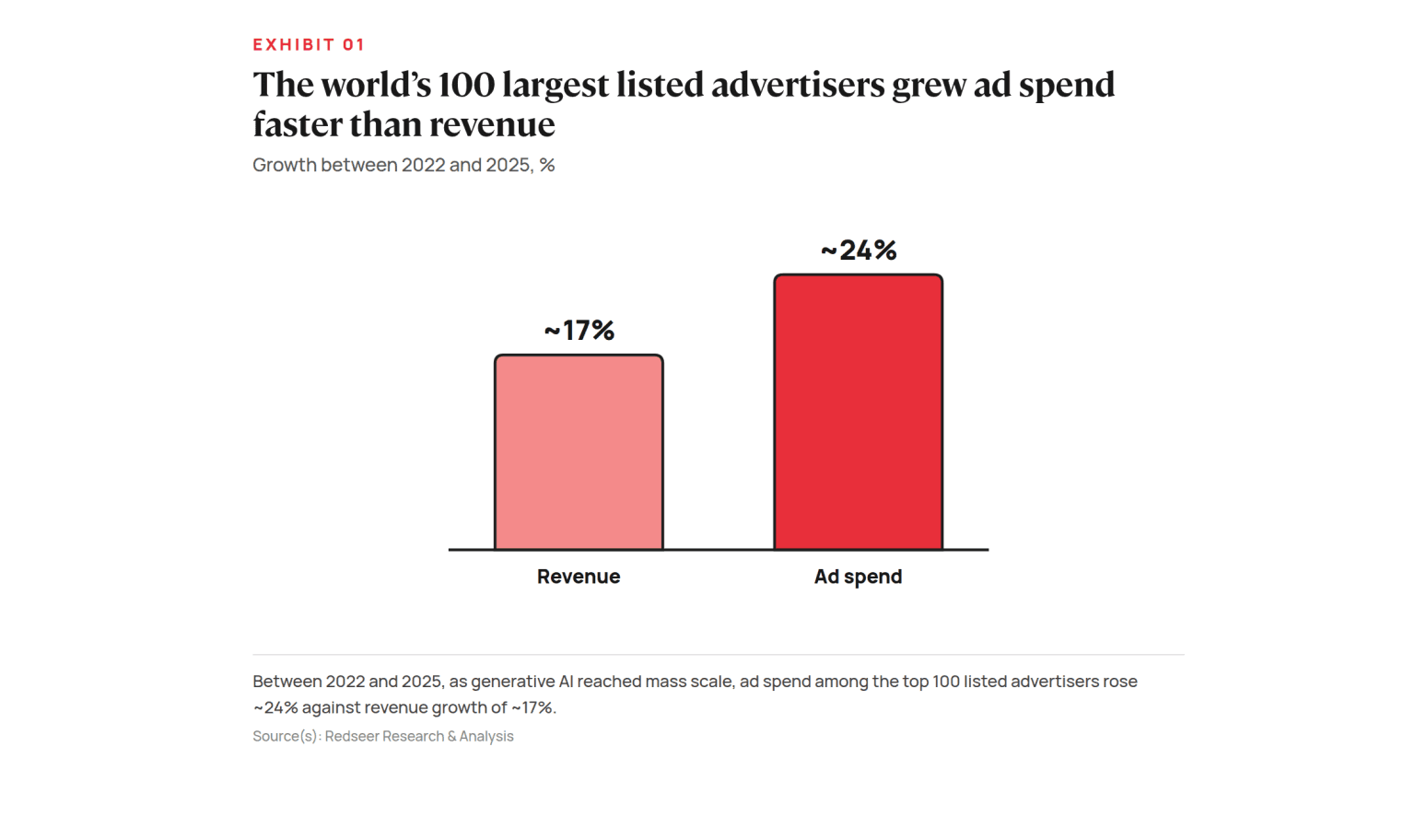
Boardrooms have long treated advertising as one of the easiest costs to cut, largely because its return has been hard to prove. Yet the world’s 100 largest listed advertisers are doing something else: between 2022 and 2025, as generative AI reached mass scale, their ad spend rose about 24% against revenue growth of about 17%.
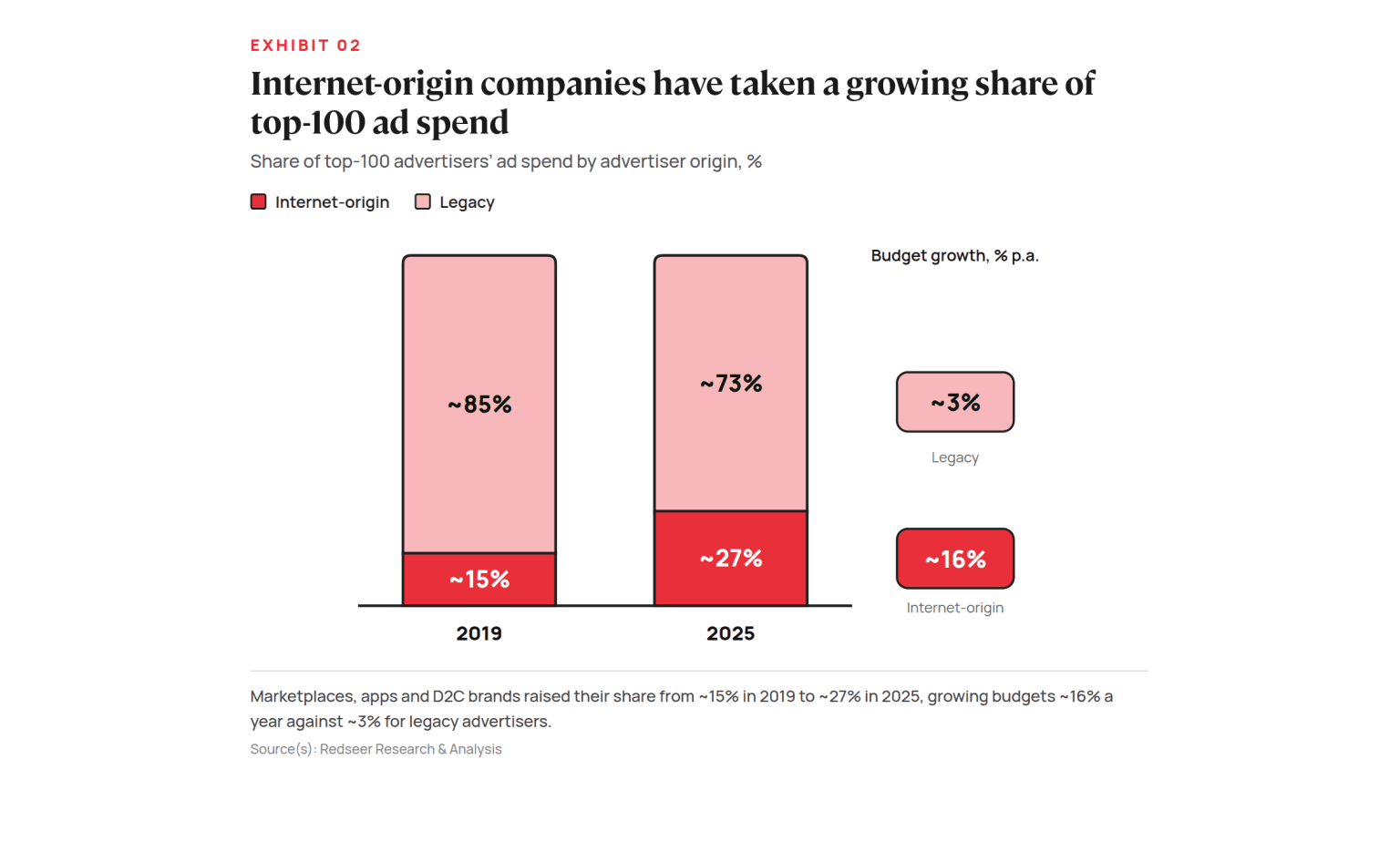
Internet-origin companies are leading the increase in ad spend. In 2019, internet-origin businesses such as marketplaces, apps and D2C brands accounted for about 15% of ad spend among the top 100. By 2025, their share had reached about 27%, with budgets growing at roughly 16% a year against about 3% for legacy advertisers. The logic behind that allocation is attribution, since first-party targeting, real-time buying and creative changes daily let these companies see what each campaign returns and move budget toward what works.
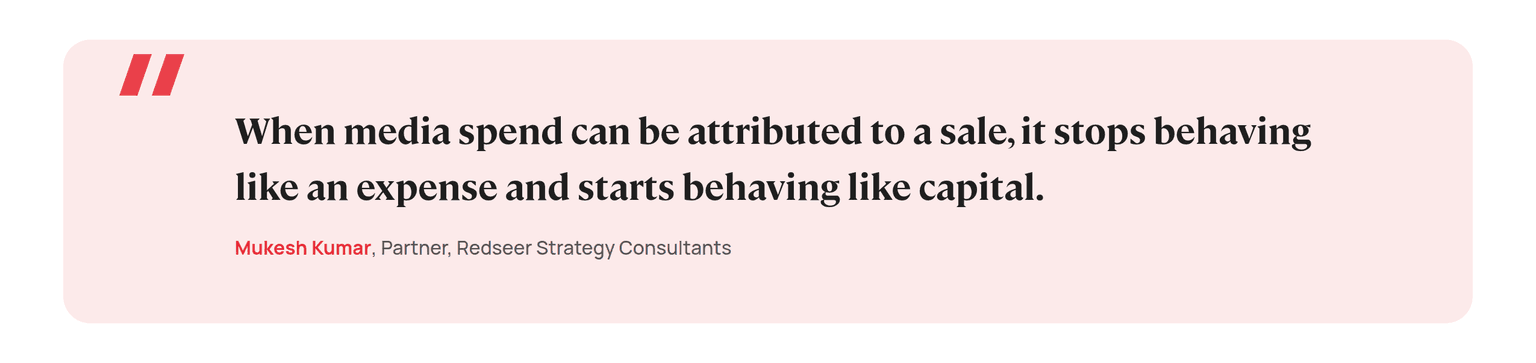
Redseer believes the dividing line is attribution, since a company that can trace spend to a sale reads advertising as an investment, while one selling through dealers, shelves or partners still treats it as a cost it has to justify.

Retail shows the shift most evidently, because retailers own the checkout and can attribute spend to a sale directly. Retailers grew their own ad budgets at more than twice the pace of revenue between 2022 and 2025, driven by the build-out of retail media and intensifying competition, especially among Chinese e-commerce platforms, and the allocation is expected to keep compounding, with US retail digital ad spend projected to grow about 11-12% a year through 2027.
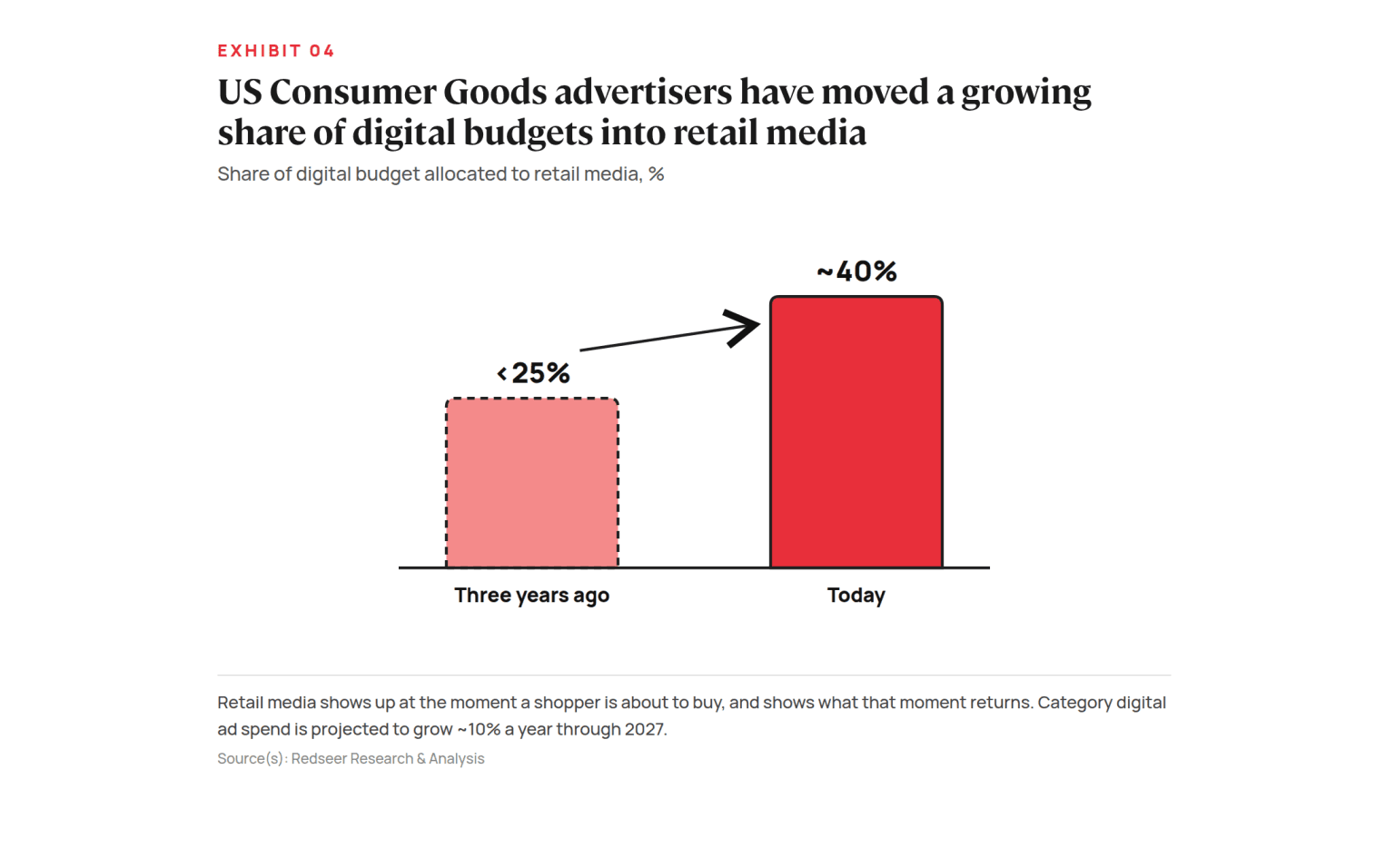
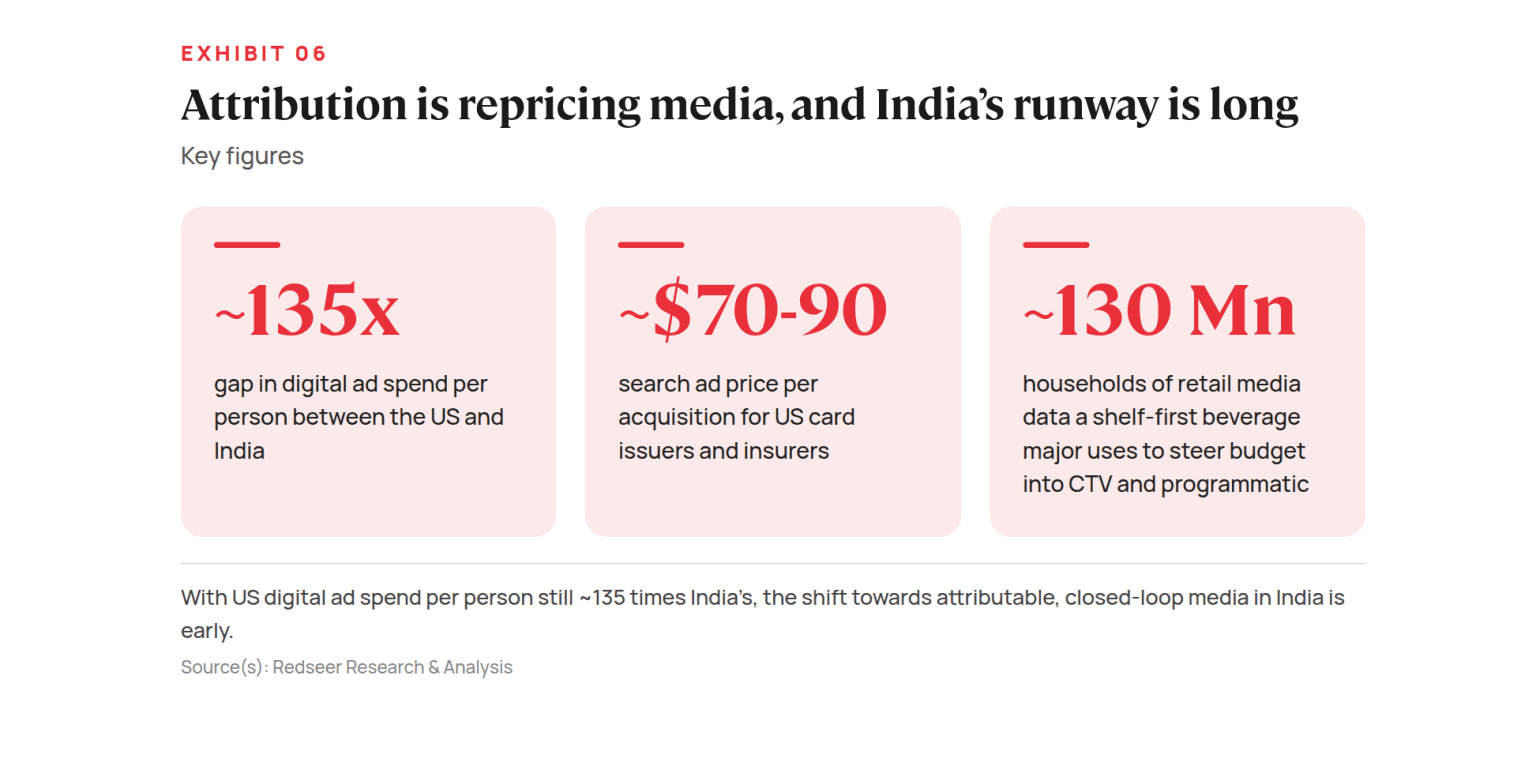
US Consumer Goods advertisers have moved about 40% of digital budgets into retail media, up from under 25% three years ago. Retail media offers what the shelf never could: show up at the moment a shopper is about to buy, and see what that moment returns. Even Coca-Cola, a shelf-first brand, now uses retail media data from about 130 Mn households to shift budget into CTV and programmatic.
Financial Services followed the same logic for a different reason. Rising interest rates made every new cardholder and depositor more profitable, so US card issuers and insurers fought harder for each one. Rates created the prize, and outcome-based buying attributed spend to each completed application, pushing search ad prices to about $70-90 per acquisition, a price that holds only because the return is visible. Ad budgets grew about 13% a year against revenue of about 9%, and sector digital ad spend is projected to grow about 9-10% a year through 2027 as privacy rules push budgets toward first-party data.
Consumer Goods, Healthcare and Pharma, and Telecom also grew ad spend faster than revenue, at about 4-5% a year against 0-2%, but with the top line barely moving, that spend reads more like defending share than deploying capital against an attributable return, and healthcare and telecom are projected to see the slowest US digital ad growth, as they still carry the most offline budget.
Not every sector moved this way. In Travel, Media and Technology (TMT), revenue outgrew ad spend: post-pandemic demand lifted travel, tech shifted toward services, neither needing more media. Technology is the one to watch; its decoupling is temporary, with US tech digital ad spend projected at about 11-12% growth a year through 2027. And the logic has limits. Brands that starved brand advertising for short-term ROI are finding that long-term equity costs more to rebuild.

India is early in this shift. D2C and consumer brands are moving budgets from broad-reach platforms like Google and Meta to closed-loop networks like Amazon Ads, Flipkart, Blinkit and Zepto, where transaction data lets them optimise for conversions. With US digital ad spend per person still about 135 times India’s, the runway is long.
Redseer believes advertising is becoming an investment decision, judged on attributable ROI. Firms that can see what their spend returns will deploy more of it with conviction. And where the transaction can be watched, those who cannot see will lose ground to those who can.
What this means for the next move
For Brands/Advertisers: Build the measurement layer before raising the budget, since the right to spend like an internet company is earned by seeing returns like one.
For Publishing Platforms: Treat first-party data and attribution as strategic assets. They determine how effectively the combined business can spend on media after an acquisition.
For Investors: Read rising ad intensity alongside attribution, since the same number can signal disciplined allocation in one company and leakage in another.
Written by


Senior Consultant

Advertising Unlocks Scale for the Next Generation of Consumer Platforms

Advertising Is the Oil Powering The Digital Economy

Artificial Intelligence: The Next Growth Catalyst in Advertising

India’s Internet Economy: Built for Scale, Ready for Capital

Digital Disruption in Home Category: Whitespace to Market Leadership

Micro-Drama’s J-Curve Moment: What Marketers, Platforms, and Investors Need to Know

Breaking barriers: Rise of challenger platforms in digital advertising landscape

Digital Advertising in India and disruptive trends

AI is the Next Growth Catalyst in Advertising

When AI Does the Shopping, It Recommends the Brands It Can Read

India’s leading e-commerce players’ growth execution strengthened by strategy consulting

Microdrama’s ₹5,000 Cr Advertisement Opportunity
Advertising Unlocks Scale for the Next Generation of Consumer Platforms
Advertising Is the Oil Powering The Digital Economy
Artificial Intelligence: The Next Growth Catalyst in Advertising
India’s Internet Economy: Built for Scale, Ready for Capital
Digital Disruption in Home Category: Whitespace to Market Leadership
Micro-Drama’s J-Curve Moment: What Marketers, Platforms, and Investors Need to Know