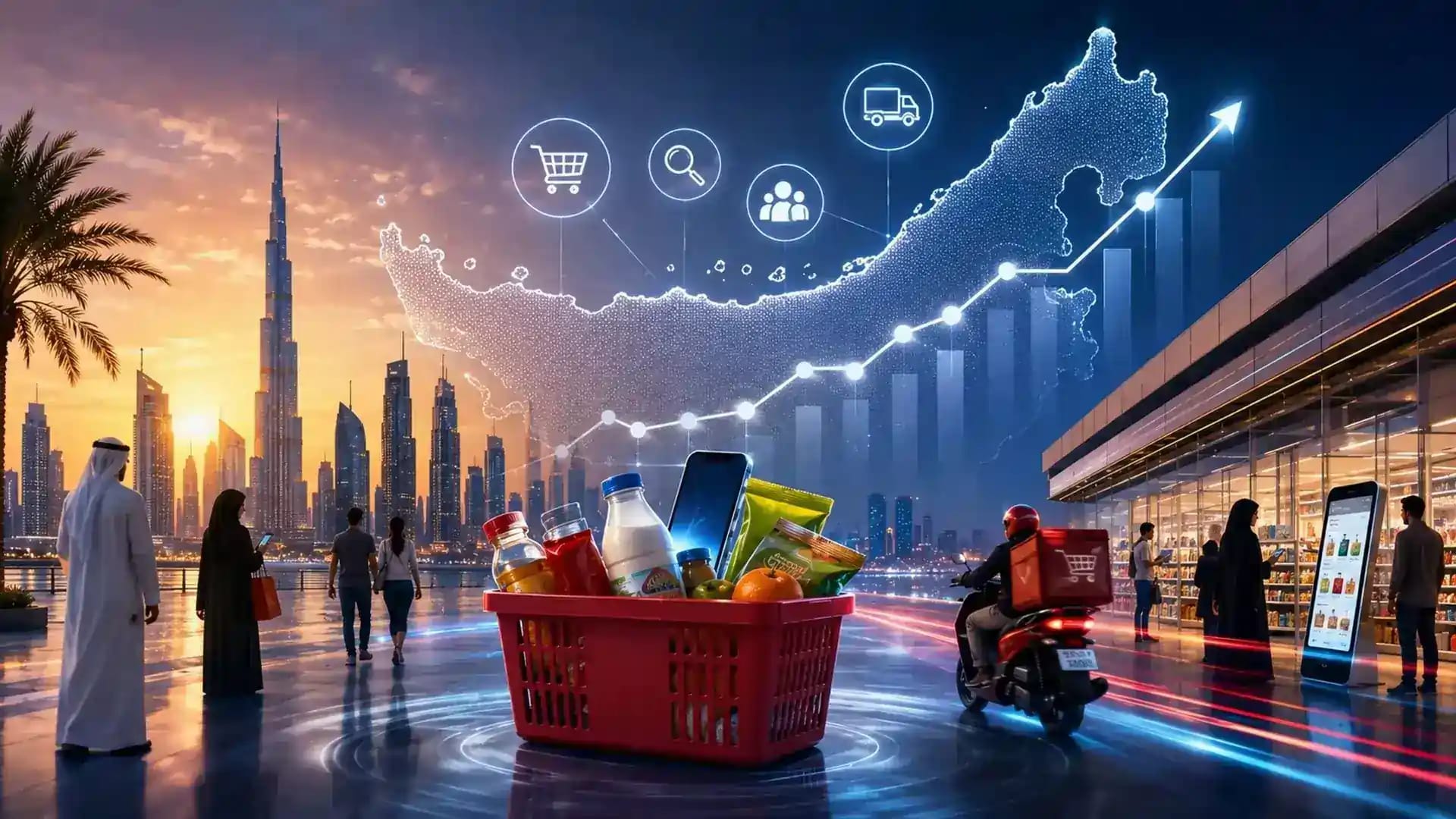
UAE Consumer Economy in Transition: Recovery, Channel Shifts, and the Changing Retail Playbook
The UAE consumer economy is entering a new phase. Recent data points to a sharp population correction, evolving retail dynamics, and shifting consumption patterns across categories. While overall demand remains resilient, the way it is distributed across sectors, channels, and consumer groups is changing.
For businesses operating in the UAE consumer economy, understanding these shifts is becoming essential. This is an area where strategy consulting in the UAE and global strategy consulting firms are increasingly supporting decision-making across sectors.
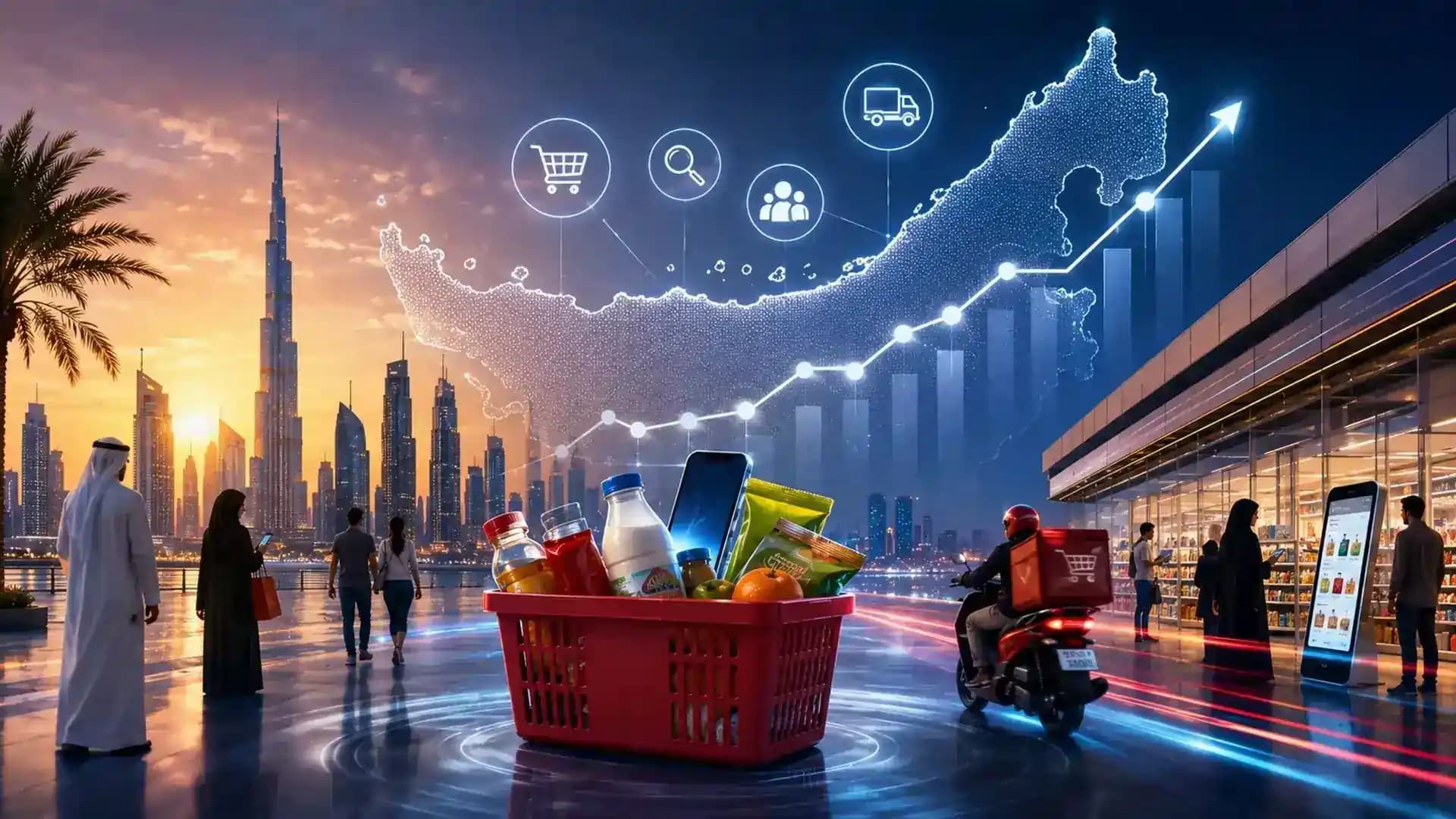
Population Recovery Is Uneven, and So Is Demand
In March 2026, the UAE saw a sudden ~12% drop in its expatriate population. While recovery is expected over the next 24 months, it is not unfolding in a single wave. Instead, recovery is progressing through multiple stages:
- Delayed returns from short-term visitors
- Mobility linked to school and housing cycles
- Job-driven relocation decisions
- Long-term confidence rebuilding
Each of these stages moves on different triggers. This matters because population recovery does not translate directly into spending recovery. Different parts of the UAE retail market are responding at different speeds.
Spending Recovery Varies Across Sectors
Early trends show a clear divergence across categories:
- Essential retail, including grocery and quick retail, is recovering faster as households stabilise
- E-commerce is following, supported by sustained digital adoption
- Restaurants and delivery are improving as social routines return
- Luxury and tourism are recovering more gradually, tied to discretionary confidence and visitor mix
This uneven recovery highlights a key shift in the UAE retail trends in the 2026 landscape. Demand is not moving in a straight line. It is redistributing across sectors based on consumer priorities and confidence levels.
Quick Commerce Is Reshaping Retail Structure
Alongside recovery dynamics, the structure of retail itself is changing. Quick commerce is becoming a central part of the UAE retail market, particularly within online grocery. By 2030, quick grocery is expected to account for a significant share of online grocery demand.
This shift changes how retail operates:
- Digital platforms are replacing physical shelves with app-based discovery
- Speed and convenience are becoming baseline expectations
- Product visibility is increasingly controlled by algorithms rather than store placement
As this happens, control within the value chain is also shifting.
Private Labels Are Expanding Beyond Traditional Retail
One of the most important changes within quick commerce in the UAE is the rise of private labels.
Across the GCC:
- Private labels already contribute over 25% of sales in large grocery chains
- Quick commerce platforms are now building their own product portfolios
Examples across the region show:
- Platforms launching owned brands across staples, snacks, and beverages
- Rapid SKU expansion within months
- Higher margins compared to third-party brands
The economics are clear:
- Better margins
- Exclusive assortment
- Reduced dependence on external brands
However, this also introduces new dynamics within the UAE retail market.
Platforms are no longer just distributors. They are becoming competitors to the brands they host.
The Balance Between Growth and Trust
While private labels offer strong economics, they also come with risks. Consumer trust in platform-owned brands is still evolving. Unlike established retail chains, quick commerce platforms do not yet have the same level of credibility associated with their own products.
There are also broader ecosystem implications:
- Aggressive promotion of private labels can affect brand relationships
- Over-prioritisation can impact customer experience and retention
- Poor product quality can affect overall platform perception
Some platforms are already adjusting their approach by:
- Allowing private labels to compete organically
- Focusing on categories where direct competition is limited
- Building new consumption occasions rather than replacing existing ones
These decisions are shaping how the quick commerce in the UAE ecosystem evolves.
External Shocks Are Accelerating Structural Changes
At the same time, broader geopolitical and economic factors are influencing the UAE consumer economy. Different types of shocks affect consumption differently:
- Geopolitical events impact travel, sentiment, and discretionary spending
- Economic disruptions influence income visibility and job stability
- Behavioural shocks shift channel usage and daily routines
In the current environment, the impact is not uniform. Demand is splitting across:
- Resident-led vs tourist-led consumption
- essential vs discretionary categories
- online vs offline channels
This reinforces the idea that the UAE retail market is becoming more segmented.
What This Means for Businesses
For companies operating in the UAE, these shifts require a more nuanced approach.
Some key implications include:
- Recovery assumptions need to be sector-specific
Not all categories will follow the same timeline - Channel strategy needs to adapt to digital control points
Platform dynamics are changing how products are discovered and sold - Private label competition needs to be factored into planning
Platforms are increasingly competing with brands - Consumer demand needs to be segmented more clearly
Behaviour differs across cohorts, channels, and use cases
These are areas where retail strategy consulting and consumer strategy consulting are increasingly being used to guide decisions.
The Role of Strategy Consulting in a Changing Market
As the UAE consumer economy evolves, the complexity of decision-making increases.
Businesses need to:
- track multiple demand signals simultaneously
- understand how different sectors recover
- align channel, product, and pricing strategies
Strategy consulting firms are playing a key role in helping companies interpret these shifts and build more resilient growth strategies.
Conclusion
The UAE has strong fundamentals and a track record of recovery. However, the current phase is not defined by a single trajectory. It is shaped by:
- staggered population recovery
- uneven spending patterns
- structural shifts in retail channels
- and evolving platform dynamics
For businesses, success will depend on understanding where their category fits within this broader transition and how quickly they can adapt.
To explore these shifts in more detail, refer to Redseer’s latest insights on the UAE consumer economy, quick commerce, and retail transformation.
Redseer works with businesses across the region to translate market changes into actionable strategies through strategy consulting in the UAE, including retail strategy consulting and consumer strategy consulting.