
Beauty & Personal Care: Why Brand Strength No Longer Wins the Q-Com Shelf


“What we see in the Index is that heritage buys a brand its place on the Q-Com shelf, and nothing more. The brands climbing the rankings are the ones that keep the product in stock at the moment of intent, and that use the shelf they already own to test a new category in weeks rather than years.”– Nikhil Dalal, Associate Partner, Redseer Strategy Consultants
Take two legacy beauty and personal care brands, equally well known and trusted by consumers for decades. Put them on the same quick commerce shelf and they will often sit far apart in rank. That shelf now carries around $1 billion in annualised sales and grew about 90% over JFM 2025, so the distance between them is expensive, and the reason lies beyond the strength of the brand itself.
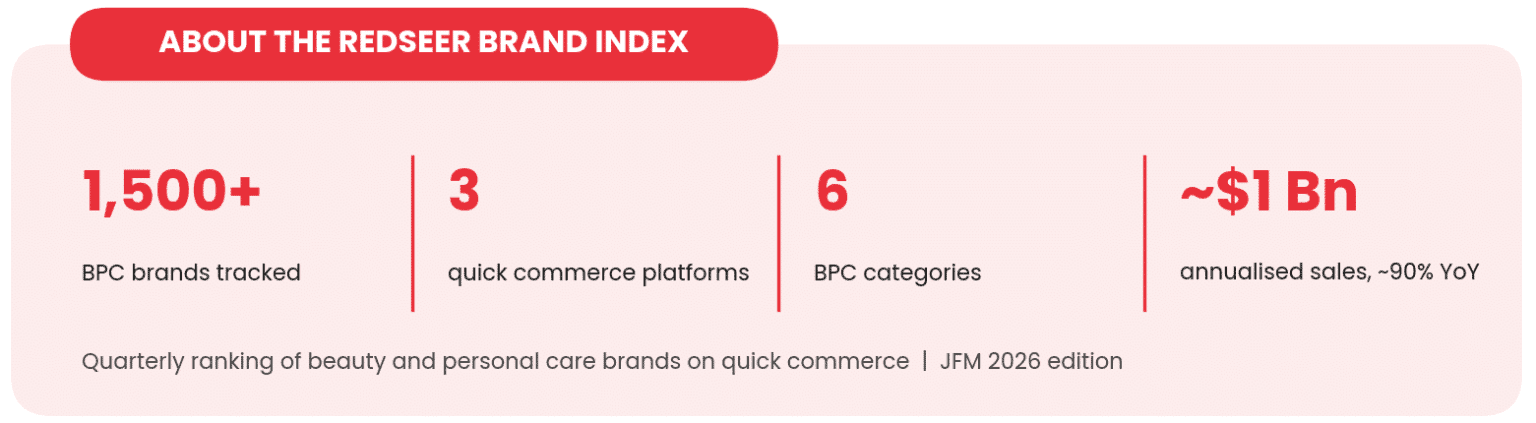
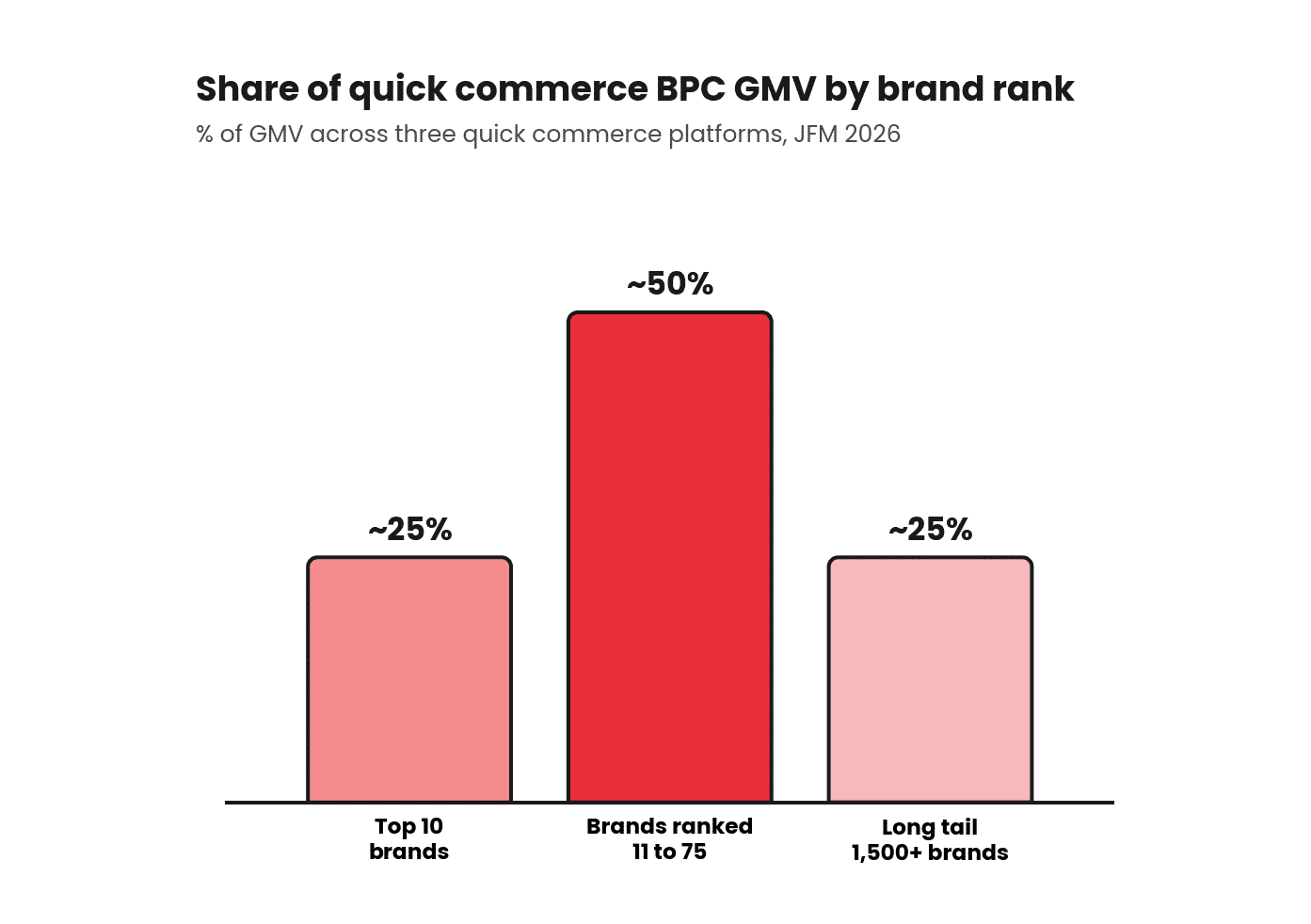
Most leadership teams read quick commerce rank as a verdict on brand strength. Our Redseer Brand Index for January to March 2026, analysing beauty and personal care brands across three quick commerce platforms, points somewhere else. The top 10 brands hold a quarter of the category, the long tail of more than 1,500 brands holds another quarter, and half sits with brands ranked 11 to 75. That middle band is where brands of comparable strength fight for position, and brand strength is not what separates them. Two further levers do, one of which is closing fast and one of which compounds.
1. Brand strength has become the entry ticket

The first lever is everything built outside the platform: product efficacy, consumer NPS and repeat rate, content. It has taken years, sometimes decades, to build, and every legacy brand at scale already has some version of it. That is precisely why it cannot separate two brands that both qualify as strong.
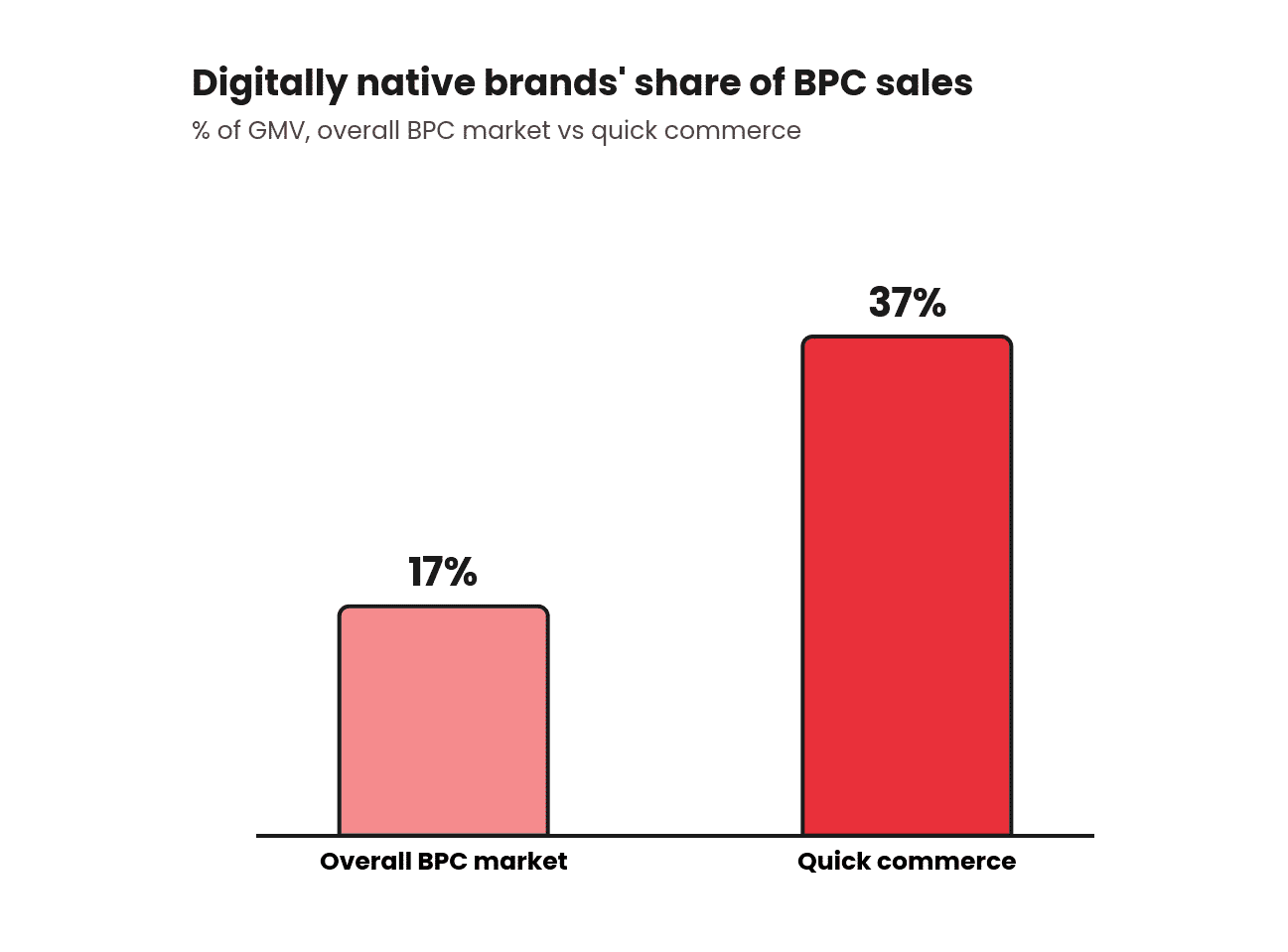
Digitally native brands show the sequence most clearly. They hold just 17% of the overall BPC (beauty and personal care) market but 37% of quick commerce, and they got there by building trust through direct and social channels first, then using quick commerce to convert it.
2. Execution separates brands today and will stop doing so soon
The second lever is operational: fill rate, in-stock percentage, time to fulfilment. Put plainly, is the product there, in the right pack size, at the moment a shopper opens the app? Pack size matters more than most portfolios assume, because small and mid-sized packs dominate quick commerce in a way they do not across wider e-commerce.
Brands currently sit at very different levels of execution maturity, and it shows in rank. The advantage is temporary. Execution rests on processes and partners that competitors can replicate, and as every brand with scale builds this capability over the coming quarters, it will become hygiene, as brand strength already has. Investment here buys time and does not buy a lasting position.

3. Innovation speed is the only lever that compounds
The third lever has a simple rhythm: spot a category extension early, test it on the existing quick commerce shelf at real volume within weeks, and commit once the signal proves out.
Two cases from the Index make it concrete. A legacy bath, body and hair care brand identified hair masks as an adjacency that extended its equity, validated demand on its own shelf, and now ranks second in the category on quick commerce with around 20% share. A legacy makeup brand watched digitally native players turn sunscreen into an everyday habit, used its reach to validate a lighter formulation, and now draws 15 to 20% of its GMV from sunscreen.
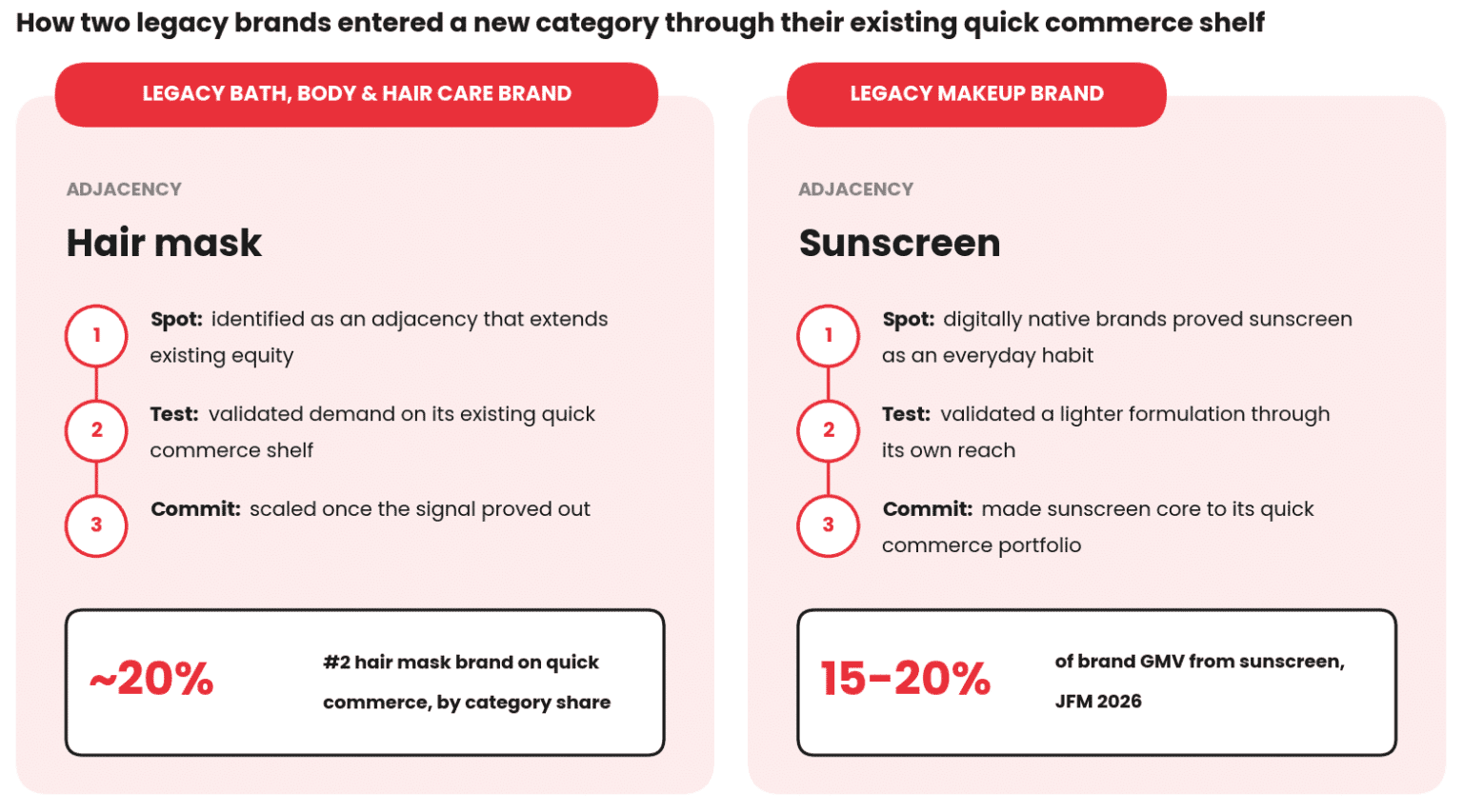
Neither brand invented its category. Both used an existing shelf as a live testbed, at a fraction of the risk a new entrant would carry, which makes quick commerce a research and development environment as much as a sales channel. And because this lever depends on organisational habit, how fast a company can spot a shift, test it cheaply and commit, competitors cannot buy their way to parity as they can with fulfilment.

Redseer believes quick commerce has quietly reordered what brand leadership means in beauty and personal care. Brand strength now only buys entry to the shelf; execution decides rank for the next few quarters, until it too becomes hygiene. The durable advantage belongs to brands that treat the shelf as a live R&D environment – spotting a category shift, testing it at real volume in weeks, and committing before rivals react. Legacy brands hold the trust and reach to win this game, but only if they build the internal speed to match; the ones that keep testing at the pace of their planning cycle will watch challengers of equal brand strength pull away, quarter after quarter, on a shelf that only grows.
Redseer Advisory: diagnose the gap before funding it
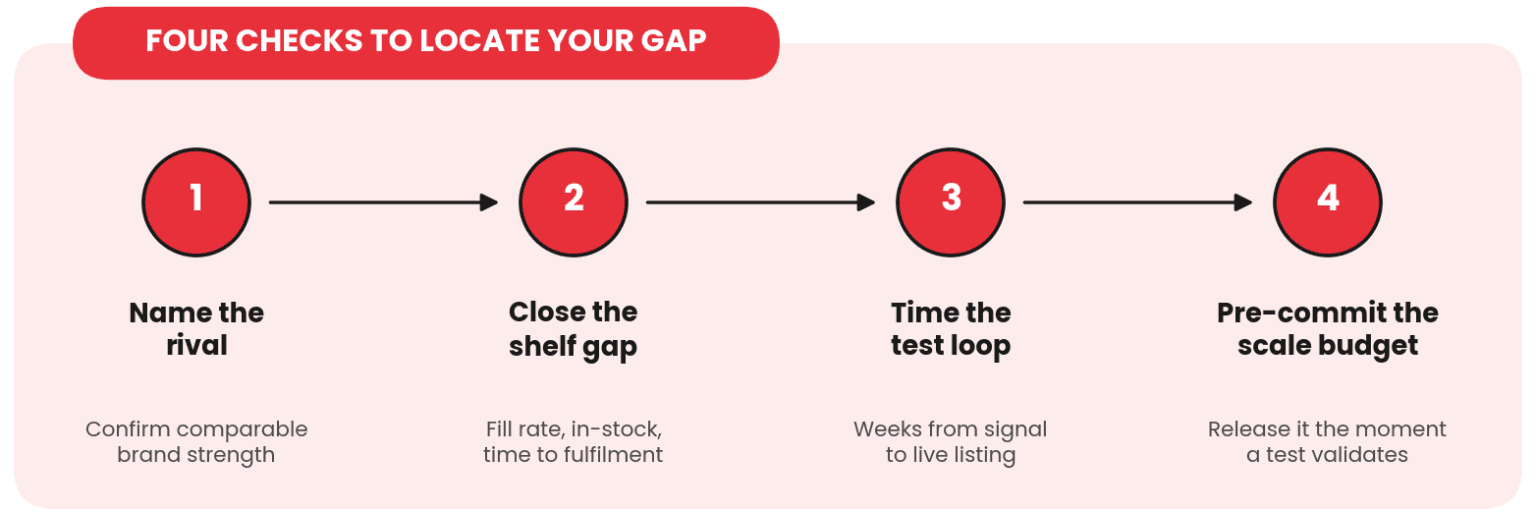
When a competitor of comparable brand strength outranks you on quick commerce, the gap sits at execution or innovation, and each calls for a different investment. Four checks locate it.
- Name the rival – Identify the brand directly above you in your core category and confirm that its brand strength is comparable to yours. If it is not, the gap is at the first lever, and this test does not apply.
- Close the shelf gap – Compare your fill rate, in-stock percentage and time to fulfilment with that rival’s, platform by platform and pack size by pack size. Where you trail, the fix is operational and should be scoped in quarters, with the right partners and processes.
- Time the test loop – Measure how many weeks it takes you to move from spotting an adjacency to a live listing on the shelf you already have. If the answer is set by the annual planning cycle, the loop is too slow.
- Pre-commit the scale budget – Set aside resources that can be released the moment a test validates, with the criteria agreed in advance. Speed of testing is wasted if commitment waits for the next plan.
A brand that fails the second check has a problem it can fix this year. A brand that fails the third and fourth has a problem of organisational design, and that one widens with every quarter the shelf keeps growing.
Get a deeper perspective with Redseer’s BPC Brand Index, and you can discuss specific challenges that you would like to discuss with our experts.
Written by




Digital Disruption in Home Category: Whitespace to Market Leadership

Think Quick Commerce: Unlocking the $90Bn Opportunity

Winning the Quick-Commerce Decade: Playbook for Brand Success

New-Age vs Legacy: The Future of Fashion in India and the Battle for Consumer Loyalty

Redseer advised a global beauty company on its acquisition of a multi-brand D2C Platform

We enabled a leading e-commerce player with decision-grade intelligence on India’s online grocery market

How we helped a leading investment firm evaluate a quick commerce deal

Redseer enabled a leading Indian fashion marketplace to harden seller experience as a strategic moat

BigBasket’s business growth enabled by Redseer Consulting

India’s leading e-commerce players’ growth execution strengthened by strategy consulting

Due Diligence That Protected Millions: Redseer Guides Consumer Giant with Right M&A Investment

Two Engines, One Basket: How Quick & Value Commerce are Rewriting India’s Retail Story
Digital Disruption in Home Category: Whitespace to Market Leadership
Think Quick Commerce: Unlocking the $90Bn Opportunity
Winning the Quick-Commerce Decade: Playbook for Brand Success
New-Age vs Legacy: The Future of Fashion in India and the Battle for Consumer Loyalty
Redseer advised a global beauty company on its acquisition of a multi-brand D2C Platform
We enabled a leading e-commerce player with decision-grade intelligence on India’s online grocery market