The QC Playbook: How India’s Fastest Growing Channel is Rewriting Packaged F&B Strategy


India is witnessing one of the biggest shifts in food and beverage consumption.
For example, more than 20% of batter sales now come from quick commerce channels that barely existed at scale three years ago. The short shelf life of the batter category, a $400 million market, has always been dependent on frequent top-ups. But what has changed is the timing and reasons for those top-ups. If there is no dosa batter at 7:15 AM, it’s no longer a problem to solve in advance. It is a need met in real time. The weekly stock-up is slowing down. It’s replaced with a stream of small, high-intent purchases. A chocolate at 9 PM. A protein shake after a workout. Coconut water just before going into the heat.
Purchases that were carefully planned once are now caused by mood, context, or occasion. The consumer sends signals, and the category responds.
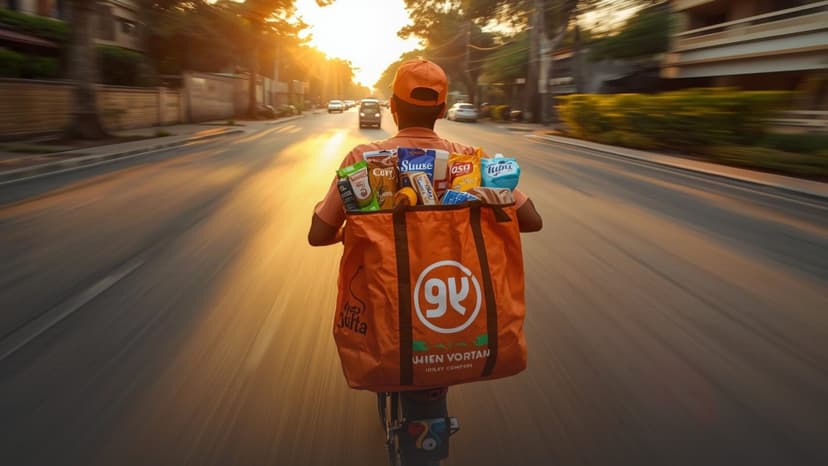
Quick commerce is driving the change
Today, quick commerce contributes to 4% of sales for food FMCG. By 2030, this share is expected to grow to 18%. That’s a 4.5x expansion, growing at almost 45 to 50% per year and nine times faster than all other channels combined. In terms of value, the market is projected to grow from $4 billion today to $27–29 billion by the end of the decade.
This momentum is being driven by consumption of high-frequency staples, fresh produce and dairy-anchored products. These common essentials create habits and bring consumers back to platforms on a weekly basis. And once users get into the habit, adjacent categories also see significant growth. The top tier already has nearly 10% of the total share. Behavioural adoption is indicated by the penetration level in a short period.
Scale is also quickly catching up.
The quick commerce ecosystem in India is expected to reach over 50 million monthly transacting consumers across over 250 cities by 2026. The top eight metropolises are early indicators of behaviour changes and contribute 70-75% of gross merchandise value (GMV). These cities emphasise the shift in consumption that occurs when access is immediate: smaller containers, more purchases, and a more direct relationship to specific momentary events.
But this shift is not taking place in a vacuum.
The buyers behind the purchases are forming it
The common denominator in these people is not similarity but simultaneity. Now they all use the same instant access system. But they aren’t buying for the same reasons. That’s why demand in quick commerce doesn’t self-organise perfectly by category. It is broken up across contexts, cohorts, and instances.
Take 2024, for example, where Gen Z is already consuming an average of about 74 grams of protein per person per day. The growth rate is more than double the world average. Their acquisitions are also focused and simple. Protein drinks are used as a refreshment between meals. Each decision is linked to a particular result. For brands, the result is products designed for a purpose, not just for portability.
Millennials do things differently. They eat more complicatedly. They want to know what’s in their food and see it clearly labelled, but they refuse to give up pleasure. On the same day, the user switches from a low-sugar drink in the afternoon to a confection in the evening. This means that portfolios must have health and indulgence in them and still be coherent with the brand.
The expansion can also be seen outside of metropolitan areas. As quick commerce expands into smaller cities, it creates a new set of consumers with different value equations. For instance, 30% of mothers in non-metros are willing to pay a premium of up to 15% on healthier sugar substitutes like jaggery, honey and khaand. This is not the trend the driver supports. Convenience is a big factor, but value-led upgrading, trust, familiarity and perceived health benefits are just as important.
The channel is associated with three different growth vectors
Each vector points to a different reason why people are buying things, but they all point to the same change: rapid commerce is changing when people buy stuff, why they buy stuff, and what they buy stuff for.
In the fast commerce world, convenience beats speed. It links intention with action and converts intended decisions into realised outcomes, thus increasing the consumption of the category.
For example, the ready-to-cook (RTC) meal category has grown from $200 million in 2024 to $375 million. The trend was underlined by an 88% increase in consumers’ approach to meal planning year-over-year.
There is a reason for this increase. In the old days, families used to prepare their meals ahead of time and buy enough food to last a few days. The paradigm was vision and coordination. But there was a rapid exchange of flexibility.
Now a consumer can choose what to cook just minutes before getting to the kitchen. The choice is adapted to the moment, to the mood and to the energy. If the meeting extends, quick meal solutions that can be requested on-demand become relevant. If the plans are different, the basket is different. The shift is even more striking in urban nuclear households where smaller families, tighter schedules and a preference for fresh consumption are increasingly influencing purchase decisions.

If convenience is the ‘when’ of people’s purchases, the next vector is how quick commerce is changing the ‘why’.
Millennials are conscious buyers who consume with mindfulness. Nearly two in five actively verify sugar content, and two in three are willing to pay a 15% premium for cleaner RTC products.
Average consumption of non-alcoholic, ready-to-drink beverages in India, however, tells a different story. The consumption is only 15-20 litres per person per year compared to the UK’s 60-70 litres and the USA’s 100 litres. This gap is both a constraint and an opportunity that can be conquered with the help of quick commerce.
Coconut water is a prime example of such a phenomenon.
The total market size of coconut water is around $900 million, and 15-20% of that market flows in packages. In this segment, quick commerce already accounts for more than 20% of volume. The category has also seen rapid brand expansion, with around 60-80 packaged coconut water players operating in India. What was considered an “occasionally better choice” is rapidly becoming a routine.

Indulgence shows how quick commerce has made people want things right now.
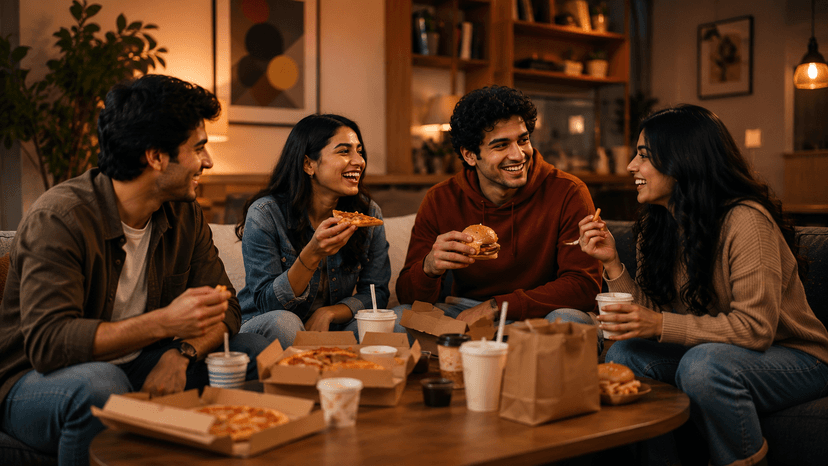
For example, ordering chocolates online through quick commerce platforms has grown from 55% in 2024 to almost 70% in 2025. But the bigger change is timing when the chocolates are ordered.
Around 20% of online chocolate GMV is consumed late at night. Average selling prices over this period have been around 1.3 times the morning level. This proves that premium products are effective at riding momentum in high-intent emotional windows.
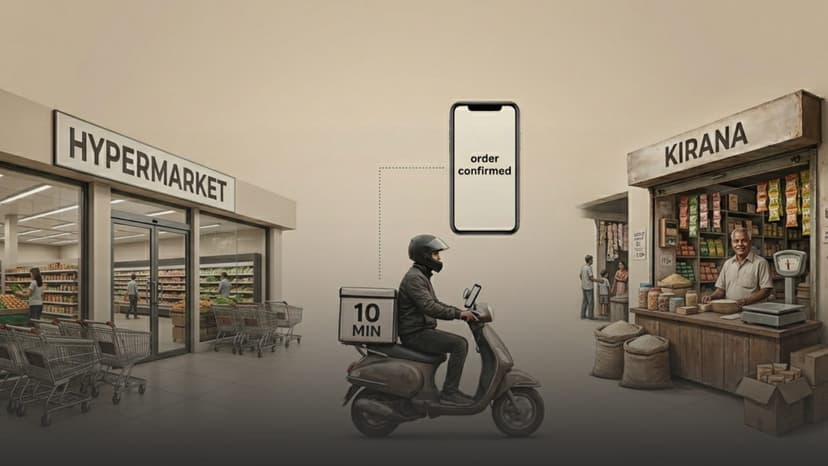
But quick commerce for many businesses is just a faster version of their kirana play
The question is not how brands can enter quick commerce, but how they can compete in it.
Most are still using it to accelerate current SKUs. They follow the traditional approach of same packs, same prices, and same assumptions that get delivered in minutes and not in hours, stifling their growth and making their brand invisible.
But the opportunity sits deeper, and competing here requires a different playbook.
Build for moments and not classes: Brands need to blend in with the occasions that are increasingly impacting how consumers consume, such as late-night indulgence, post-workout recovery, pre-commute refresh, or even mid-day pick-me-ups. The consumer demand today is much more fluid, much more context-driven, than the rigid aisle classifications imply. Brands that continue to build portfolios only on traditional “aisle logic” risk missing how people actually discover, buy, and consume products in everyday life.
Build for frequency, not volume: Small or mini packets of food and beverages are winning because they match how people consume today. They reduce friction and increase the speed of trial and repeat. Compound growth in frequency and volume. The price range of Rs. 100-200 has consistently demonstrated its strength. The price is low enough to feel cheap, but high enough to maintain margins.
Make products trigger: The rise of quick commerce is redefining consumption with impulses such as self-reward, sharing and gifting. A growing number of consumers are not just buying products to solve a functional problem but to address an immediate emotional or social trigger. Brands that don’t design for these spontaneous, moment-led behavioural opportunities miss out on entire consumption occasions they didn’t even know existed.
Get the premium: High-intent moments are more price-sensitive. But only for brands that are correctly displayed. The others trade down without blinking. These are not stand-alone strategies. Together they redefine demand creation, capture & compounding. For brands, it’s not about just speeding the purchase. This is about shifting the source of advantage: from distribution-led scale to behaviour-led precision.
Brands that use this playbook start to build frequency, data and recall around those specific moments. Every interaction increases the likelihood of the next. With time, they not only capture demand, but they also begin to own it.
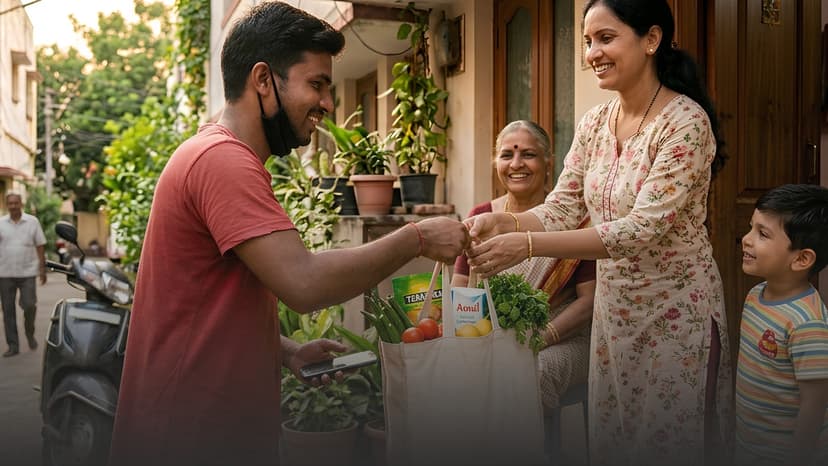
Today there are some 150,000 gated communities in India. Within the next 5 years the figure will reach 180,000, housing 32 million families. Residents here make $14,000-$15,000 per person. That’s five to seven times the national average, making these communities high-impact clusters, mixing spending power with readiness. And 70% already use quick commerce to fulfil their daily needs.
One society can produce dependable orders 24/7: functional in the morning, convenient in the day, and indulgent late at night. Repeat rates often exceed city averages for categories such as RTC meals and healthy beverages.
But it’s not just demand that makes these clusters valuable to brands. It’s their ability to test and learn in the live environment.
Brands in a defined geography can:
- Test pack sizes and formats against real consumption
- Test pricing over dayparts
- Pilot gifting and impulse purchases
- Read repeat cycles fast and launch new SKUs
When it comes to winning, it is not enough to simply remain present for brands. Within these clusters, it is necessary to experiment in order to create, improve, and scale what is successful.
Written by



Think Quick Commerce: Unlocking the $90Bn Opportunity
Reinventing Packaged F&B with Quick Commerce

Value Grocery Commerce: The Bharat Unlock
State of India’s Food Services Market

Why India’s Mass Grocery still leans on Kirana Stores
Value Grocery – Unlocking India’s Next 100 Mn Shoppers

Quick Commerce vs Kiranas vs Hypermarkets, who will win the Indian Grocery Market?

Two Engines, One Basket: How Quick & Value Commerce are Rewriting India’s Retail Story

BigBasket’s business growth enabled by Redseer Consulting

The Bharat Unlock: India’s Next Grocery Growth Engine Lies Beyond Quick Commerce

Beauty & Personal Care: Why Brand Strength No Longer Wins the Q-Com Shelf
Value Grocery – Unlocking India’s Next 100 Mn Shoppers
Think Quick Commerce: Unlocking the $90Bn Opportunity
Reinventing Packaged F&B with Quick Commerce
Value Grocery Commerce: The Bharat Unlock
State of India’s Food Services Market
Why India’s Mass Grocery still leans on Kirana Stores
Value Grocery – Unlocking India’s Next 100 Mn Shoppers