The Bharat Unlock: India’s Next Grocery Growth Engine Lies Beyond Quick Commerce


Executive Summary
India’s next retail opportunity is unlikely to be unlocked by delivering faster; it will be unlocked by serving differently.
While Quick Commerce continues to redefine convenience for urban consumers, a far larger opportunity is quietly emerging across Bharat. By FY30, over 150 million Bharat households are expected to account for more than $1 trillion in annual consumption, with groceries remaining their largest spending category. Yet nearly 91% of grocery purchases still flow through kiranas, highlighting how little digital commerce has penetrated this massive market.
This is not a failure of demand, but a mismatch of business models. Bharat consumers are increasingly choosing branded, packaged, and healthier products, but they also demand regional assortments, smaller pack sizes, and value-driven pricing—needs that traditional e-commerce and quick commerce models were not designed to serve. Instead, a new value grocery model is emerging, built around deep regional selection, private labels, and low-cost fulfilment, creating a scalable pathway to bring India’s next 100 million online shoppers into digital commerce.
The next growth unlock for brands and the grocery value chain
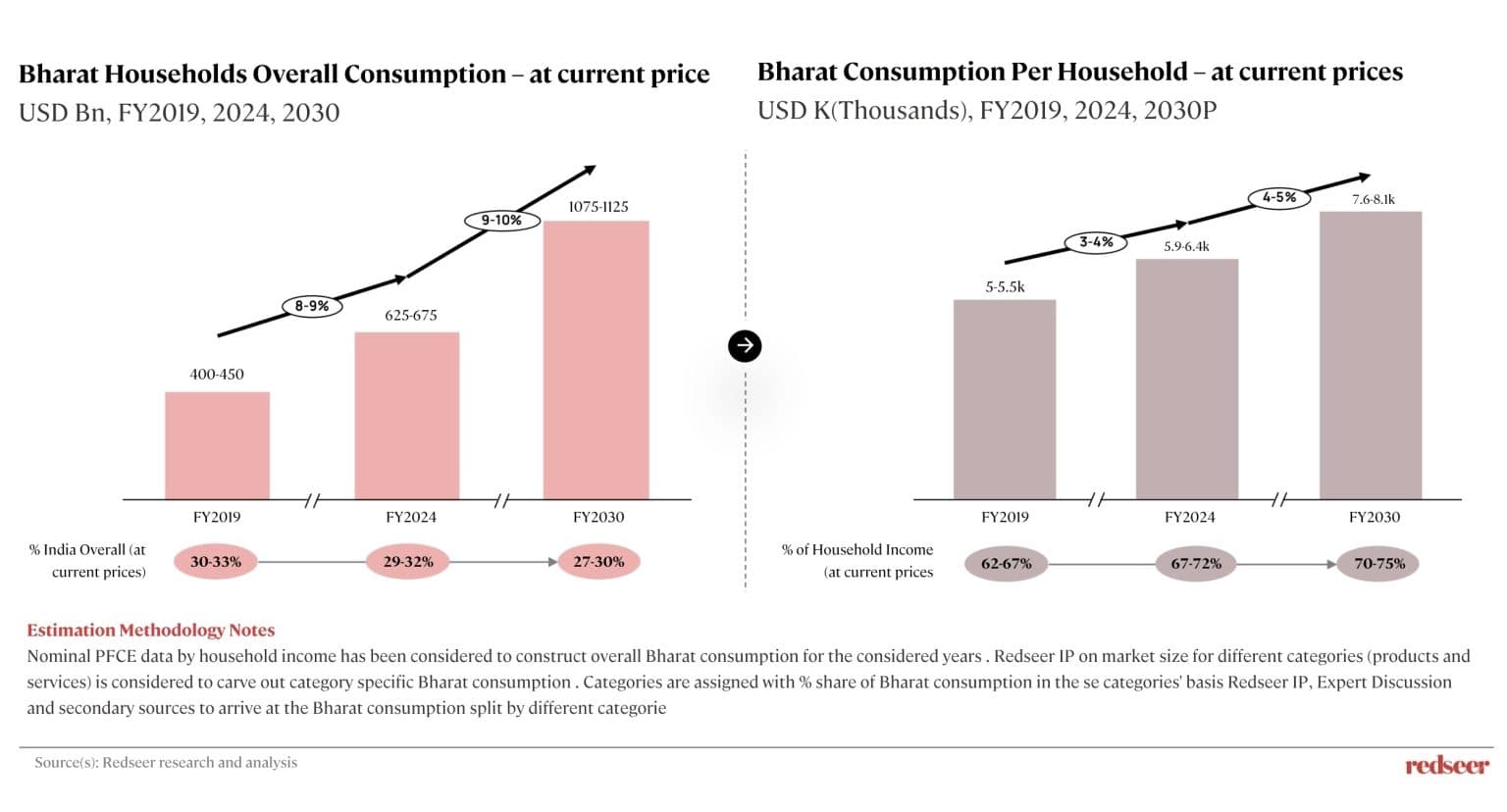
“Groceries absorb ~67-72% of a Bharat household income”
The next growth unlock for brands and the grocery value chain in India is hiding in plain sight, and most e-commerce players have not noticed it yet. By CY30, Bharat households will consume ~$1 trillion worth of goods and services every year. They are India’s lower-middle-income families, spread across Tier 2 and Tier 3 cities, towns, and semi-urban India. The ~$1 trillion is a market driven by ~150+ million households who carry a compounding spending power of ~4-5% every year.
India’s grocery market is heading to ~$992 Bn by FY30, yet ~91% of it still flows through kiranas. This highlights a clear paradox:
While the scale is undeniable, the digital opportunity in the Bharat market remains untouched.
And, if the digital opportunity does not reach the Bharat buyer, the largest wave of consumption in India’s retail history will pass through the unorganised sector entirely.
“India’s grocery market is heading to $992 Bn by FY30 – yet 91% of it still flows through kiranas.”
Kirana is still winning, but not because it is better
~91% of India’s grocery market is commanded by Kiranas, and by CY30, this share will only come down to ~86%. They own these figures because they show up for the Bharat buyer – and not because of technology, selection depth, or an efficient supply chain.
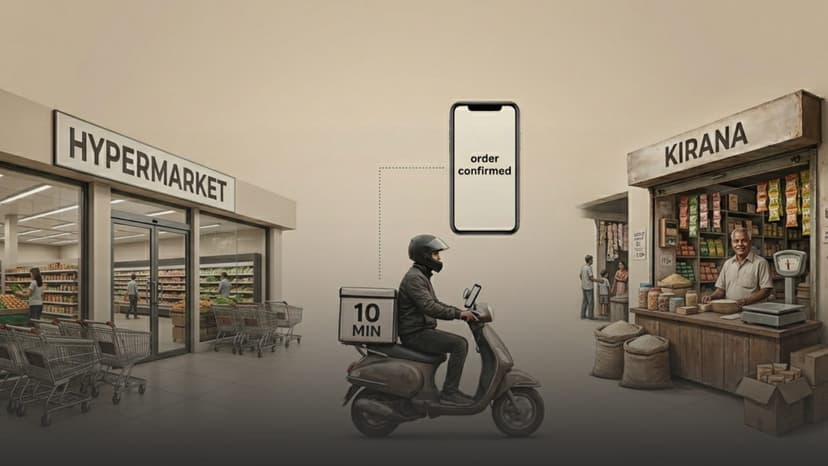
While online retail in India has grown to ~21% year-on-year in FY26, the split in India’s grocery market lands at two different models (and two different Indias). Quick commerce serves the metro market with a 10-minute delivery and dark stores around the cities. This is India 1, where the upper-middle-income families live.
India 2, rather better known as ‘Bharat’, works on a different consumer model entirely. With no digital player to clock into this opportunity (because they are not built for this type of buyer), kiranas still remain the default grocery purchase hub. This is a large gap.
The ‘Bharat’ unlock comes with different demands
The Bharat buyer is a structurally different buyer. The aspirations are converging with the metro counterpart. The Bharat buyer wants packaged products, branded products, and healthy products at a price that respects the budget they have.
Let the numbers bear this out.
Packaged edible oil penetration is at ~70%, with packaged atta and rice growing in the high teens. Branded staples are the fastest wallet-mover categories that the Bharat household is moving into quickly. And it is not a segment they are waiting to upgrade – the upgrades are happening week by week, category by category.
With health coming into focus, Bharat cemented a willingness to pay a ~10-15% premium for clean-label products. For example, protein has become a daily necessity (eight in ten households consume protein-fortified or high-protein products). Mustard oil is replacing refined oil, and branded dal is replacing the purchase of loose dal.
“I’ve been adding fish to our weekly meals, about two to three times a week. My doctor advised it for the omega-3 and magnesium, which are essential for heart health and overall wellness, so I make sure to include it in our diet.” – 40-year-old mother from Tier 2
With nuclearisation in the picture, one family with one grocery purchase is now turning into three small families with three separate grocery bills. Each of them is making active choices by comparing products, switching, and upgrading to better products. A joint family would never have thought of purchasing groceries in this way.
The demand is real, and it is growing, but the digital supply has not caught up with it.
Can quick commerce cross this bridge?
Quick commerce operates on speed. It is built for high AOV’s (average order values), a dense urban geography, and for consumers who pay a premium for speed. If any one of the three is removed, then quick commerce might not remain quick commerce.
A Bharat grocery basket is small, and it will only get smaller. Average order values across online retail have compressed from ₹1,291 in FY22 to ₹746 in FY26, as value-conscious Tier 2+ buyers come online in large numbers. Bharat geographies are not fixed – they are scattered, with consumers who do not pay for speed but pay for trust, price, and selection.
A Bharat consumer does not focus on the ‘quick’ delivery of national brands. The Bharat consumer requires a regional brand of dal, rice, sugar and so on – more so, a pack size that fits the weekly budget. A Bharat buyer would need a 1-rupee shampoo sachet, a mustard oil recommended by the doctor, not refined oil brands or bulk shampoo products that are pushed for purchase.
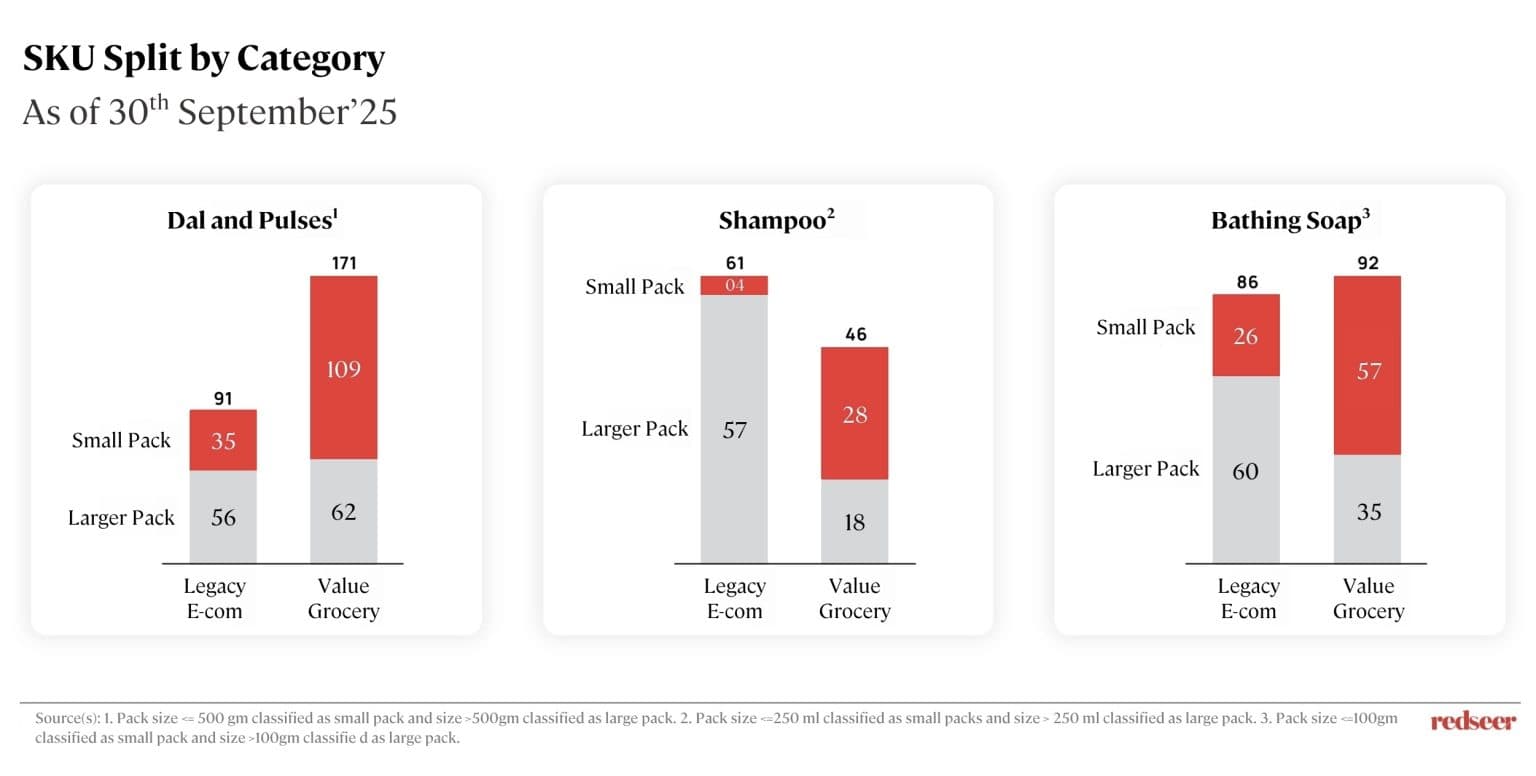
The selection gap is stark. A scaled value grocery player today carries roughly 278 regional and private-label brands, which is more than three times what legacy e-commerce platforms. Nearly ~58% of its SKUs are regional or private labels, compared to ~18–20% on legacy platforms. The Bharat buyer is not being underserved on delivery but on the basics – the brands they actually buy, and in the pack sizes they actually need.
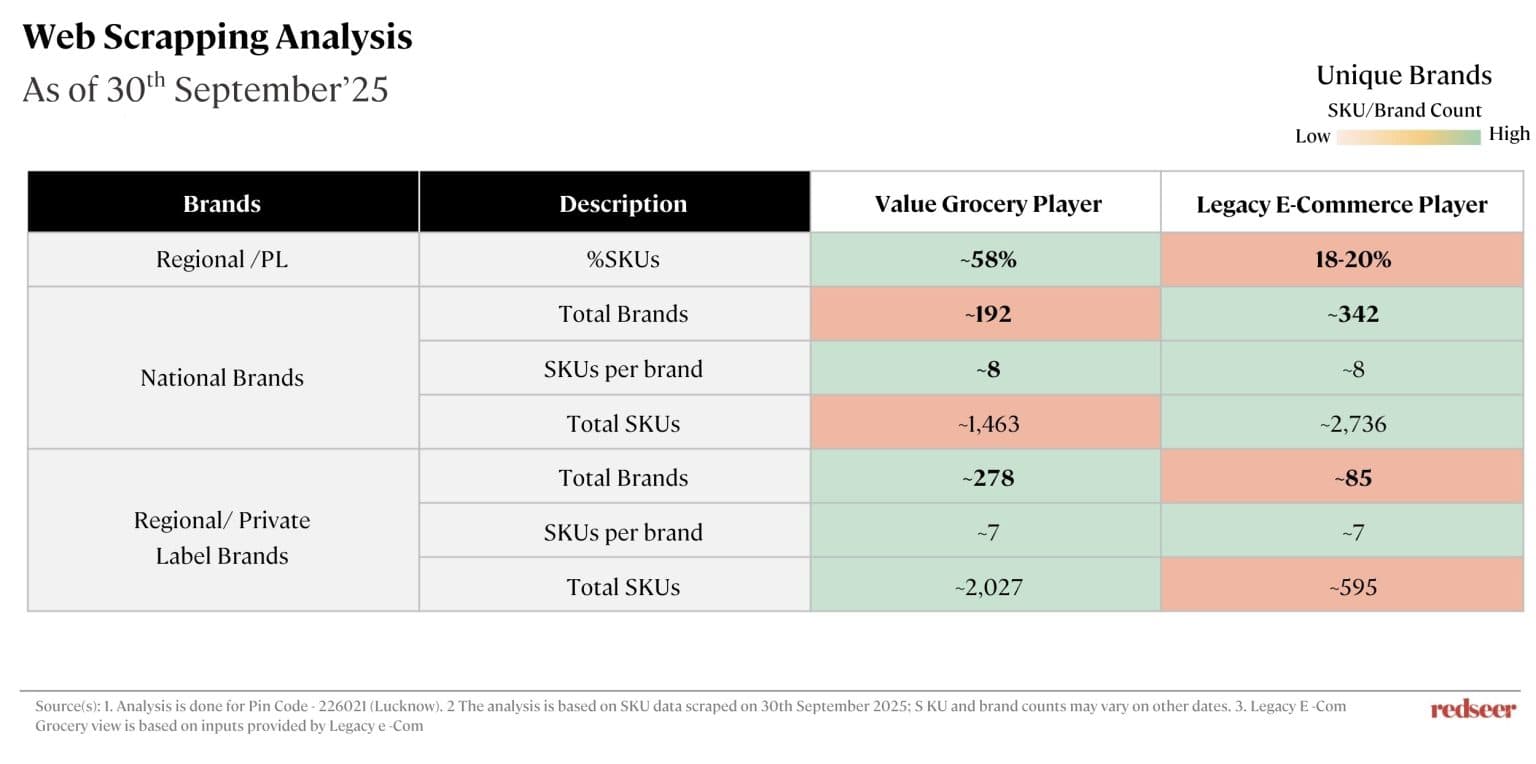
“Value grocery is winning not on speed, but on SKU selection and low-cost logistics.”
This is not a value grocery problem, but a value grocery opportunity to build into. It requires a model built specifically around selection depth, price, and a cost-to-serve that works for smaller baskets in dispersed geographies. That model looks nothing like quick commerce.
Winning this white space requires competition on price, selection, and cost-to-serve. Quick commerce players need to lead with selection, engineer low-cost last mile, build private labels, relentlessly localise and cross-sell lifestyle for margins.
The ~$1 trillion signal
The scale of the market growth for Bharat is easy to underestimate because it is scattered and not as glamorous as a ‘10-minute delivery for your daily essentials’. Selling dal in a Bharat market does not involve funding rounds either. But the signal is already visible in the transaction data. Gross online retail transactions have grown from ~277 crore in FY22 to 905 crore in FY26. The consumer base has expanded to ~335–355 million, growing at ~25% YoY. Average order values have compressed from ₹1,291 in FY22 to ₹746 in FY26, and it is not because consumers have reduced grocery purchases, but the number of baskets has changed.
What makes this structural rather than cyclical is who is driving it. Bharat households will grow from ~31% to ~40% of all Indian households by FY30 – that is, 150 million+ households whose per-household consumption will compound from roughly $5,500 today to $7,600–8,100 by 2030. And across that consumption basket, the fastest-accelerating categories are branded staples, branded FMCG and packaged food. This is the everyday grocery basket, which is upgrading itself category by category, year on year. India’s overall grocery market is on its way from $658 Bn to $992 Bn by FY30, growing at 8%+ CAGR. E-commerce today captures just 3% of that. Even the report’s projected doubling of that share to ~7% by CY30 would represent one of the greatest demand unlocks in Indian retail history.
Strategic Advisory for Brands
Winning Bharat Requires a Different Playbook. The next decade of grocery growth will not be won by extending metro strategies into Tier-2 and Tier-3 markets. Brands that succeed will redesign their portfolios, pricing and distribution around the realities of Bharat consumers.
1. Rethink assortment, not just distribution: Bharat shoppers aren’t looking for the same assortment available in metros. Regional preferences, trusted local brands and deeper SKU localisation will increasingly determine conversion and loyalty.
2. Build for affordability without compromising quality: Small packs, accessible price points and value-engineered portfolios are becoming essential growth levers as basket sizes shrink while purchase frequency rises. The winning brands will make premiumisation accessible, not expensive.
3. Treat grocery as the gateway to household loyalty: With groceries accounting for nearly 70% of Bharat household spending, brands that establish habitual purchase in staples can create long-term opportunities to cross-sell higher-margin FMCG and lifestyle categories.
4. Partner with emerging value-commerce ecosystems: The next wave of online retail growth is likely to be driven by value-first commerce models that combine regional assortment, private labels and cost-efficient fulfilment rather than speed alone. Early partnerships can provide access to consumers who remain underpenetrated by conventional digital channels.
5. Measure success by household penetration, not just GMV: As online retail enters its next phase, sustainable growth will come from expanding the consumer base across Bharat rather than extracting more spend from existing urban users. The brands that win will be those that capture new households before competing for larger baskets.
The biggest opportunity in India’s grocery market isn’t another two-minute improvement in delivery times.
Written by




Value Grocery Commerce: The Bharat Unlock

Think Quick Commerce: Unlocking the $90Bn Opportunity

India Online Retail 2026: The Fastest Year in Five, and the New Engines Behind It

Why India’s Mass Grocery still leans on Kirana Stores

State of India’s Food Services Market
Reinventing Packaged F&B with Quick Commerce
Value Grocery – Unlocking India’s Next 100 Mn Shoppers
Smart clicks to win India’s online groceries & general merchandise basket

Online grocery: What brands need to know?
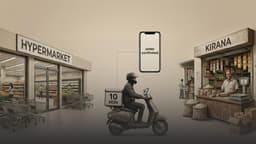
Quick Commerce vs Kiranas vs Hypermarkets, who will win the Indian Grocery Market?

Two Engines, One Basket: How Quick & Value Commerce are Rewriting India’s Retail Story
Value Grocery – Unlocking India’s Next 100 Mn Shoppers
Value Grocery Commerce: The Bharat Unlock
Think Quick Commerce: Unlocking the $90Bn Opportunity
India Online Retail 2026: The Fastest Year in Five, and the New Engines Behind It
Why India’s Mass Grocery still leans on Kirana Stores
State of India’s Food Services Market
Reinventing Packaged F&B with Quick Commerce