When AI Does the Shopping, It Recommends the Brands It Can Read


Digital advertising has always run on an assumption that a person is sitting on the other end. It believes that someone searches, scrolls, watches, compares – and then decides what to buy. And hence, every winning format, from search to banners to video, simply has reached that person better than the last.
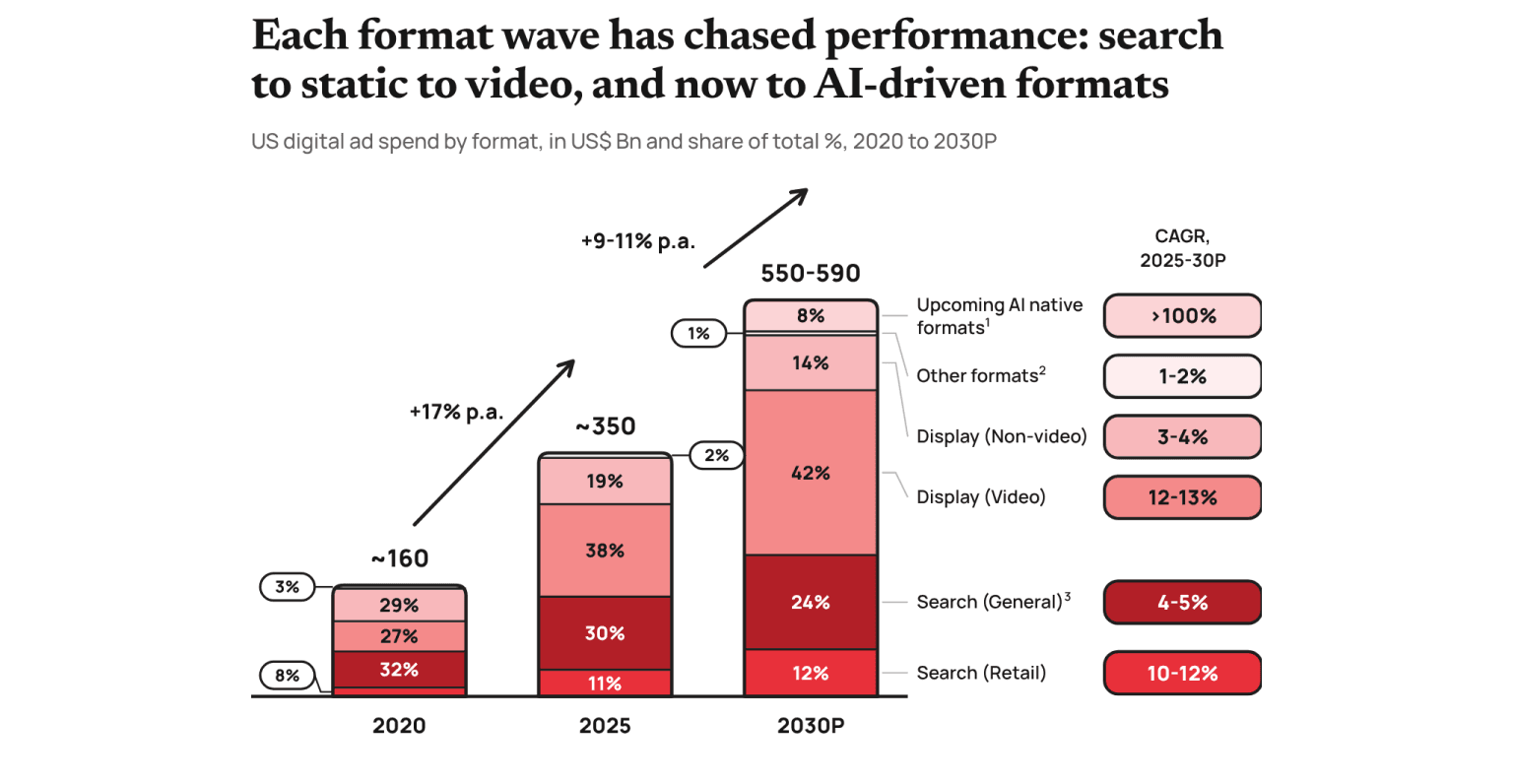
US advertisers spent about $160 Bn on digital ads in 2020 and about $350 Bn in 2025, with video and product search, such as Amazon’s sponsored products, now taking about half of it.
But across AI search, assistants and display, a machine now chooses which brands ever reach the shopper. And in agentic commerce, it decides alone based on the product data rather than the ad copy.
AI-native formats are projected to grow at more than 100% a year to about 8% of spend by 2030, mostly at the expense of general search and static display. Product search is projected to grow 10-12% a year to 2030, against 4-5% for general search.
Redseer believes the shift will reach India faster than earlier waves did. Programmatic advertising took 5-7 years to reach mainstream adoption in India after the US; CTV took 4-5. For AI-native formats, it puts the lag at about three years, and the full commercial rollout of advertising on a leading frontier model platform began in India in Q3 2026, as the report anticipated.
In the first half of 2026, 20-25% of Americans were already buying through AI on average. Redseer expects agentic commerce to take 10-25% of US e-commerce by 2030. The referral numbers point the same way. Visits from AI assistants grew more than 350% globally between 2024 and 2025, and shopping is still only 5-10% of that traffic.
Redseer’s analysis sorts the new formats into two kinds: user-led, like search and AI assistants, which follow how people already behave, and advertiser-led, like display and agentic commerce. In all four, a machine decides which brands appear before the shopper sees anything.
1. The clicks that make it through AI search arrive decided
Old Google used to return ten blue links upon searching, which meant there were plenty of ad slots. Now it comes back with the very answer itself and places an eligible ad inside. Amazon’s Rufus does the same, embedding sponsored products directly in its replies.
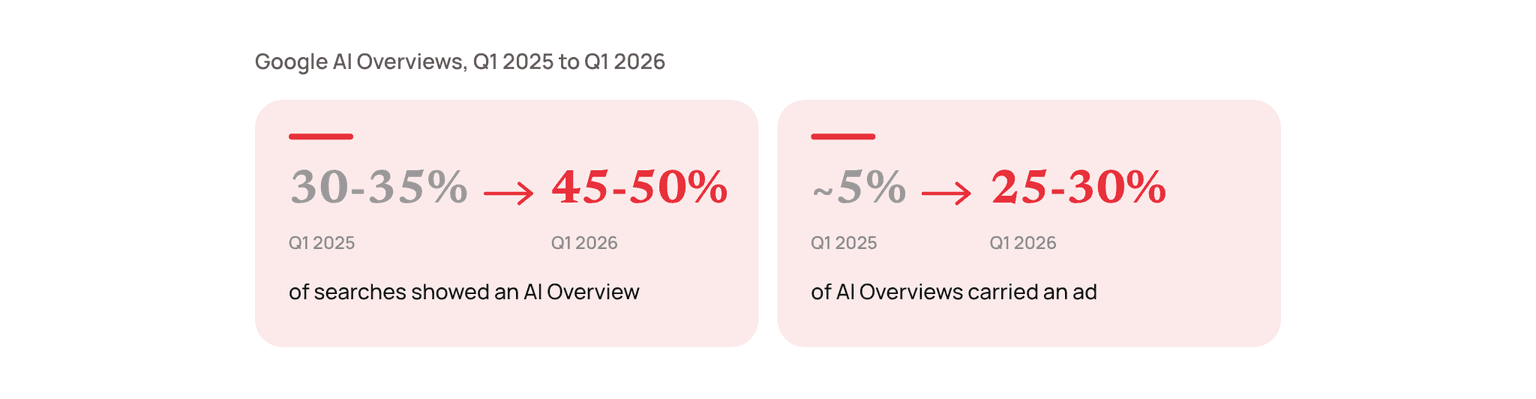
That leaves fewer places to advertise. But when someone does click through, the AI has already done the comparison for them, so they land ready to buy.
2. Conversational AI sells attention at a premium
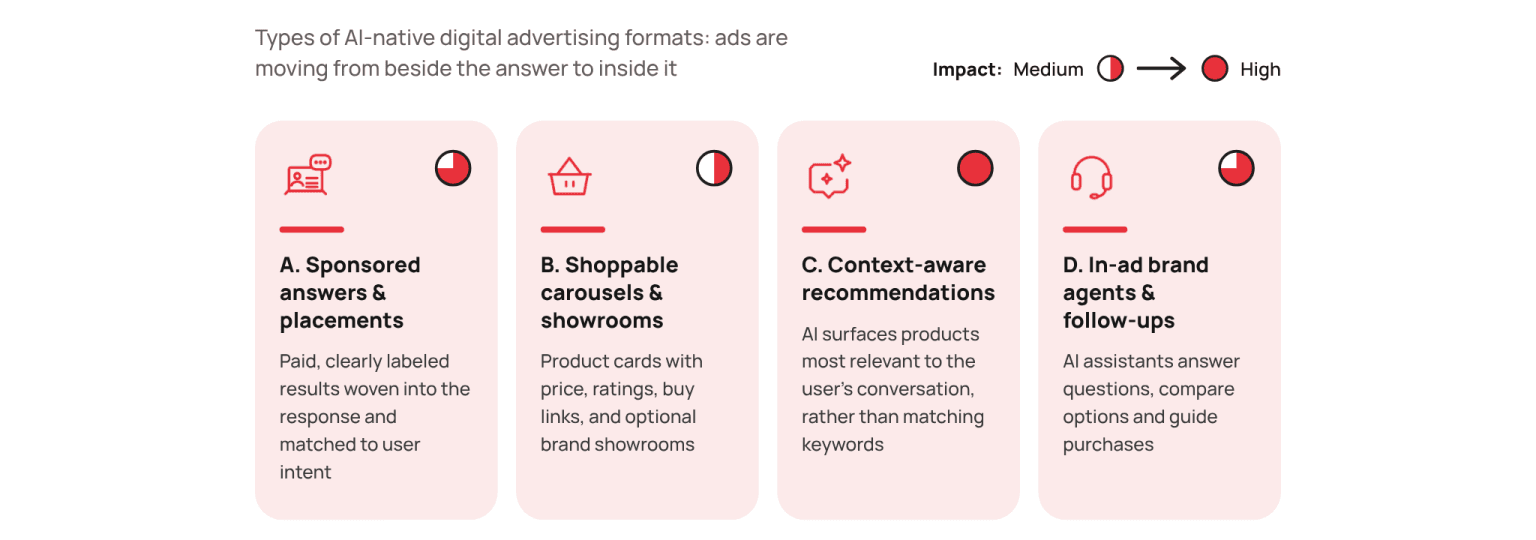
Now if a consumer asks a chatbot for carry-on suitcase recommendations, brands can appear in the answers with all the necessary details via 4 different routes, including sponsored answers (the paid suggestion), shoppable carousels (a swipeable row of products), context-aware recommendations, and in-ad brand agents (a little brand assistant inside the ad).
Since AI has read all of the user’s conversation already and has full context of what the user is looking for, the report believes that context-aware recommendations will matter the most.
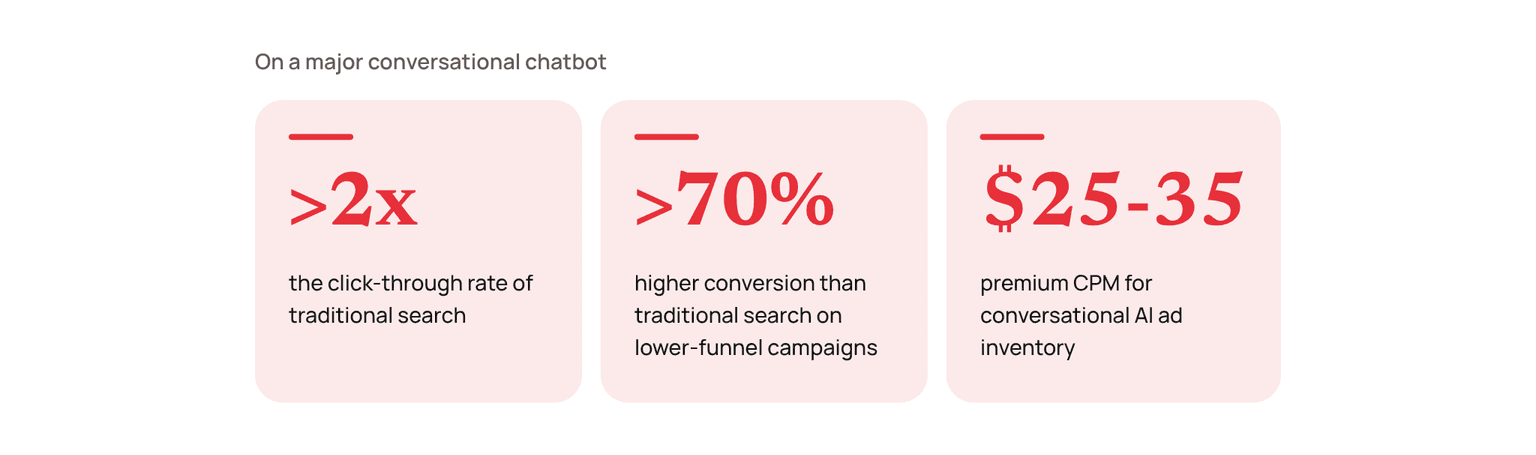
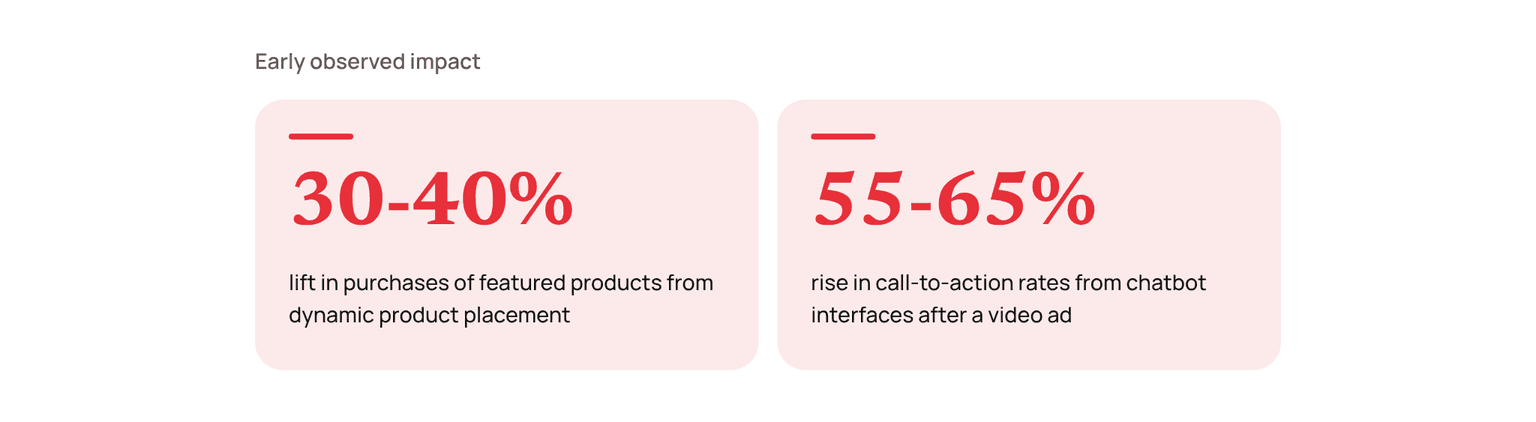
Those early results suggest why advertisers pay the premium.
3. Display-Ads now give brands control
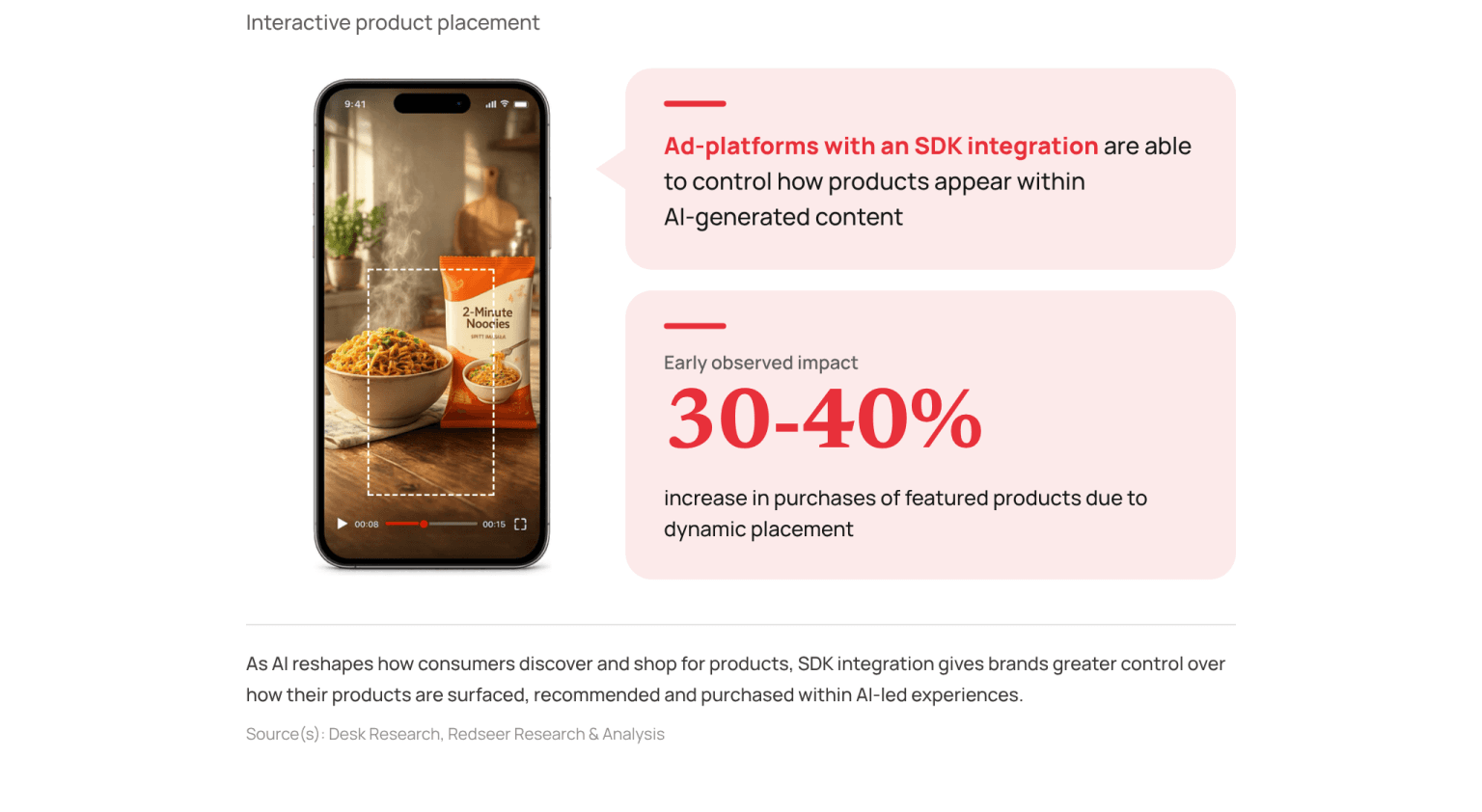
As opposed to earlier, when a display ad wasn’t more than a poster with very little control in the brand’s hands, now it has come to be interactive in the sense that a viewer can ask questions and the AI assistant would immediately answer, guiding the viewer to the next step of purchase and choice. Also, products can now be inserted into the video automatically, so the placement isn’t fixed at shoot time. And through SDK integrations, brands can decide how the product shows up. All in all, brands get to have end-to-end control over the journey now.
4. Agents choose on eligibility, not attention
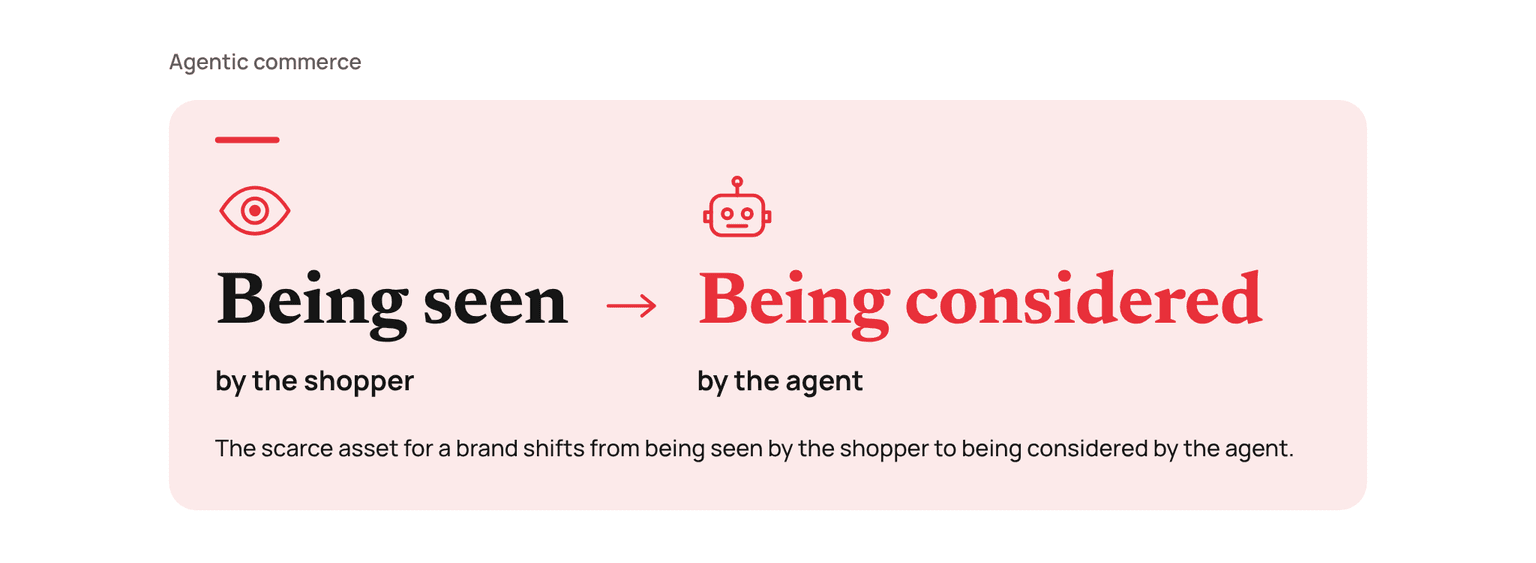
The report calls this format extremely different from how other formats pan out in the purchase, because in each of them, a human still ultimately takes the call. But when an agent enters, the game changes. Unlike a human, it’s not comparing 5-6 brands to land on a decision. Within a short span of time, it’s reviewing a thousand data points – which means a thousand brands fighting for attention to get to the consumer.
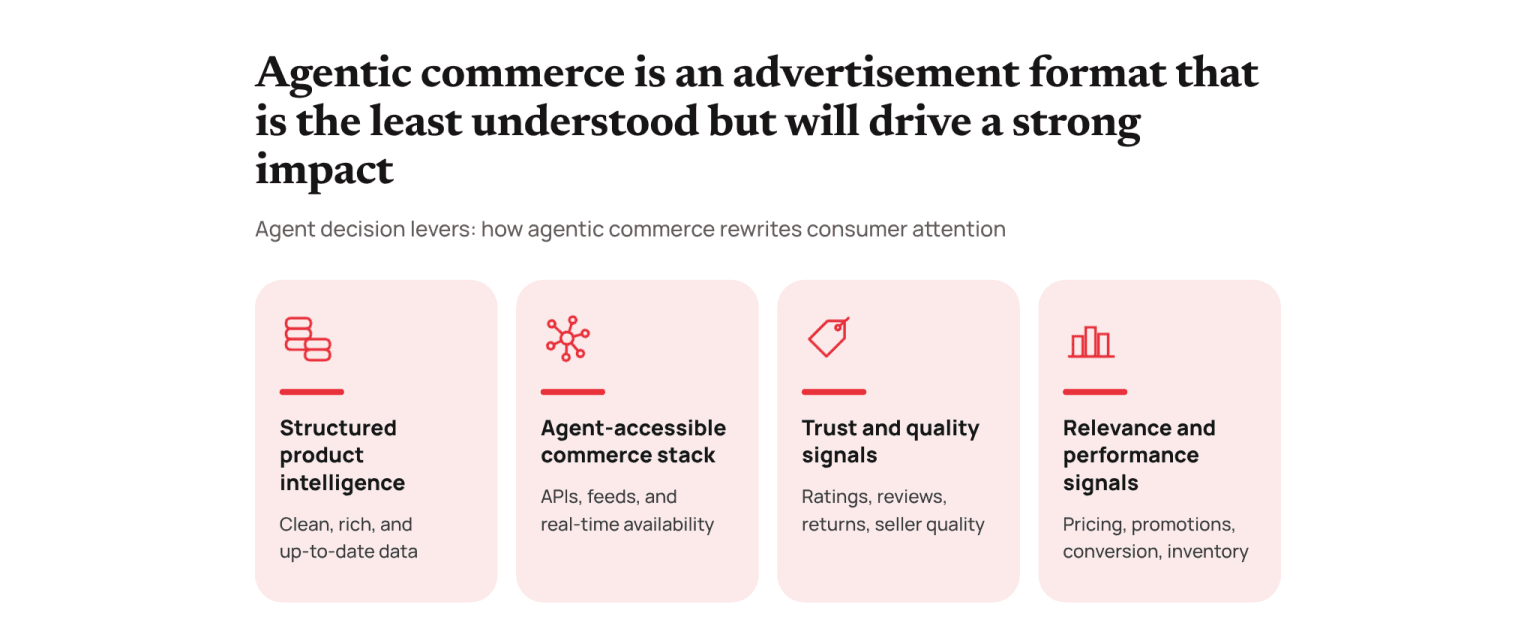
The report identifies eligibility as a few things: clean and updated data, high trust signals via ratings, reviews and customer experience, systems the agent can actually plug into (APIs, live stock), and relevance signals like pricing, promotions, conversion and inventory.
Redseer’s Advisory
Every new addition to the advertising wave rewarded and promised the brands could reach a step close to the purchase and nudge them in the direction. In the times of agentic waves now, brands must also be readable by the agent to enable that selection.
For brands, being seen is not enough anymore because it’s not always a human on the other side. They must invest and proceed with their functions being readable via product data and high trust signals so as to get shortlisted by the agent. They should audit their catalogue before further spending to ensure the bases are right. Check if their data is clean, if the agents can access it, are there high trust signals and is the current stock situation up to date. Otherwise, the agent might not even consider.
Investors, while assessing, should consider reviewing what is the source of the demand. Is it coming from conventional human purchase or via agents, because the gap in numbers could indicate a gap in visibility, distribution and absence in agent-led channels.
Written by


Senior Consultant
Advertising Unlocks Scale for the Next Generation of Consumer Platforms

Artificial Intelligence: The Next Growth Catalyst in Advertising

Advertising Is the Oil Powering The Digital Economy

Digital Disruption in Home Category: Whitespace to Market Leadership

Micro-Drama’s J-Curve Moment: What Marketers, Platforms, and Investors Need to Know

The Indian Consumer at 2030: Redefining Aspirations, Choices, and Markets

Winning the Quick-Commerce Decade: Playbook for Brand Success

AI is the Next Growth Catalyst in Advertising

The customer is still human. The agent is not.

We enabled a leading e-commerce player with decision-grade intelligence on India’s online grocery market

The World’s Largest Advertisers Now Spend Like Investors

India’s leading e-commerce players’ growth execution strengthened by strategy consulting
Advertising Unlocks Scale for the Next Generation of Consumer Platforms
Artificial Intelligence: The Next Growth Catalyst in Advertising
Advertising Is the Oil Powering The Digital Economy
Digital Disruption in Home Category: Whitespace to Market Leadership
Micro-Drama’s J-Curve Moment: What Marketers, Platforms, and Investors Need to Know
The Indian Consumer at 2030: Redefining Aspirations, Choices, and Markets