Disruption in the Indian Small Home Appliances Category

Executive Summary
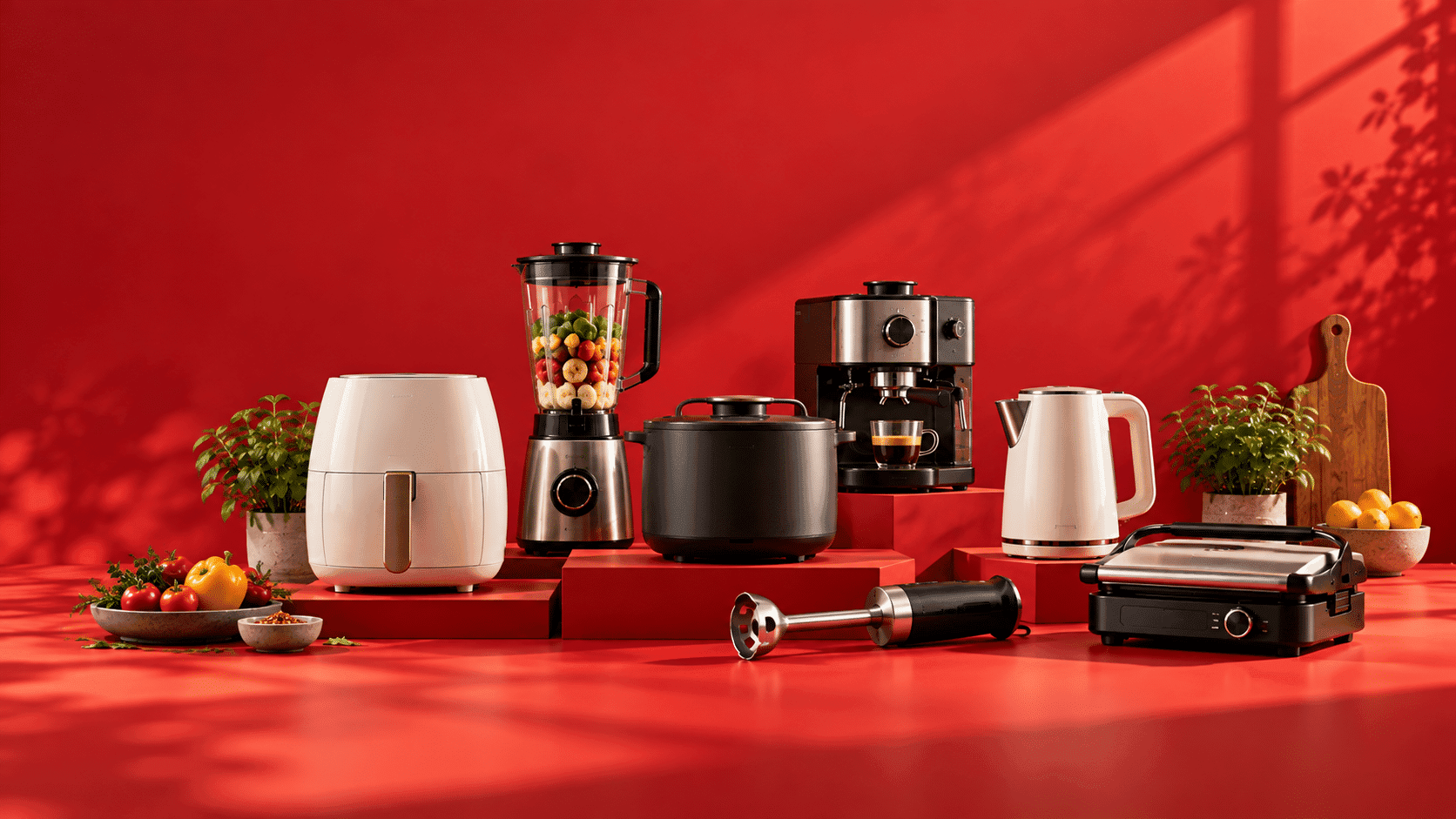
India’s small appliances market is worth ₹138 Bn in FY25 and is set to reach ~₹200 Bn by FY30, growing at ~8% a year. The momentum, however, sits in six emerging categories (air fryers, garment steamers, air purifiers, coffee makers, tower and bladeless fans, and vacuum cleaners) that are growing at ~18% a year, from ₹18.5 Bn to ~₹42 Bn. Their share of the market is set to rise from 13% to 21% over the same period.
These categories are still early. They reach just 0.1-2.4% of Indian households, against 33% for mixer grinders, and remain a fraction of their size in China and the US. Part of that gap reflects income and household structure, so parity should not be assumed, but it still signals a long runway for products engineered for Indian use cases and price points.
That runway is being decided online. Around 70% of air fryers already sell online, against ~25% of mixer grinders, and the online share of small appliances is set to rise from 31% in FY25 to 37% by FY30. Leadership is also consolidating fast: on a leading marketplace, air fryers grew 103% year on year, yet the top three brands already hold ~70% of sales. The brands that last will be those that win one hero category and then repeat the feat in adjacent ones.
What the report covers
01. Market size and headroom The size and growth of nine small appliance categories from FY25 to FY30, household penetration for the emerging categories, and how India’s category values compare with China and the US.
02. Channels How online share is shifting across categories, and why search rank, ratings, reviews and returns now shape which brands build consideration.
03. Competition and brand landscape Which categories pair high growth with moderate concentration, where new-age brands lead and trail, and how breadth separates platform candidates from one-hit brands.
04. The playbook The three-stage winning model, the six levers of a durable moat, and what it means for new-age brands, traditional brands and investors.
The Redseer Perspective
Redseer believes Category growth will reward many brands, but only those that repeat product success will last. Leadership in air fryers consolidated within a few years, and the brands that endure will be those that can find, launch and scale their next hero product, aimed at categories that pair high growth with moderate concentration.
Online decides early share, but operations decide durability. Contribution margin after returns and service, sourcing quality and disciplined offline expansion will separate scale from staying power. Traditional brands also continue to reassure first-time buyers in mature and higher-priced categories, so new-age brands need a visible reason for consumers to switch.
A single winning appliance proves product instinct. The valuation step-up comes from proving the system can generate multiple winners with healthy service economics.
Who should read this report
- Founders and leaders of new-age appliance brands building their first hero product or planning the next one
- Leaders at traditional appliance brands defending share as emerging categories move online
- Investors in consumer brands assessing which appliance businesses can sustain growth beyond a single category
Download the report to see the full category map and the playbook for building a lasting appliance brand.

Written by
Mrigank Gutgutia
Partner
Mrigank leads business research and strategy engagements for leading internet sector corporates at Redseer Strategy Consultants. He has developed multiple thought papers and is regularly quoted in media and industry circles.