India’s IPO Reset: Why Readiness Matters More Than Hype


Executive Summary
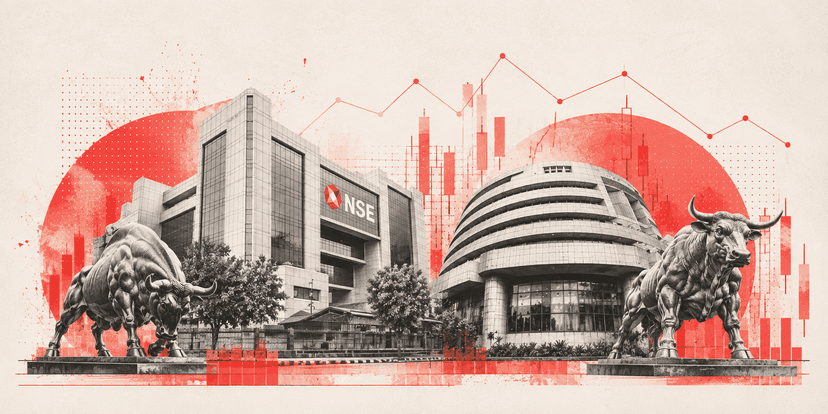
India’s IPO market is entering a very different phase from the one that captured headlines just a few years ago.
Over the past decade, India’s public markets have expanded nearly eightfold, becoming one of the few major markets globally to sustain primary issuance through multiple economic cycles. But the biggest shift isn’t the number of IPOs—it’s what the market now rewards.
The first generation of new-age listings was driven by scale and growth. Today’s market demands something different: profitable growth, operating discipline, and businesses built to create long-term shareholder value.
In this conversation, Redseer Partners unpack the forces shaping India’s next IPO cycle—from the rise of domestic capital and the outlook for H2 CY26 to the evolution of the IPO Readiness Index, which evaluates more than 1,400 new-age companies across five dimensions of public-market preparedness. With around 210 companies already IPO-ready and a pipeline capable of creating $1 trillion in market value by 2030, the discussion explores what separates companies that simply list from those that outperform after listing.
Whether you’re a founder preparing for the public markets, an investor evaluating India’s next generation of listed companies, or a corporate leader tracking capital market trends, this discussion provides a practical perspective on where India’s IPO market is headed—and what it takes to succeed in it.
In This Conversation
- Who is actually funding India’s IPO market, foreign investors or domestic investors?
Domestic investors, and decisively so. Foreign institutions were net sellers of Indian equities in three of the last four years, which reads as an exit until you set it against the primary market, where it becomes a handover. Record SIP inflows have lifted the domestic institutional share steadily over five years, and the same shift runs through the new-age cohort. Domestic capital now funds the larger part of Indian issuance, simply because there is more of it.
- Why did India’s IPO market look quiet in the first half of CY26, and will the rest of the year be stronger?
India’s secondary markets had their worst first half since 2020 as the West Asia conflict spiked crude, disrupted shipping through the Strait of Hormuz and pushed rate cuts off the table, all landing on a US market already managing tariff friction and a tighter immigration stance. The primary market used the same window differently: IPO activity stayed resilient and the filing queue deepened rather than thinned, because wars move IPO windows but rarely IPO pipelines.
The quiet headline captures only six months, and the DRHP queue underneath tells the opposite story. Reliance Jio and NSE have filed, and each is a top-tier issue if priced today.
- What changed in India’s new-age IPO market between its first wave and its second wave?
The market changed what it rewards – the first wave paid for scale and growth; the second wave, listed through FY25–26, pays for profitable growth, and the FY22-to-FY26 cohort data shows the shift on nearly every metric. Subscription frenzy has cooled from a mean of 83x to 20x, and the listing-day pop has all but disappeared, from 29% to near flat. What improved is everything that shows up later: one-year returns moved from -38% to +6%, and the share of companies PAT-positive at listing rose from 50% to 70%. Growth is more measured, with median pre-IPO revenue growth down from 50% to 33%, and companies are reaching the market younger, at a median age of 11 years against 15. The reward moved from the pop to the performance.
- What is Redseer’s IPO Readiness Index, and what does it actually measure?
It is a scoring framework that evaluates a company’s IPO preparedness across five dimensions: Scale, Growth, Profitability, Valuation Discipline and Operating Maturity. Together these test whether a business is large enough to matter to public investors, growing sustainably rather than in a single burst, on a credible path to profit, priced with discipline against listed peers, and operationally mature enough to run as a public company. The index is built to be read 18 to 24 months ahead of a listing, not on the eve of one.
- How many Indian companies are currently ready for an IPO, and which sectors have the deepest bench?
Of 1,400 new-age companies assessed, ~210 are Ready or Near-Ready to list within 24 months. Today’s cohort tilts towards Retail & Leisure and Fintech, but by CY30, Fintech, TMT, Consumer Goods and B2B are expected to gain more share.
- Does a company’s IPO readiness score actually predict its long-term stock performance after listing?
Yes, but not on listing day. Readiness shows no correlation with day-one performance; it correlates strongly with sustained market-cap growth in the years after. The gap is stark once companies are sorted by score. Companies scoring 75 and above have compounded annualised post-listing market cap at +46%, those in the 60–74 band at +11%, and those below 60 have gone backwards at -6%. Readiness does not predict the pop. It predicts the decade.
Much of the IPO euphoria of the first wave has faded. Today’s market is more disciplined, with investors rewarding companies that demonstrate sustainable growth and profitability rather than short-term excitement. Listing-day gains may grab headlines, but long-term performance is increasingly determined by how prepared a company is before it goes public.
Written by




Redseer India IPO Report: 2026

India’s Internet Economy: Built for Scale, Ready for Capital

India’s Digital Investment Market Report

Outcome is King: India’s UG Test Preparation Market Rewards Credibility Over Scale

India’s Digital Lending Report 2026: Value Beyond Acquisition

The Indian Consumer at 2030: Redefining Aspirations, Choices, and Markets

Micro-Drama’s J-Curve Moment: What Marketers, Platforms, and Investors Need to Know

Why Global Apparel Players Are Betting Big on India!

IPO consulting services behind Groww’s public market readiness

The Next Lever of Growth in India’s Wealth Tech

How we helped a global gaming & interactive media investor read the India opportunity.

India’s Biggest IPO Year Is About to Be Beaten in Six Months
Redseer India IPO Report: 2026
India’s Internet Economy: Built for Scale, Ready for Capital
India’s Digital Investment Market Report
Outcome is King: India’s UG Test Preparation Market Rewards Credibility Over Scale
India’s Digital Lending Report 2026: Value Beyond Acquisition
The Indian Consumer at 2030: Redefining Aspirations, Choices, and Markets