Why Many Micro-Drama Viewers Subscribe But Do Not Stay


A 42-year-old viewer from Jamshedpur signed up for a Re 1 micro-drama trial. What he wasn’t prepared for was that Rs 399 would be automatically deducted from his account for the next 3 months without him actively choosing it. Even in months when he was too busy to watch, he stayed subscribed. His objection was to the recurring charge – he wanted to decide each time before money was deducted.
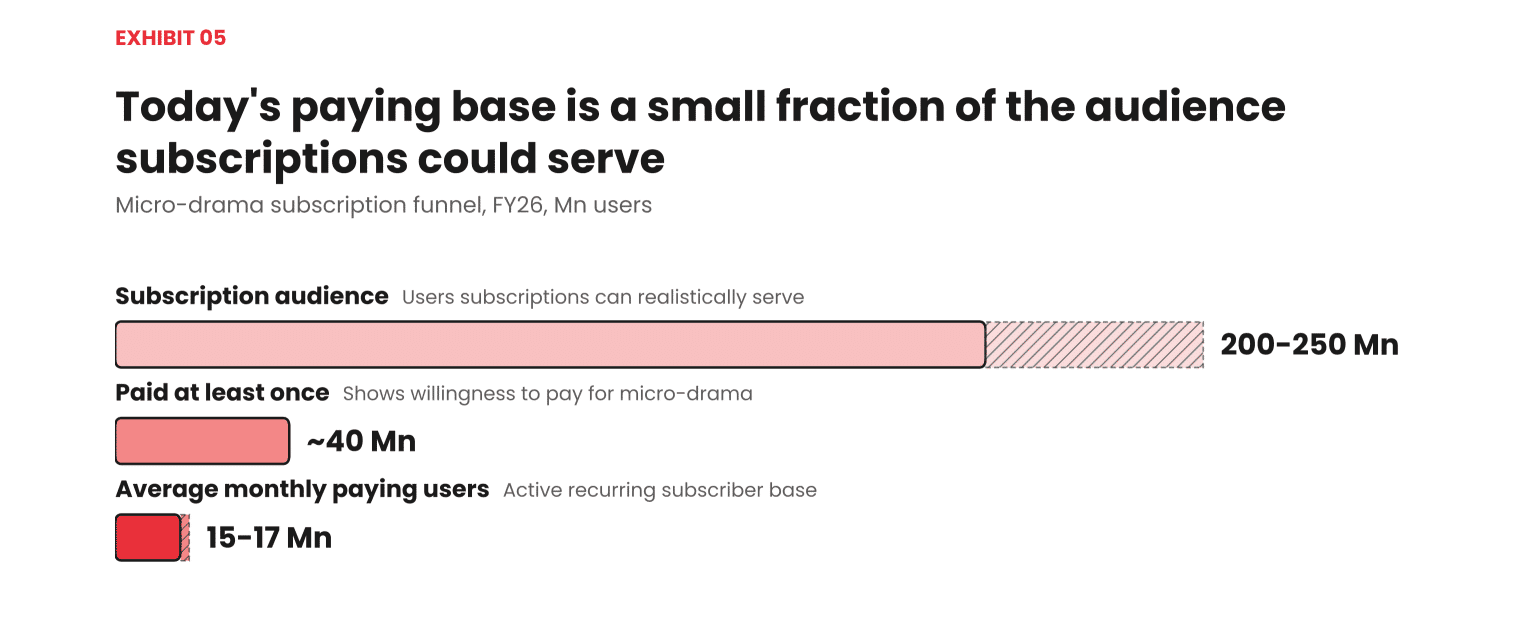
While this might read like an individual story, it offers a peek into larger viewer behaviour on micro-drama consumption. In FY26, about 40 Mn people paid at least once to watch micro-dramas. But in an average month, only 15-17 Mn did, fewer than half.
Viewers in Redseer’s research describe paying once for a story and accepting a monthly charge as two different commitments. Redseer’s report, The AVOD Imperative, argues that advertising, alongside subscriptions and micro-payments, can widen the micro-drama market by reaching viewers who would rather watch with ads than pay every month.
1. Micro-Drama Rides a Habit India Already Has
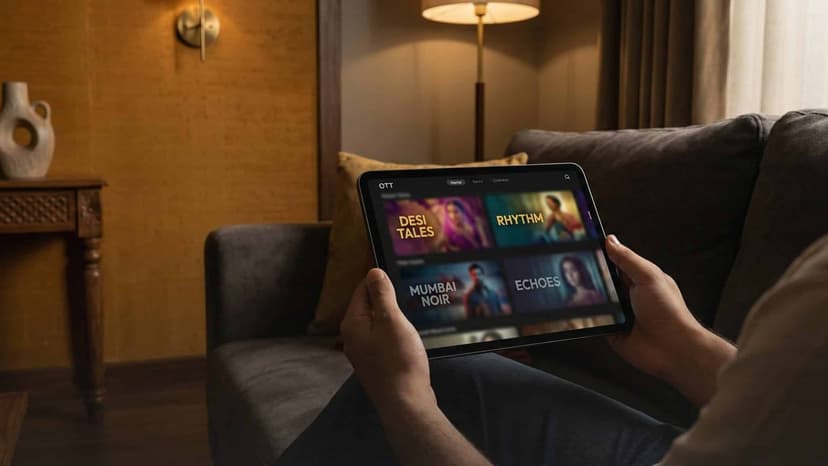
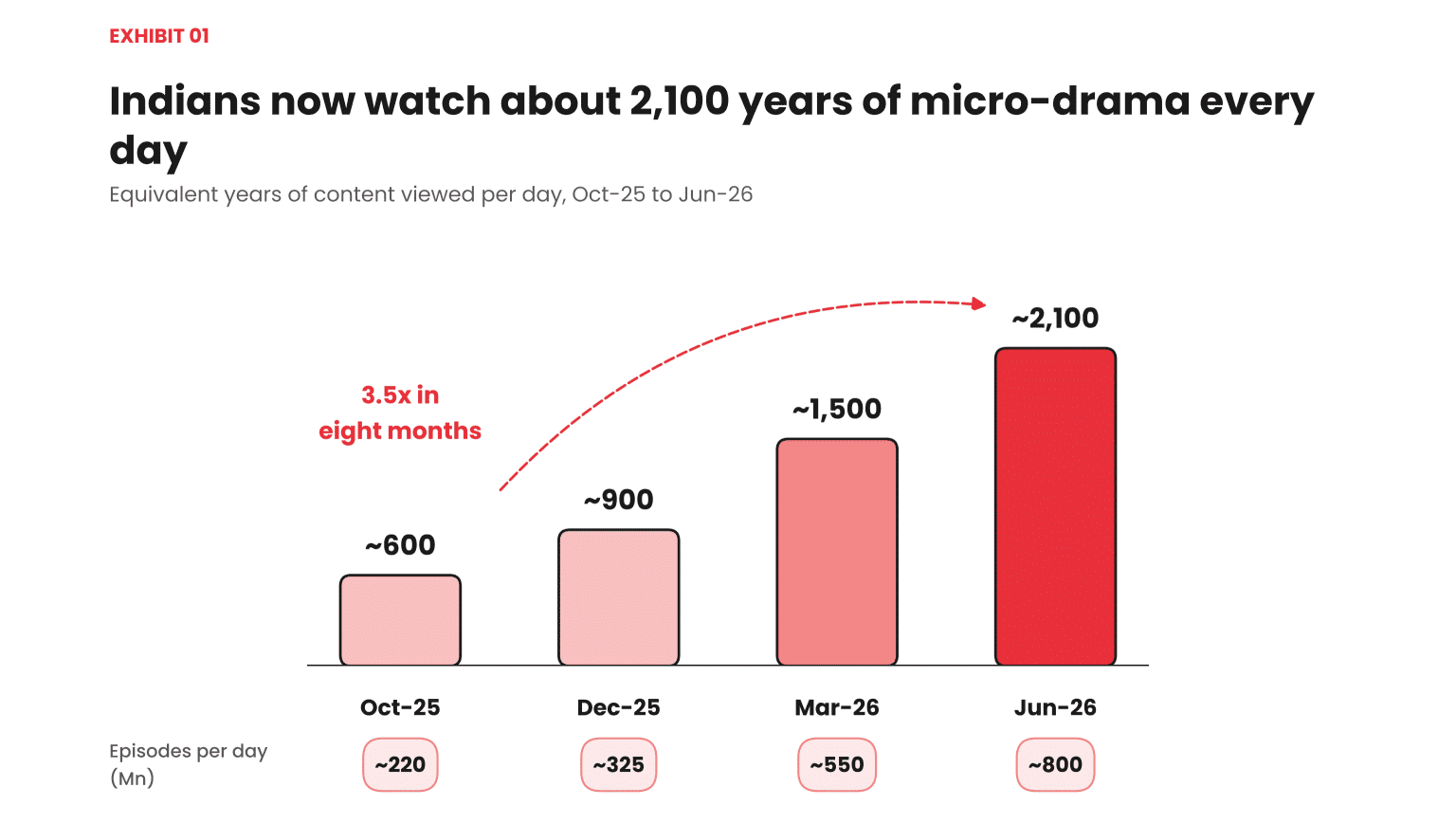
Cheaper data and wider smartphone adoption have expanded India’s mobile-video audience from 300 Mn in 2016 to over 640 Mn by 2026. Short-form video has already made brief, frequent viewing a daily habit for hundreds of millions of these users, and micro-drama has slipped into that habit.
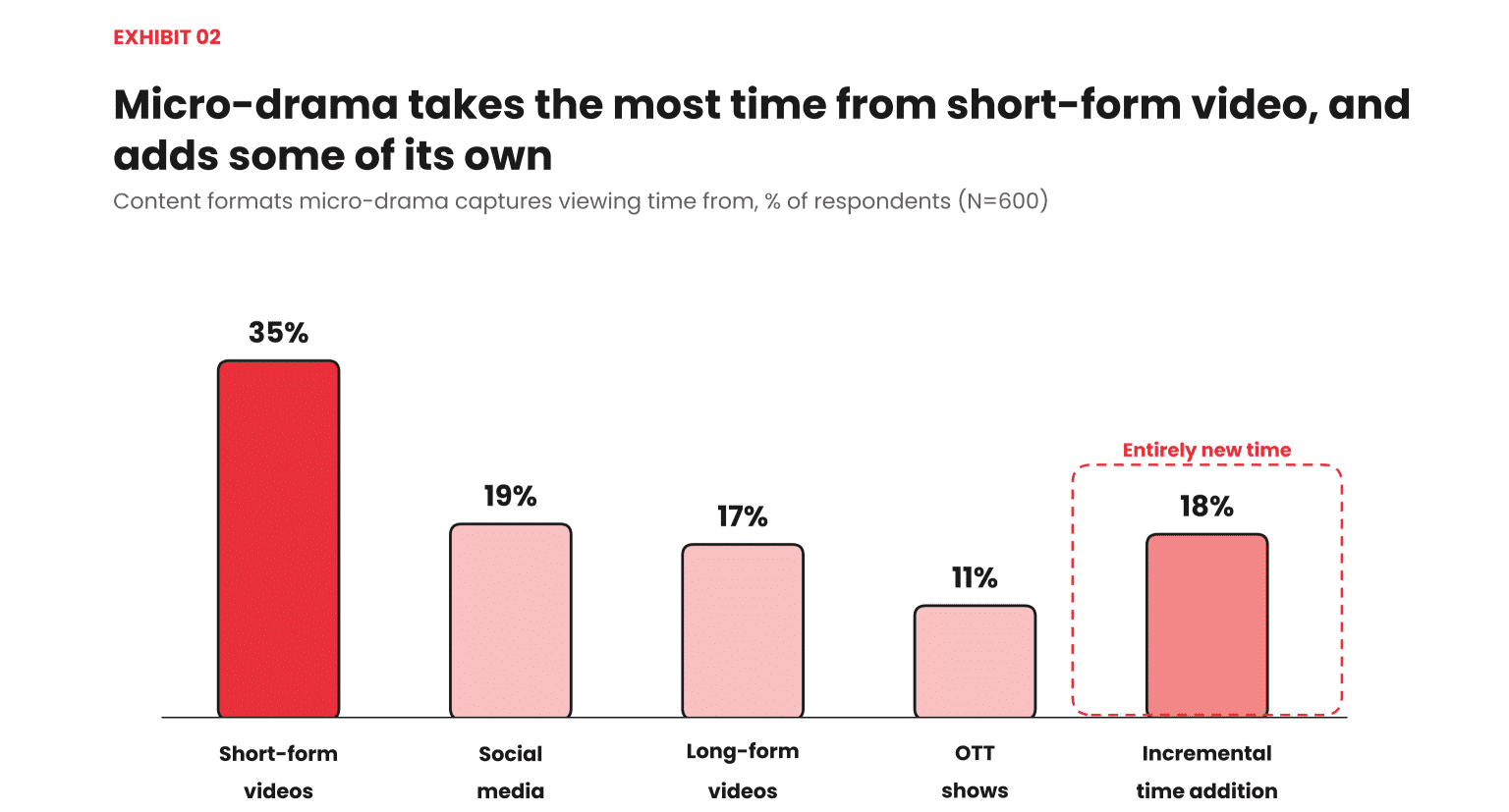
Nearly half (49%) of surveyed viewers watch micro-drama daily, and about the same share have no fixed viewing pattern. Asked where that time comes from, 35% said short-form video, and for another 18% micro-drama has not replaced anything and is entirely new viewing time.
That casual, no-fixed-viewing pattern is also what makes subscriptions a hard sell.
A 27-year-old viewer from Hyderabad explained: “Because I don’t watch at the same time every day, I don’t really think of it like Netflix where I subscribe and use it regularly.”
2. Fresh Stories and Payment Control Both Matter
People subscribe for the stories, but few stay for long. By month three, only about half of subscribers remain; by month six, about a quarter.
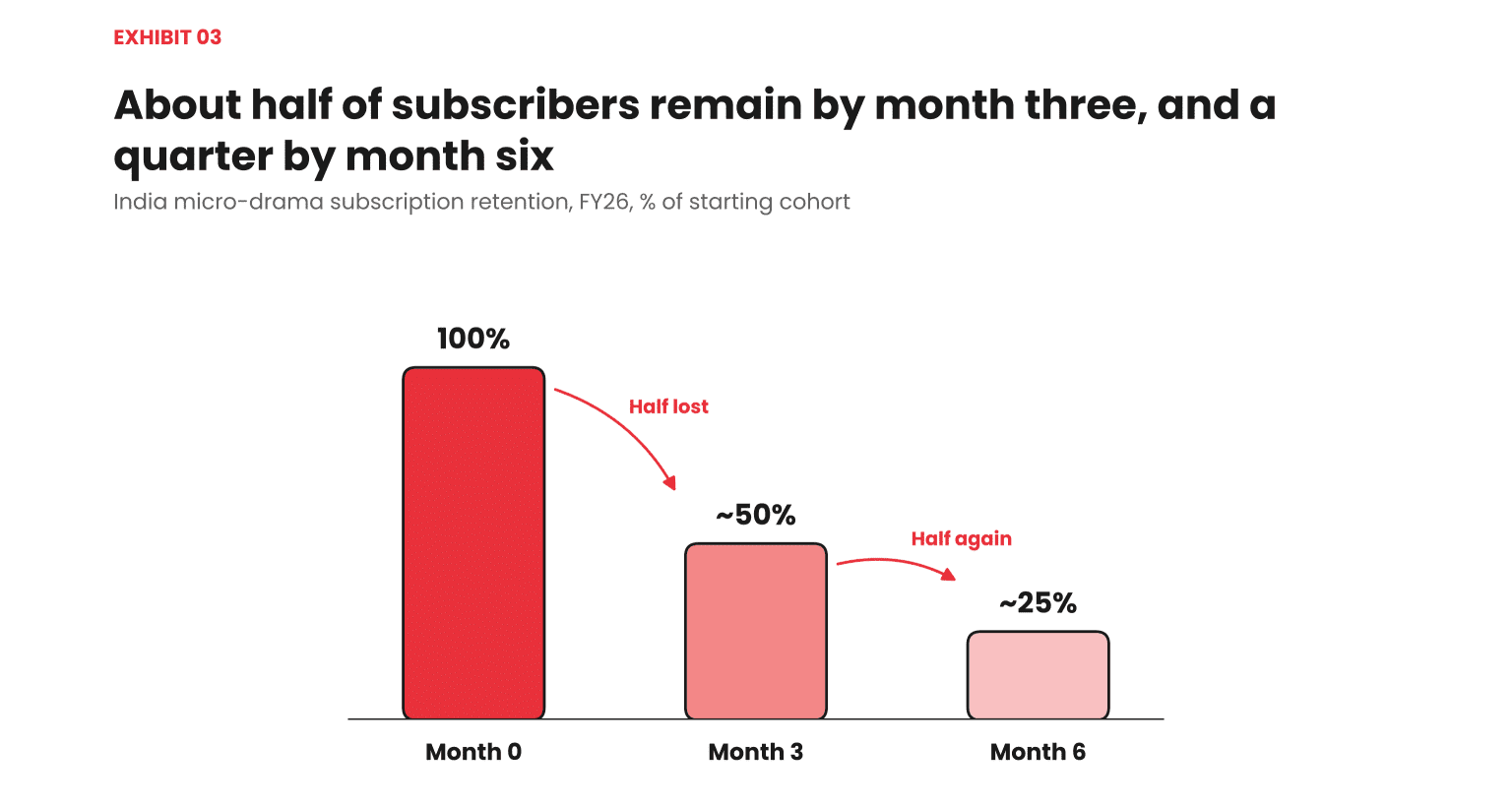
The report calls this drop-off episodic engagement: viewers leave, and are likely to return as variety, depth and new stories increase. It compares this to the early years of streaming platforms, when retention dipped at first and recovered as new content kept coming.
But content is only one side of the drop-off. Payment commitments create their own friction.
A 34-year-old viewer from Kanpur said: “If I enjoy the stories, I’ll happily pay again, but I want that decision to be mine every time.”
3. Viewers Are Open to Paying Through Ads and Unlocks.
Platforms have three ways to earn from viewers: a recurring subscription for unlimited access, a one-time payment to unlock a specific episode or series, or free viewing with ads.
Viewers are open to the ad model. Asked how their watching would change if all content were free with ads, 60% said they would watch more, including 22% who would watch much more because subscription cost is a barrier for them.
In a separate question, over 65% said they were interested in a platform offering free viewing with ads and one-time payments to skip them.
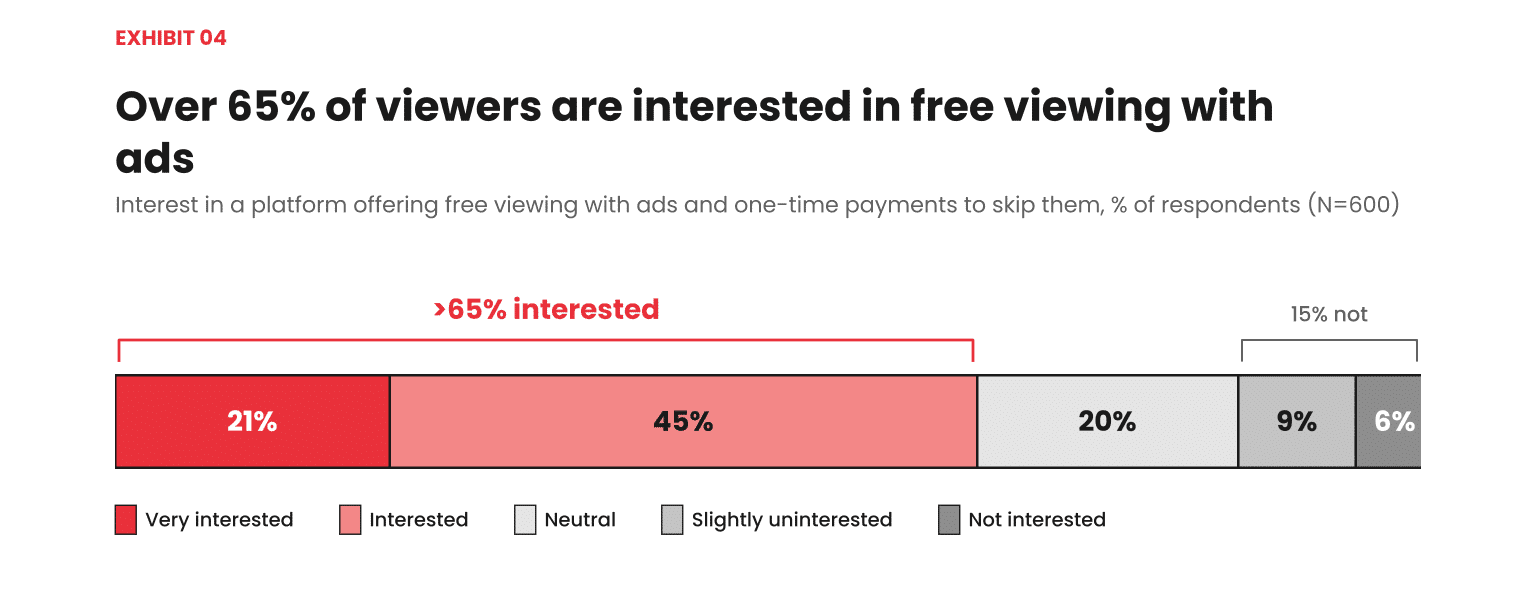
The report’s freemium journey works like this: a viewer starts watching for free, gets into a story, and then chooses whether to keep watching with ads or pay a small one-time amount, typically Rs 5-20, to unlock the series.. The story comes first; the payment ask comes later.
4. Subscriptions Still Have a Larger Audience to Serve
Subscriptions account for roughly 99% of FY26 revenue, and there is still room for them to grow. The report estimates that in FY26, 200-250 Mn Indians already paid for at least one digital content subscription, making them the most likely audience for a micro-drama one. By our calculation, today’s average monthly paying base of 15-17 Mn is roughly 6-9% of that opportunity.
Converting that larger audience means giving subscribers a reason to keep paying between the stories they come for. The report’s answer is premium exclusives: some content stays locked for subscribers only. China’s long-form video platforms show how this works: ads drive discovery while premium content stays behind a paywall, and the two models coexist.
That is why, as the report puts it, advertising expands monetisation beyond subscribers rather than replacing subscription revenue.
Redseer Advisory
Redseer believes the mode that wins in micro-drama will be a blended one: subscriptions for the committed few, ads and micro-payments for the many who dip in and out. The report’s reference point for what to build is China, where these models already run at scale.
For Platforms: In China, the first 3-15 episodes are fully free before rewarded-ad unlocks begin. Most Indian platforms have no free entry point at all. The economics favour it: ads distributed through short-form feeds acquire a viewer for Rs 5-15, against Rs 400-600 to acquire a subscriber. They should build rewarded ads and small one-time payments into viewing, and keep premium exclusives for subscribers.
For Studios: Fresh stories need natural ad breaks and cliffhangers. In China, rewarded ads appear every 1-4 episodes, depending on the platform. The report also recommends more genres, and shows made natively in regional languages for Tier-2+ audiences.
As the audience for ad-supported viewing grows, the report projects micro-drama advertising revenue to rise from about Rs 24 Cr in FY26 to Rs 5,000-5,500 Cr by FY32P.
Written by


Engagement Manager

The AVOD Imperative: Monetising Serialised Content at Scale in India

Micro-Drama’s J-Curve Moment: What Marketers, Platforms, and Investors Need to Know
Advertising Unlocks Scale for the Next Generation of Consumer Platforms

India’s Internet Economy: Built for Scale, Ready for Capital
India’s Digital Lending Report 2026: Value Beyond Acquisition

The Gaming and Interactive Media Opportunity in India

India SFV in 2024: From “Likes to Monetizing Millions”

Demystifying India’s SFV platforms

Indian shortform apps – on the cusp of monetization

How we helped a global gaming & interactive media investor read the India opportunity.

The Next Lever of Growth in India’s Wealth Tech

Value Grocery – Unlocking India’s Next 100 Mn Shoppers
The AVOD Imperative: Monetising Serialised Content at Scale in India
Micro-Drama’s J-Curve Moment: What Marketers, Platforms, and Investors Need to Know
Advertising Unlocks Scale for the Next Generation of Consumer Platforms
India’s Internet Economy: Built for Scale, Ready for Capital
India’s Digital Lending Report 2026: Value Beyond Acquisition
The Gaming and Interactive Media Opportunity in India