Micro-Drama’s Rs 5,000 Cr Ad Opportunity Rests on Cheap Reach, Cheaper Shows and Advertiser Trust


“Micro-drama’s audience is growing fast, and the work now is making each viewer worth more to advertisers as it does.”
– Mukesh Kumar, Associate Partner, Redseer Strategy Consultants
Of every Rs 100 India’s micro-drama industry earned in FY26, about 99 came from subscriptions and less than 1 came from advertising.
Redseer believes this last rupee will become an increasingly important growth engine as the category matures, because it can be earned from viewers who prefer ad-supported viewing to recurring subscriptions.
Advertising brought in about Rs 24 Cr in FY26, and Redseer projects it to reach Rs 5,000-5,500 Cr by FY32P – more than 200X its FY26 size.
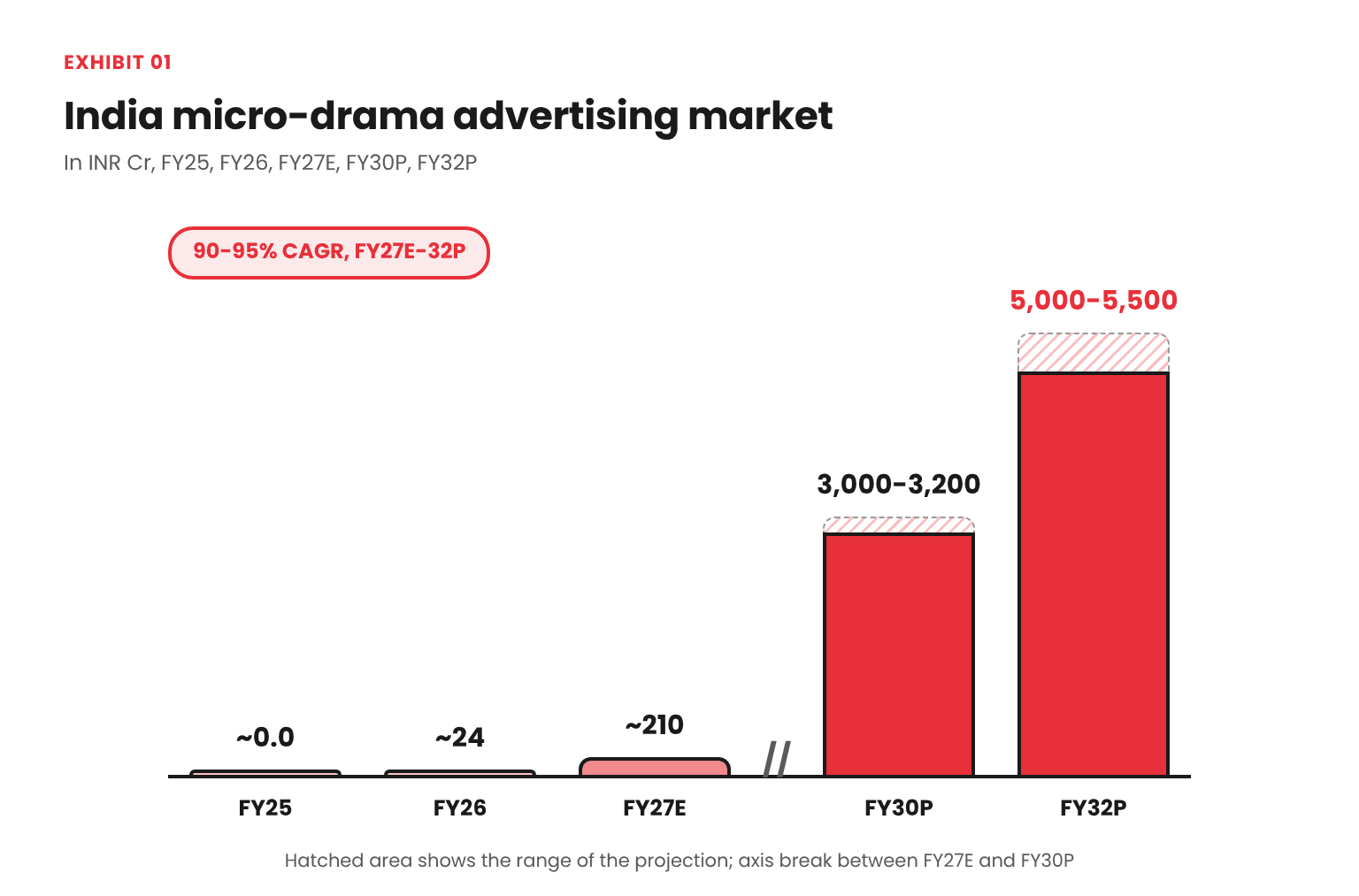
Behind that projection sit two engines. Redseer projects the daily audience for ad-supported micro-drama will grow about 6X, from 25-28 Mn in FY27E to 140-150 Mn by FY32P, and annual advertising revenue per user will rise from Rs 75-85 to Rs 360-370, as fill rates, ad frequency and eCPMs improve.
This piece examines what it takes to get from one rupee to a Rs 5,000 Cr market: viewers who are cheap to reach, shows that are cheap to make, and advertisers who are willing to spend.
Distribution shapes who can afford the audience
How much it costs to bring in one viewer depends on who is bringing them in. A short-video platform already has the viewer. A standalone app has to find one.
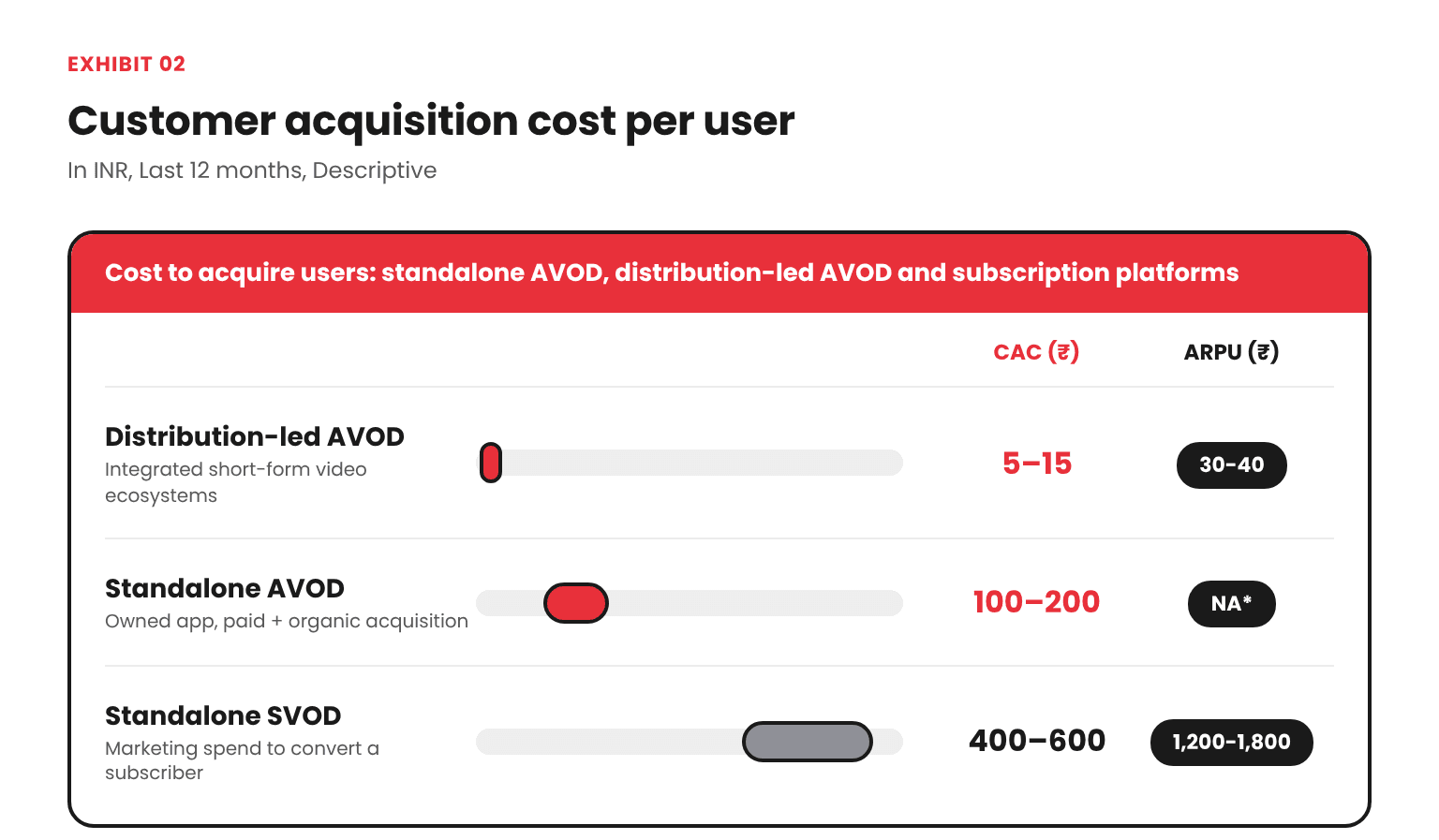
This gap decides who can actually afford to build the audience. A platform spending less per viewer has more left over to put back into content and growth.
China has already played this out: platforms with their own social feeds control over 60% of micro-drama traffic there, pulling viewers from their own ecosystems at the lowest acquisition cost. India is earlier on the same curve – short-form video platforms lead ad-supported distribution today, and Redseer expects it to spread across dedicated apps, broader OTT platforms and social video, with pure-play platforms ahead on engagement and retention.
Even the 25-28 Mn daily ad-supported viewers Redseer estimates for FY27E are only about a fifth of the 140-150 Mn it projects by FY32P.
Cheaper shows mean more ads to sell
In an illustrative estimate, the report has GenAI pulling the cost of a roughly 100-episode series from Rs 15-20 lakh down to Rs 5-6 lakh within three to four years. Redseer believes that once production gets that cheap, advertising alone can pay for a much wider range of stories.
The bigger shift is in which stories get made in the first place. A show that costs less needs less ad money to break even, so stories that wouldn’t have survived the old maths become worth producing, and every extra ad-supported title adds to the inventory advertisers can buy.
GenAI is already inside the workflow. The report’s FY26 comparison shows Indian studios using it for scripts, dubbing, localisation and posters, and AI dramas in China going from idea to release in 5-10 days where an Indian production cycle takes 20-25.
Its role doesn’t stop at production either: the report maps it into distribution, through personalised recommendations, ad targeting and creative testing. That last part feeds the advertiser confidence that fill rates and prices depend on.
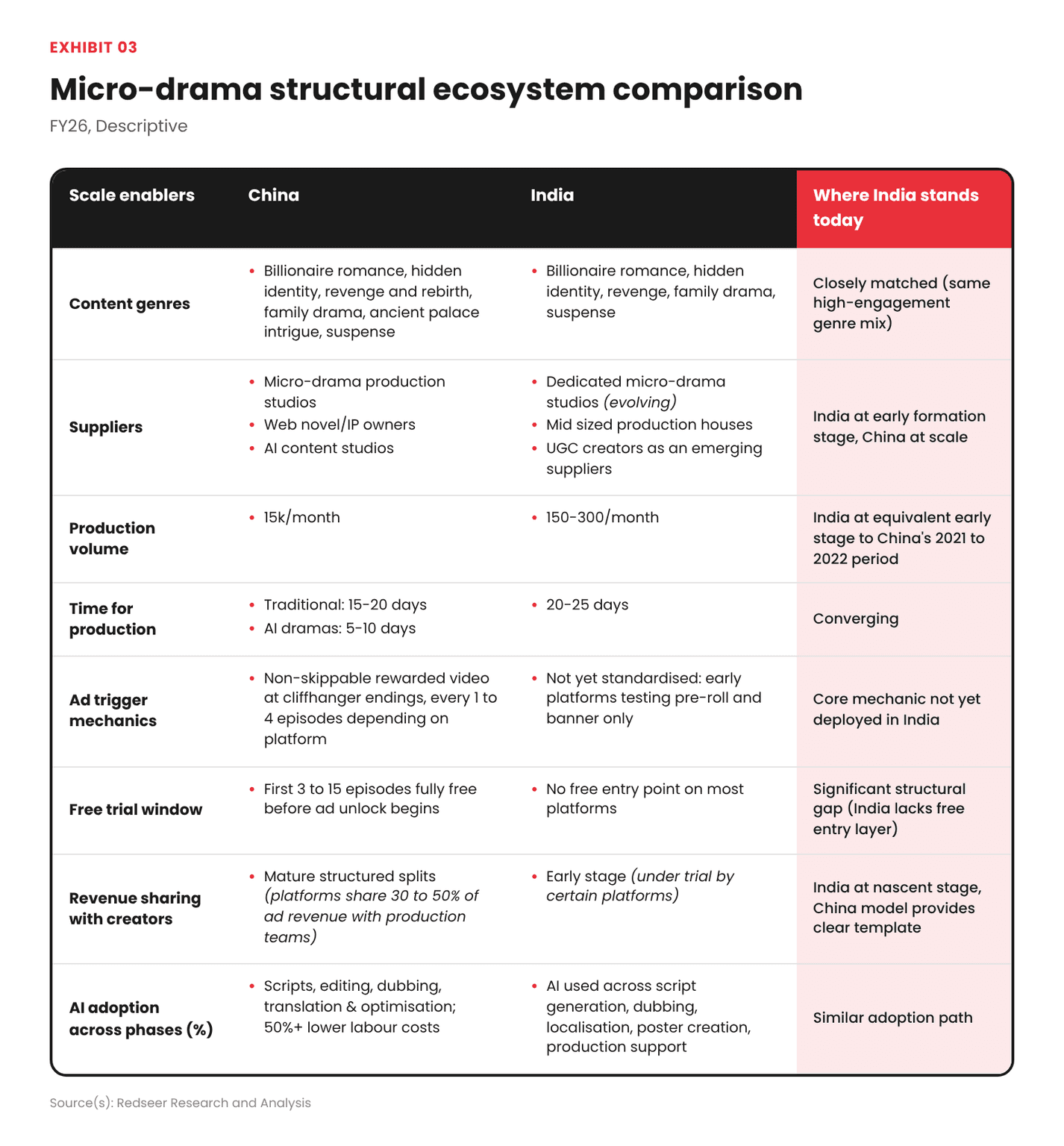
There is room to grow: the FY26 comparison puts monthly micro-drama production volume at 150-300 in India against 15,000 in China, placing India at an early stage comparable to China in 2021-22.
Advertiser trust is the last piece to build
Redseer believes the remaining gaps are in how ad-supported micro-drama gets packaged and sold – ad formats, fill rates, prices. The audience is growing and shows should get cheaper; better fill rates and prices follow as that trust builds.
That trust is still early. The model assumes 24-28% of available ad inventory gets filled in FY27E, rising to 50-55% by FY32P. Rates tell the same story: an eCPM (what the platform earns for every thousand ad views) of Rs 40 in FY27E, against the report’s OTT benchmark of roughly Rs 70-75. By FY32P it reaches Rs 60-65 – still a discount. Redseer assumes both fill and rates improve as advertisers get familiar with the format and programmatic demand matures.
Formats are no further along. In the report’s FY26 assessment, Indian platforms were still testing pre-roll and banner ads, the ad-trigger mechanics were not standardised, and China’s core cliffhanger rewarded-video mechanic had not made it to India yet.
Redseer describes the ecosystem’s remaining gaps as “driven more by ecosystem maturity than structural readiness”, and they are the part of the forecast that still has to be built.
Redseer Advisory
Redseer believes the advertising opportunity is real, and its economics favour those who combine owned reach, low-cost content and advertiser trust.
For Platforms, build the ad infrastructure before the audience arrives. Design ads into the product from day one, next to optional micro-payments, and keep premium exclusives for subscribers. And open a free entry point, since China gives the first 3-15 episodes free while most Indian platforms have none.
For Studios, make originals for advertising. The report expects them to hold viewers better than repurposed SVOD libraries. The money split is still taking shape: in China, platforms share 30-50% of ad revenue with production teams, while in India revenue sharing is under trial at some platforms. AI can raise output without raising costs.
For Advertisers, get in early. Regional audiences are still well priced, and the report expects CPMs to rise as the market matures. Early partners get more say over targeting and what their ads sit next to. Creative needs to change too, since rewarded and cliffhanger ads call for shorter, emotionally engaging spots.
Written by


Engagement Manager

The AVOD Imperative: Monetising Serialised Content at Scale in India

Advertising Unlocks Scale for the Next Generation of Consumer Platforms

India’s Internet Economy: Built for Scale, Ready for Capital

Micro-Drama’s J-Curve Moment: What Marketers, Platforms, and Investors Need to Know

Artificial Intelligence: The Next Growth Catalyst in Advertising

Advertising Is the Oil Powering The Digital Economy

The Gaming and Interactive Media Opportunity in India

India SFV in 2024: From “Likes to Monetizing Millions”

Breaking barriers: Rise of challenger platforms in digital advertising landscape

Demystifying India’s SFV platforms

Why Many Micro-Drama Viewers Subscribe But Do Not Stay

AI is the Next Growth Catalyst in Advertising
The AVOD Imperative: Monetising Serialised Content at Scale in India
Advertising Unlocks Scale for the Next Generation of Consumer Platforms
India’s Internet Economy: Built for Scale, Ready for Capital
Micro-Drama’s J-Curve Moment: What Marketers, Platforms, and Investors Need to Know
Artificial Intelligence: The Next Growth Catalyst in Advertising
Advertising Is the Oil Powering The Digital Economy