Two Consumer Economies: How Gen Z and Gen X Are Shaping FMCG Growth in India
India’s FMCG market is expanding steadily, supported by rising incomes, urbanisation, and increasing consumption across categories. At a broad level, this growth appears consistent across the market.
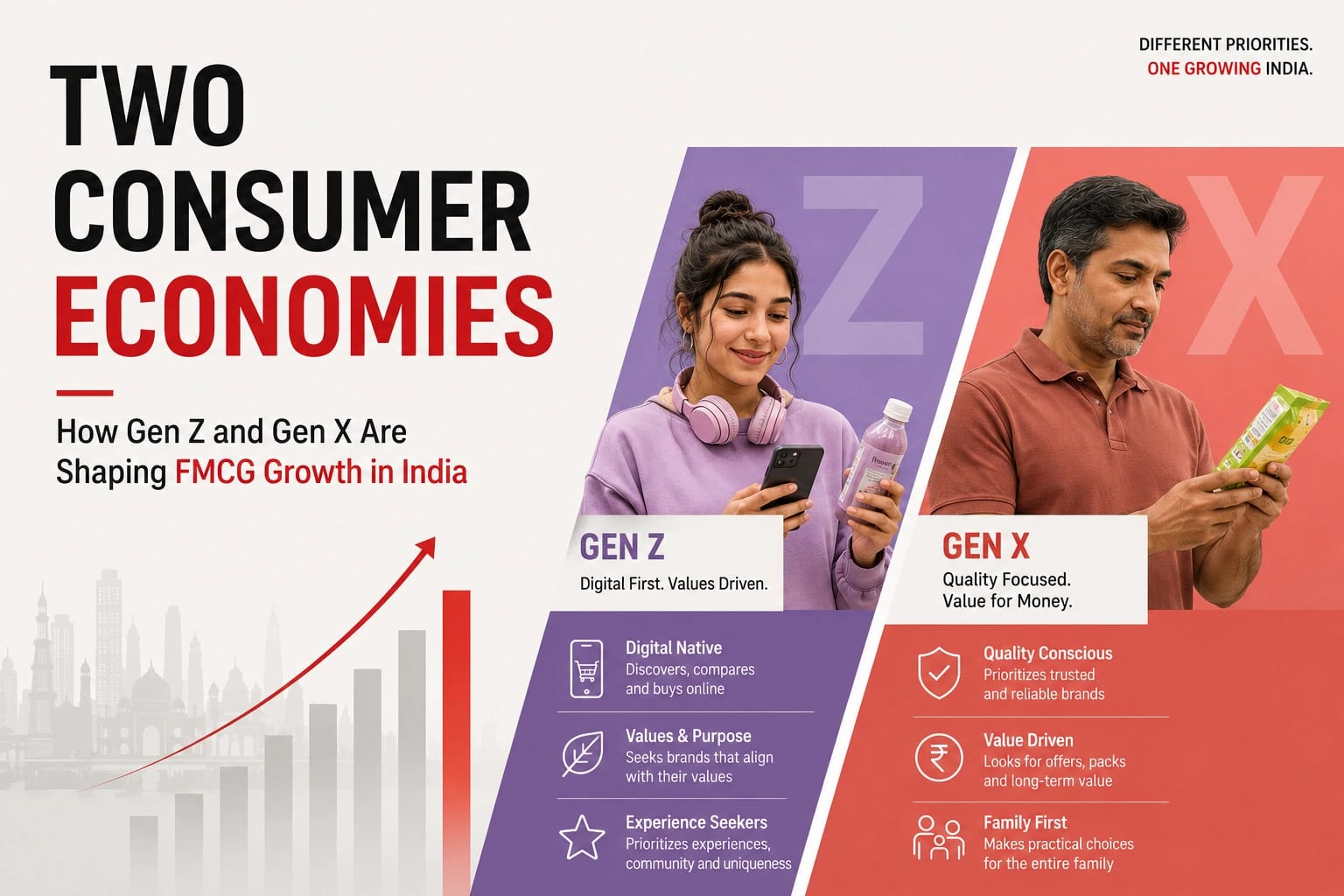
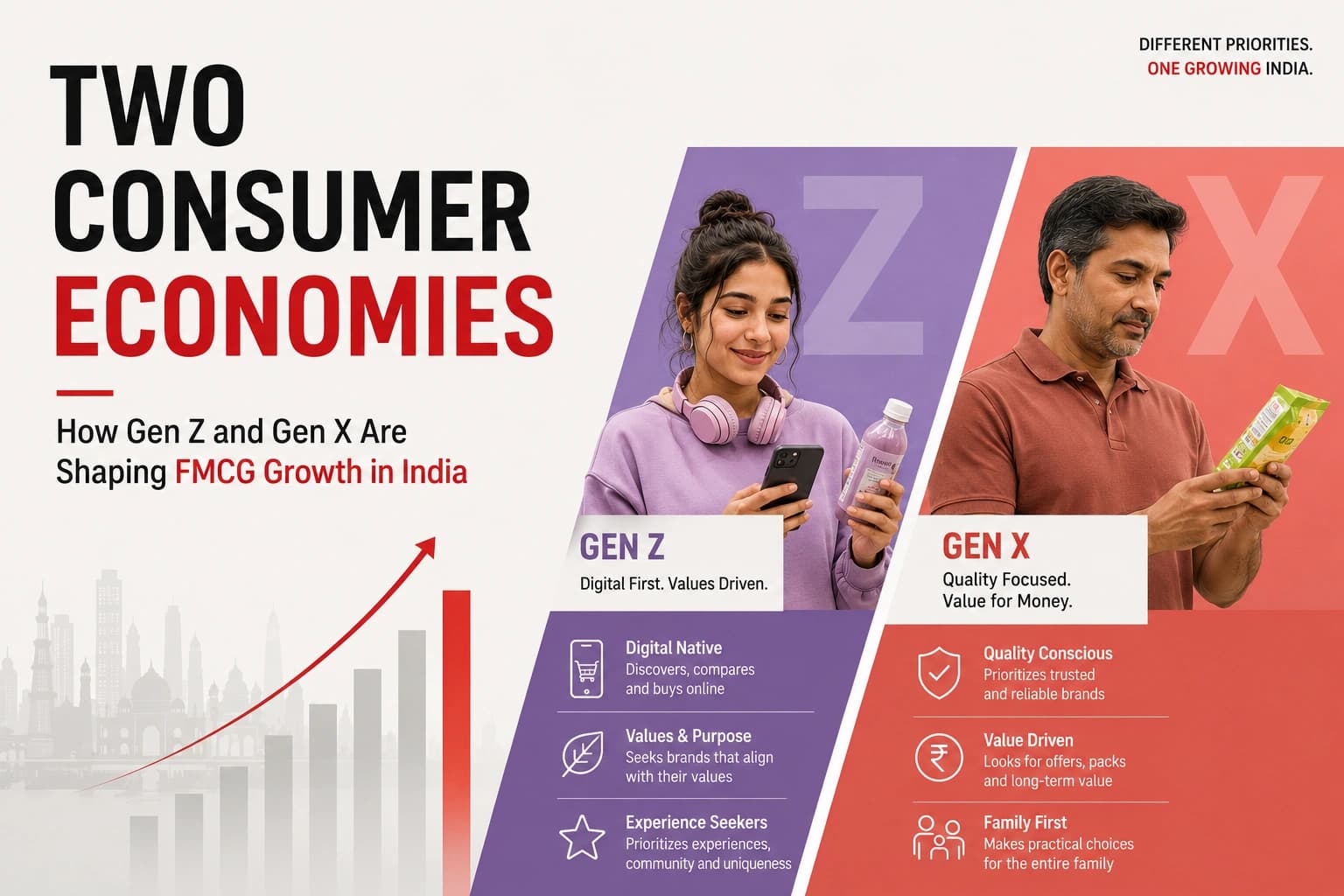
A closer look at FMCG consumer trends in India shows a more segmented picture. Different age groups are driving demand in very different ways, influencing how categories grow, how products are designed, and how brands scale.
In particular, Gen Z and Gen X are shaping two distinct consumption patterns within the FMCG market in India, creating parallel demand drivers that brands need to understand more clearly. This is an area where strategy consulting firms in India are increasingly helping businesses refine their growth strategies.
The FMCG Market in India Is Becoming More Segmented
The idea of a single “Indian consumer” is becoming less useful in understanding demand. Consumption behaviour today varies significantly based on:
- age group
- income level
- lifestyle preferences
- and channel usage
This shift is visible across categories such as beauty and personal care, health and wellness, and packaged food and beverages.
As a result, consumer behaviour in India is becoming more fragmented, and growth in the FMCG market in India is being driven by multiple demand engines rather than a single trend.
Gen Z: Driving Expansion Through New Consumption Patterns
Gen Z is emerging as one of the most influential consumer groups in India’s FMCG landscape. By 2030, this cohort is expected to contribute significantly to overall consumption, with a strong influence on categories linked to lifestyle, identity, and self-expression.
Key characteristics of Gen Z consumption include:
- High experimentation
Gen Z consumers are more willing to try new brands, formats, and categories, particularly in beauty, fashion, and packaged food. - Low brand loyalty
Purchase decisions are influenced more by trends, peer behaviour, and social media than by long-term brand relationships. - Preference for affordable formats
In categories like fashion and personal care, products priced below ₹1000 see higher traction, supporting frequent purchases. - Digital-first discovery
Social media platforms play a central role in product discovery and purchase decisions.
This behaviour is expanding the market by creating demand for new categories, formats, and consumption habits. For brands, this creates opportunities that often require support from product innovation consulting India to align offerings with evolving preferences.
Gen X: Anchoring Growth Through Stability and Premium Consumption
While Gen Z is driving experimentation, Gen X plays a different role in the FMCG ecosystem. This cohort represents a smaller share of the population but contributes significantly to consumption due to higher purchasing power and more stable spending patterns.
Key characteristics of Gen X consumption include:
- Focus on quality and trust
Purchase decisions are influenced by reliability, proven outcomes, and brand credibility. - Higher spend on health and wellness
Categories such as preventive healthcare and nutraceuticals are seeing strong growth within this group, with segments expected to scale significantly over the next decade. - Preference for structured products
Gen X consumers are more likely to adopt products that offer clear functional benefits, especially in health-related categories. - Consistent purchase behaviour
Repeat consumption and brand stickiness are higher compared to younger cohorts.
This cohort contributes to depth in the market by supporting premiumisation and repeat consumption. These patterns are often analysed within consumer strategy consulting India to help brands identify stable revenue pools.
Where Generational Differences Affect FMCG Growth Strategy
The differences between Gen Z and Gen X are not limited to preferences. They affect how the FMCG growth strategy in India needs to be structured.
Some of the key areas where this divergence matters include:
Product design
Gen Z-oriented products often prioritise novelty, affordability, and aesthetics, while Gen X-oriented products focus on efficacy, quality, and long-term value.
Pricing strategy
Younger consumers drive volume through lower price points and higher frequency, whereas older consumers contribute through higher ticket sizes and premium segments.
Channel strategy
Gen Z is more active on digital-first and quick commerce platforms, while Gen X continues to engage across both online and offline channels, depending on the category.
Brand positioning
Messaging for Gen Z often focuses on identity and trends, while Gen X responds more to trust, reliability, and functional benefits.
These differences make it difficult to apply a single strategy across the entire consumer base, increasing the need for structured growth strategy consulting in India.
Implications for Brands in the FMCG Market
As generational differences become more pronounced, brands need to rethink how they approach growth in the FMCG market in India.
Some of the key considerations include:
- Building segmented product portfolios
Products need to cater to different consumer groups rather than a uniform market. - Balancing volume and value growth
Gen Z-driven demand can increase scale, while Gen X-driven demand can improve margins. - Aligning channel strategies with consumer behaviour
Distribution decisions need to reflect where different cohorts are most active. - Investing in consumer insights
Understanding how behaviour varies across age groups becomes critical for long-term growth.
These decisions are increasingly being supported by strategy consulting firms in India, particularly in areas such as product innovation consulting India and consumer strategy consulting India.
The Role of Strategy in a Multi-Cohort Market
As the FMCG market becomes more segmented, growth depends on how effectively brands respond to these differences.
This involves:
- identifying which consumer cohorts are driving growth in specific categories
- aligning product and pricing strategies accordingly
- designing channel strategies that reflect actual usage patterns
Strategy consulting in India is playing a growing role in helping businesses navigate this complexity and build scalable, data-driven approaches to growth.
The Road Ahead for FMCG in India
India’s FMCG market will continue to expand over the coming years. The way this growth unfolds will depend on how well brands understand and respond to the different drivers of demand across consumer groups.
Gen Z will continue to shape new categories and consumption habits, while Gen X will contribute to stability and premiumisation. Recognising these patterns early can help brands build stronger strategies and capture a larger share of growth in the FMCG market in India.
To understand these shifts in more detail, explore Redseer’s insights on generational consumption trends and FMCG growth in India.
Redseer works with brands, platforms, and investors to translate consumer insights into actionable strategies through strategy consulting in India, including growth strategy consulting and product innovation consulting.