How India ended up watching 2,100 years of micro-drama daily


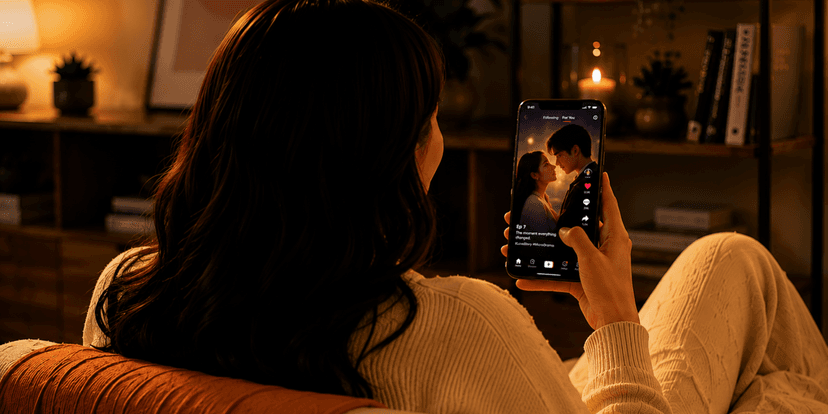
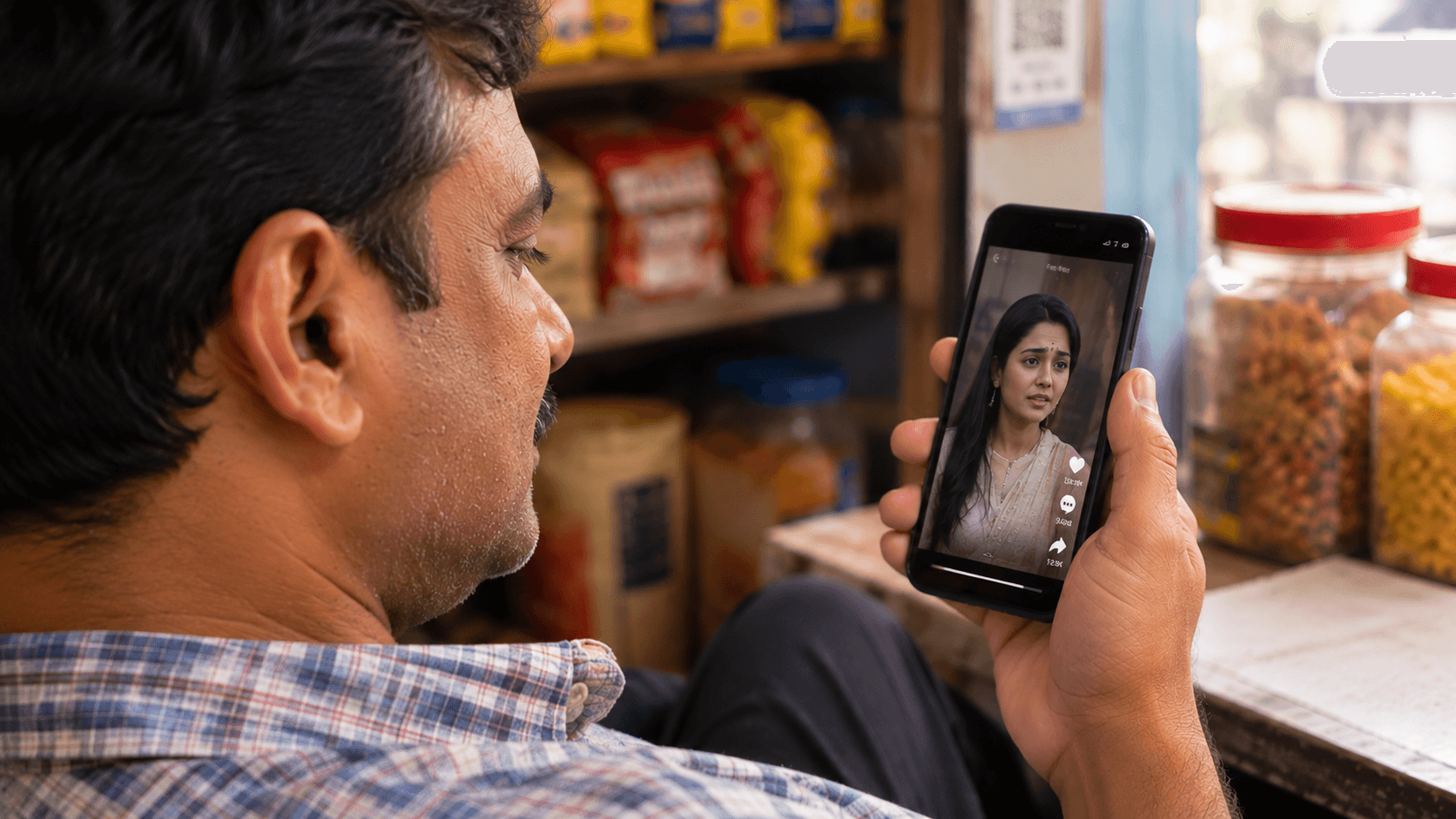
Somewhere in India right now, a billionaire’s secret heir is being exposed, a family feud is boiling over, a Dhaba chef is training to be an astronaut and someone is about to tap “next episode.”
Add up all that viewing and India is watching the equivalent of roughly 2,100 years of micro-drama every single day.
Microdramas are series of 1-4 minute videos that cut across genres, from billionaire drama to family feuds and more, and are categorised by their classic cliffhanger that makes you want to scroll more. The format uniquely combines the snackable nature of short-form content with serialised storytelling. The proliferation of this style of content is deep.
Redseer estimates an addressable opportunity of 250–280 Mn paid users for micro-drama in India, of which 15– 17 Mn were average monthly paying users in FY26.
This shows that India has a large pool of internet and smartphone users who are willing to engage with and pay for digital entertainment.
1. How did we get here?
The movement from larger screens to short form content in the last decade has a massive role to play in setting the foundation for a booming microdrama market in India. A significant inflection point was India’s development of a mobile-first infrastructure.
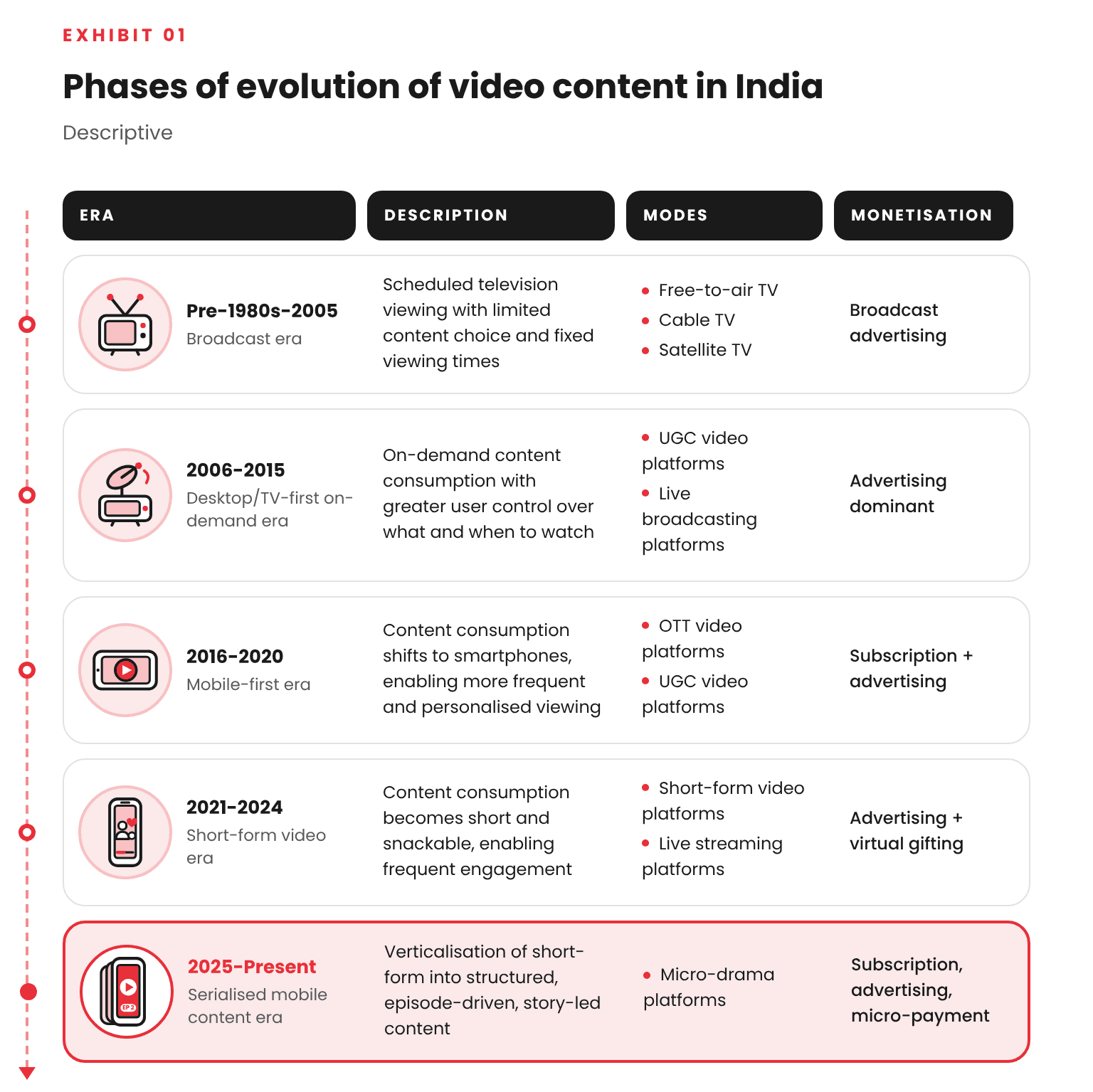
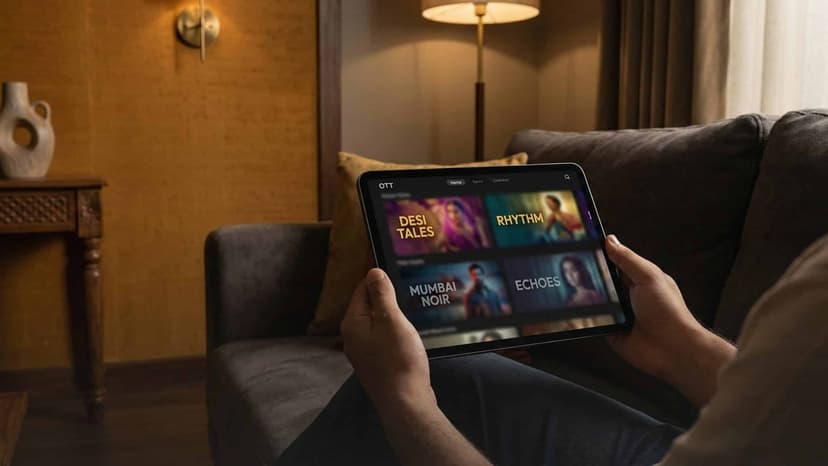
Thanks to cheaper data and smartphone adoption, mobile video expanded from 300 Mn users in 2016 to 640+ Mn by 2026, reaching well beyond Metro/ Tier 1 cities. Coupled with platform-focused features like personalised feeds and algorithms, short-form video became a consistent daily habit for millions of Indians.
Microdramas were able to create a distinct avenue where serialised storytelling could thrive: a habit built on quick, frequent sessions left room for stories that give viewers a reason to return. Micro-drama filled that gap by combining the snackability of a reel with the pull of a serial, with episodes short enough to fit into a spare few minutes and cliffhangers that make the next one hard to skip.
2. Micro-drama sticks as a daily habit because it fits the spare moments of an Indian day
Perhaps the strongest testament to microdrama’s success in India is being able to seamlessly integrate into a user’s online routine without added intervention.
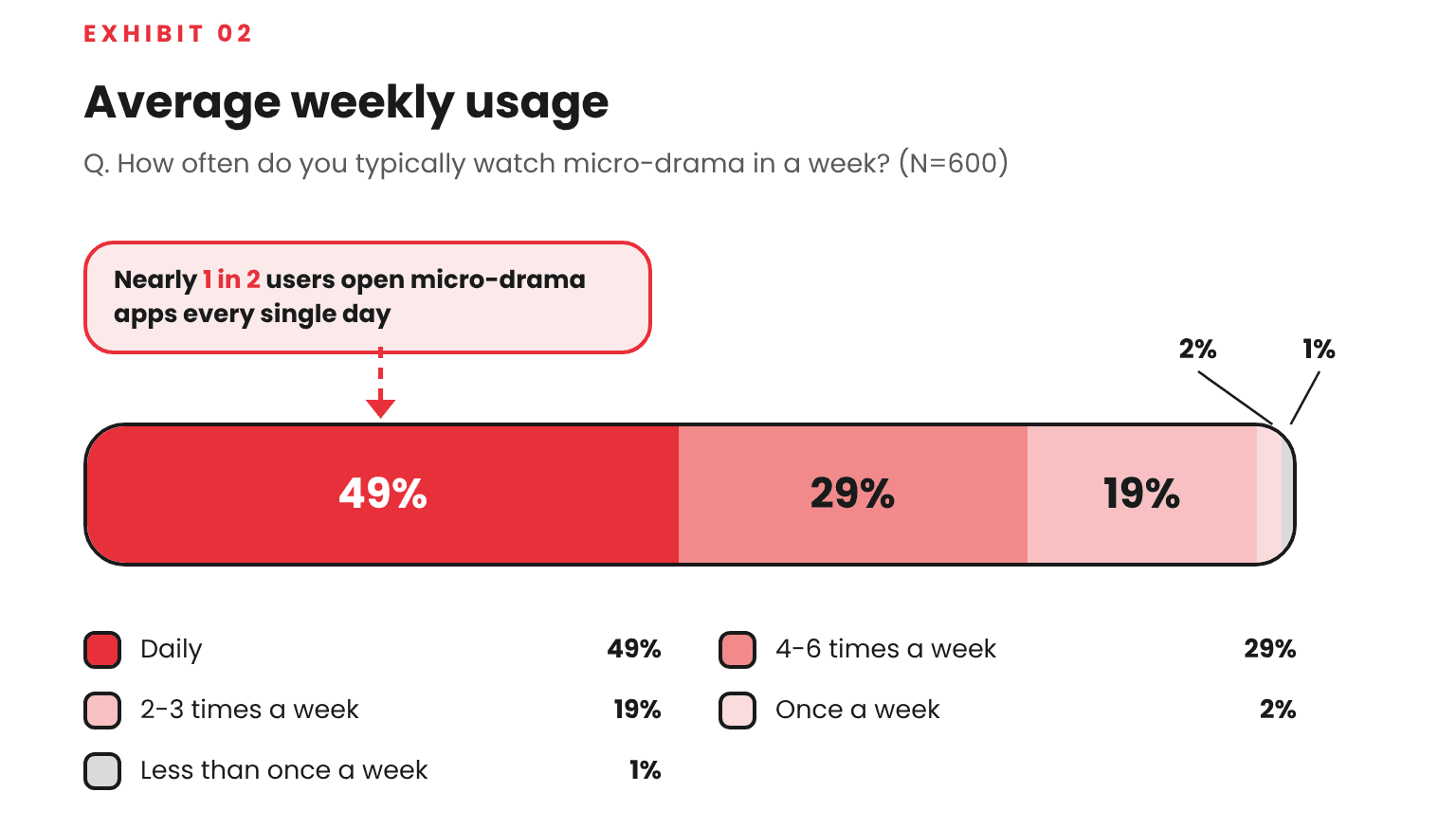
We found that particularly when it comes to microdrama, once it is discovered users with strong habit formation are reinforcing engagement, with users returning more frequently and collectively and consuming significantly more content over time. One user told Redseer –
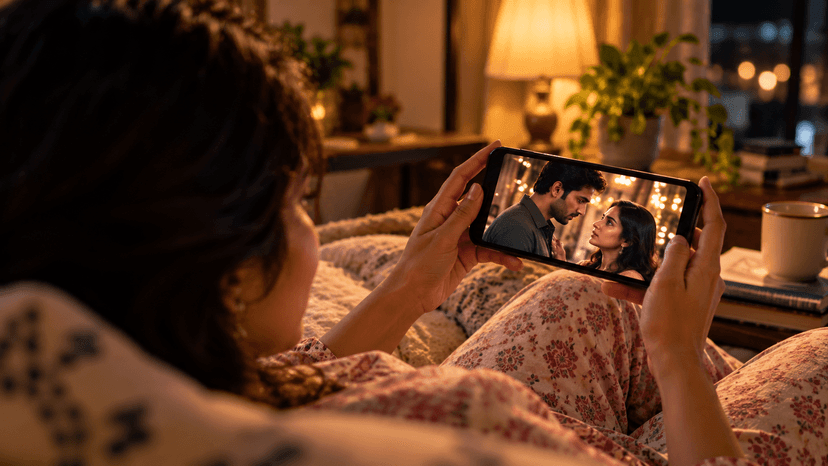
After my children leave for school and I finish my work, I sit for some time and watch a few episodes. It has become part of my daily routine now.
Microdramas have a unique spot in the consumption time of a user, where they fit in naturally into their daily routines.
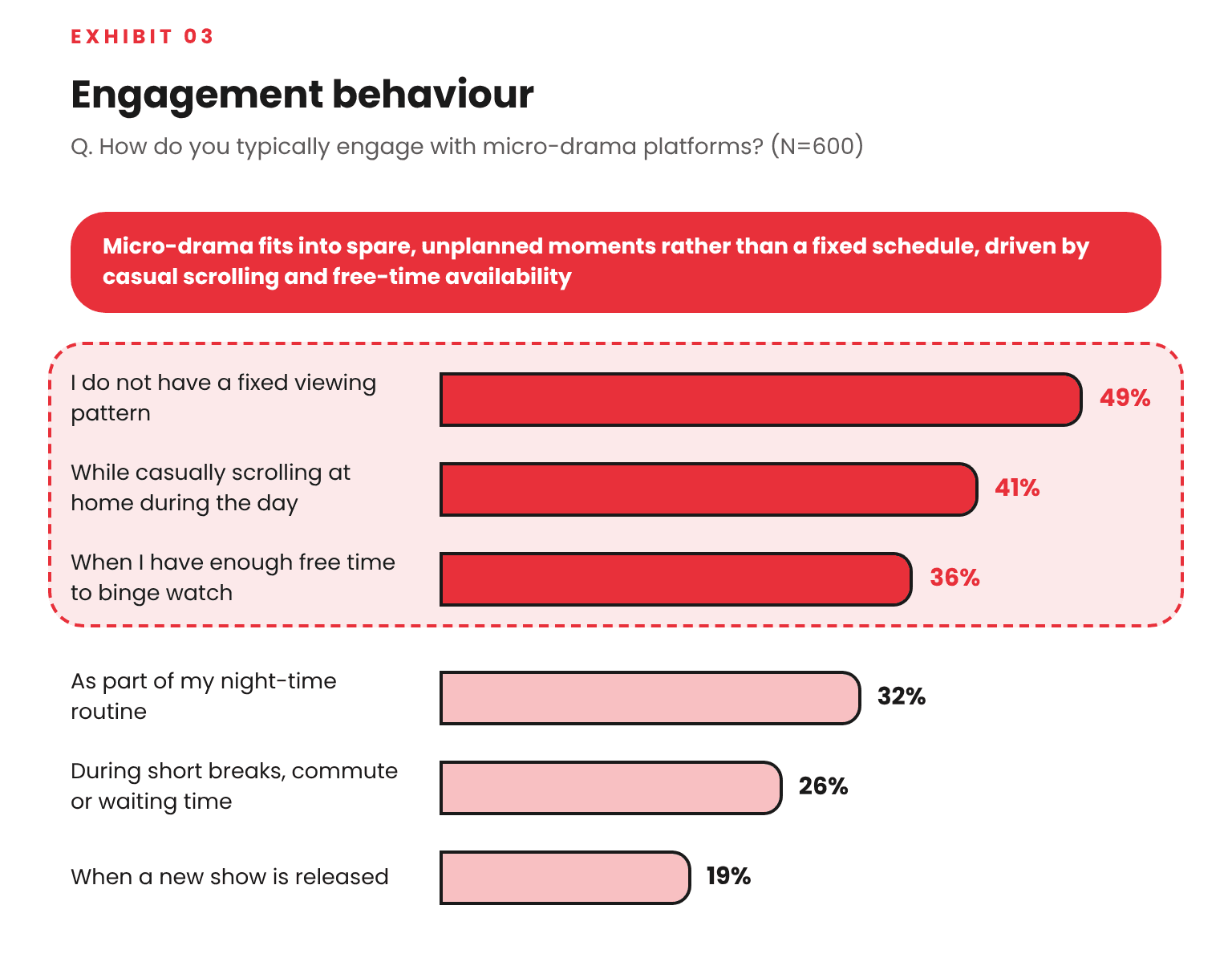
3. Four structural forces keep that habit going and widen the audience
Redseer points to four structural forces that could push micro-drama well beyond today’s audience.
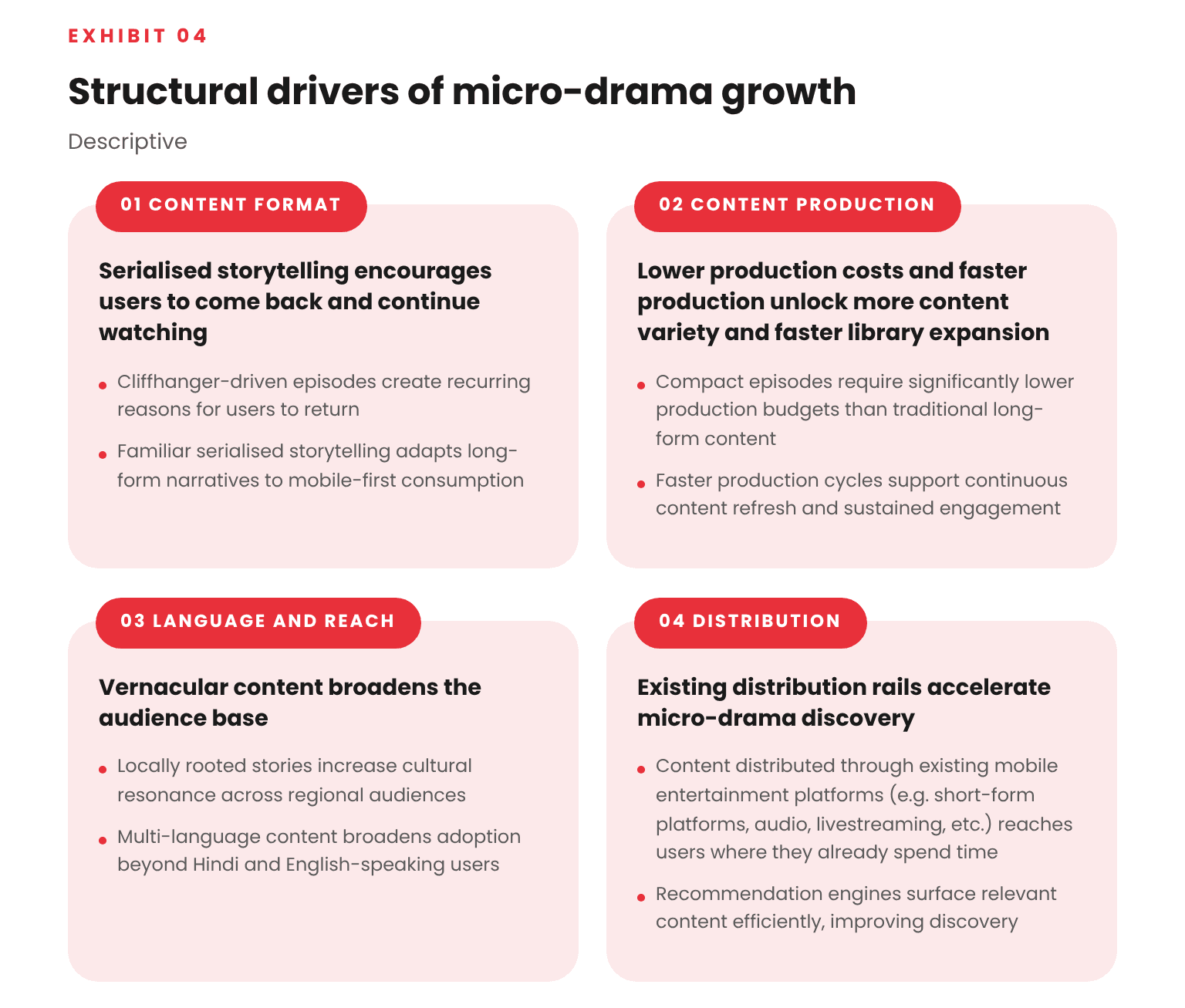
Cliffhanger-led storytelling gives viewers a reason to come back. Compact episodes are cheaper and faster to produce, so libraries refresh quickly. Local and multi-language stories reach audiences beyond Hindi and English speakers. And existing platforms, from short-form video to audio and livestreaming, already put the format in front of people where they spend their time.
4. Where Growth Stalls: The moment users are asked to pay
Around 40 Mn users paid for micro-drama at least once in FY26, but only 15-17 Mn were paying in an average month. Redseer’s analysis shows that subscription retention fell to roughly 50% by month three and about 25% by month six.
The reason is less about price than about commitment. One user told us: “It’s not that I don’t want to pay. I just don’t like money getting deducted without me checking first.” Users are comfortable making one-time payments when they’re deeply engaged in a story. Recurring payments are the barrier.
In the current market, there exist three distinct ways to monetise users.
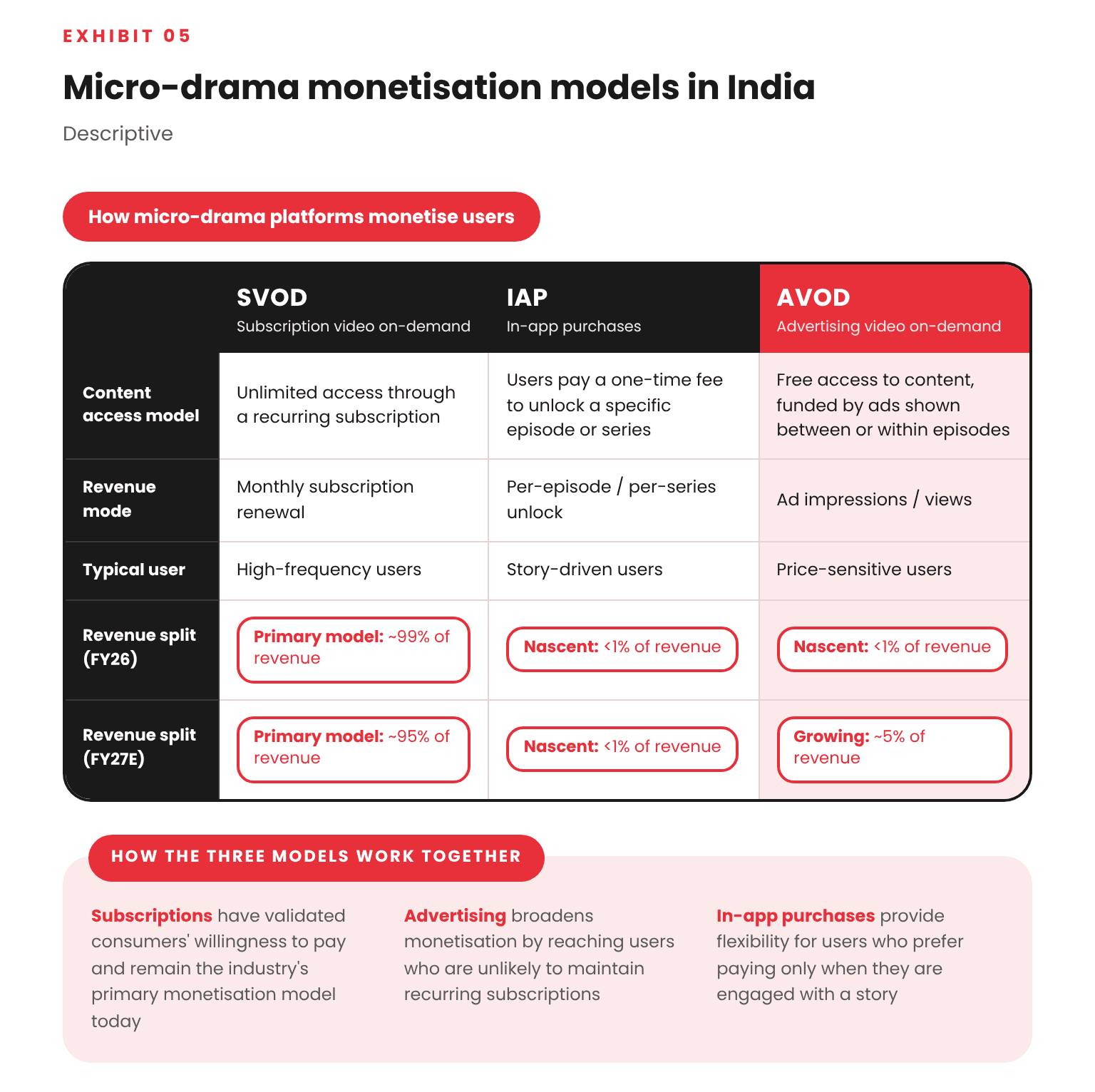
Subscription video on demand (SVOD) gives high-frequency users unlimited access for a recurring fee, and it accounted for ~99% of revenue in FY26. In-app purchases (IAP) let story-driven users pay a one-time fee to unlock a specific episode or series, while advertising video on demand (AVOD) offers price-sensitive users free access funded by ads shown between or within episodes. Both are still nascent, at under 1% of revenue each in FY26.
Redseer expects that to start shifting, with AVOD growing to ~5% of revenue in FY27E as SVOD eases to ~95%. The three models work best together: subscriptions have validated willingness to pay, advertising reaches users unlikely to maintain a recurring plan, and in-app purchases suit those who want to pay only when they’re hooked on a story.
5. Free entry widens the audience while subscriptions keep serving high-intent viewers
What advertising video on demand unlocks is the ability to broaden participation of users while simultaneously creating new avenues for monetisation. Free viewing creates a natural pathway to micropayments, letting platforms monetise both free and paying users over time.
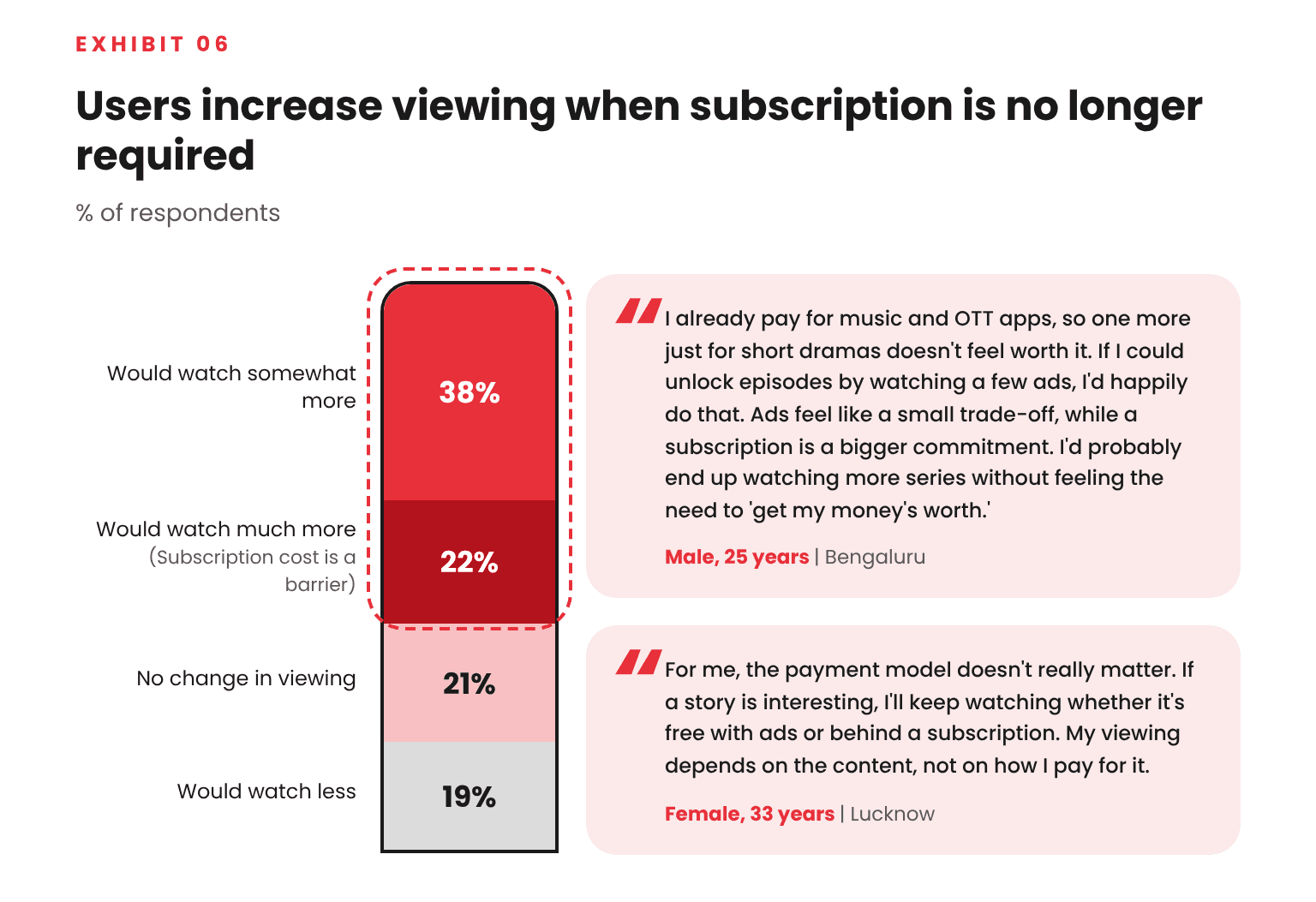
AVOD can also lower the barrier of entry which in turn can engage longer viewing and greater content discovery. One user told Redseer –
“For me, the payment model doesn’t really matter. If a story is interesting, I’ll keep watching whether it’s free with ads or behind a subscription. My viewing depends on the content, not on how I pay for it.”
The success of lower-friction monetisation models can be seen through a simple case study in how microdrama became successful in China. Micro-drama there grew from a paid-unlock model on WeChat into a market where advertising contributes 65-70% of industry revenue, with subscriptions and in-app purchases covering the rest.
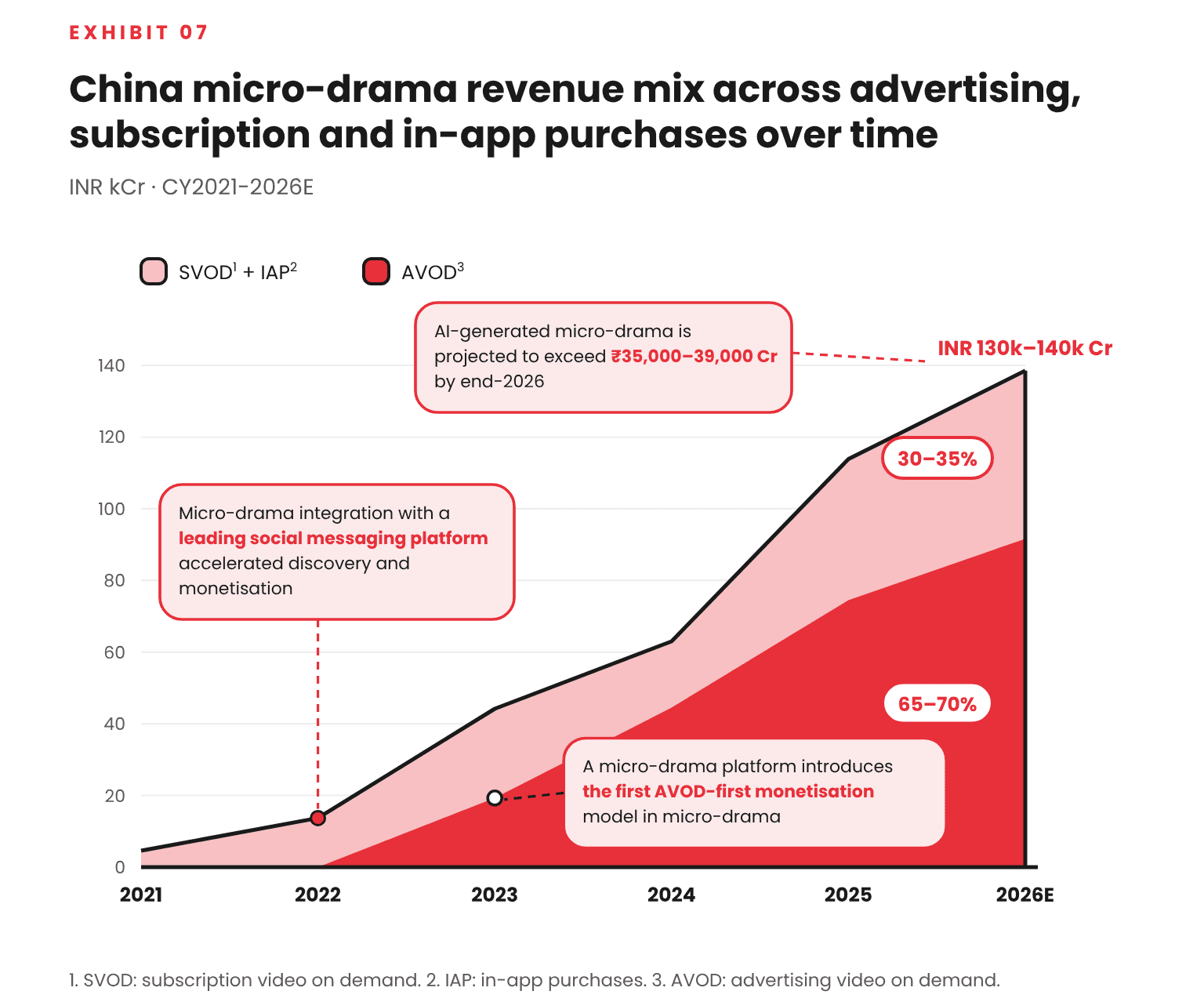
According to Redseer, industry revenue nearly doubled once ad-supported viewing scaled, and the audience broadened well beyond traditional paying users, reaching 700+ Mn monthly active users, around 55% of them from Tier-3+ cities. In the case of China, advertising essentially expanded the market rather than replacing subscriptions which kept serving high-intent viewers at scale.
Early signs in India point the same way: a major OTT platform that launched a free micro-drama tier saw ~100 Mn users try the format within three months.
Redseer Advisory
For Platforms, the focus must be on building flexible monetisation models that balance subscriptions, advertising and in-app purchases while improving retention.
For Content Producers, the opportunity lies in scaling production, investing in regional-language storytelling and using AI to improve production efficiency without compromising content quality.
For Microdrama Investors, the key metrics to watch will extend beyond downloads and paid subscribers to include repeat viewing, retention, content economics and the ability to monetise audiences sustainably.
Written by



The AVOD Imperative: Monetising Serialised Content at Scale in India

Micro-Drama’s J-Curve Moment: What Marketers, Platforms, and Investors Need to Know
Advertising Unlocks Scale for the Next Generation of Consumer Platforms

The Gaming and Interactive Media Opportunity in India

India SFV in 2024: From “Likes to Monetizing Millions”

Demystifying India’s SFV platforms

Indian shortform apps – on the cusp of monetization

Why Many Micro-Drama Viewers Subscribe But Do Not Stay

How we helped a global gaming & interactive media investor read the India opportunity.

Microdrama’s ₹5,000 Cr Advertisement Opportunity

The New Rules of Growth in India’s $150 Bn Packaged F&B Market

How Quick Commerce Can Win Bharat
The AVOD Imperative: Monetising Serialised Content at Scale in India
Micro-Drama’s J-Curve Moment: What Marketers, Platforms, and Investors Need to Know
Advertising Unlocks Scale for the Next Generation of Consumer Platforms
The Gaming and Interactive Media Opportunity in India
India SFV in 2024: From “Likes to Monetizing Millions”
Demystifying India’s SFV platforms