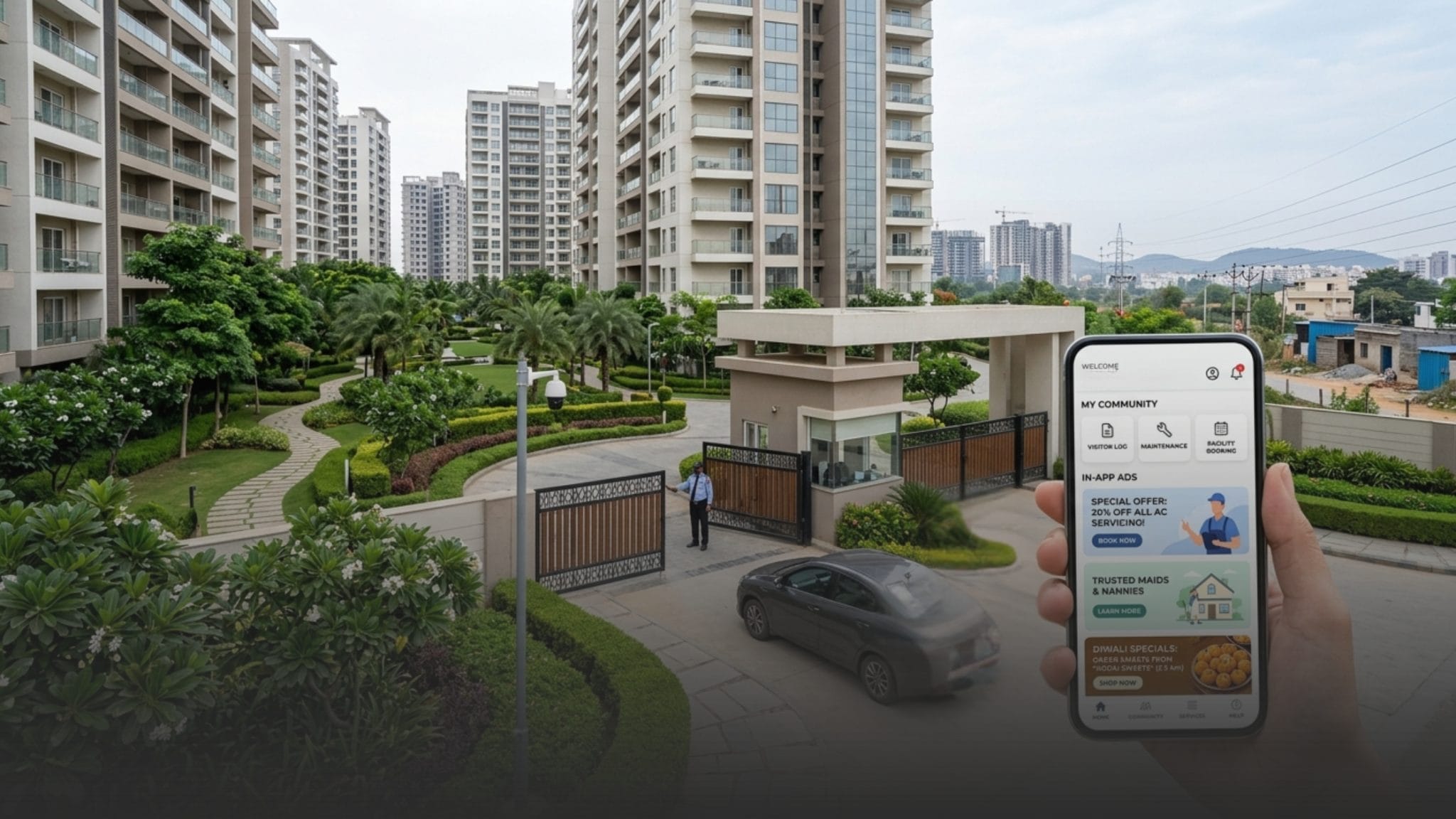
Your Next High-Paying Consumer Isn’t Scrolling. They’re Living Here

At six in the evening, a resident in a Bengaluru gated society gets a parcel alert on her phone. She heads downstairs. While waiting for the lift, a protein bar banner appears on her notification.
The lift arrives. Inside, a screen runs an ad of the same brand. A digital notice board in the lobby carries it again. Just beyond the glass, above the society’s gym, a large billboard for the same brand looms into view. A celebrity in a gym tank top, flexing his arm, clutching a protein bar. The billboard is impossible to miss from the lobby and the counter.
At the counter, the next layer unfolds. A neat kiosk stands by the mailroom, a promoter offering small samples of the bar. She takes one, asks a quick question, and scans a QR code for a contest. The winning prize is a shaker. She then collects her parcel from the mailroom and heads upstairs.
Back at her flat, within 15 minutes, she receives a notification. A platform card inside her resident app confirms she has won that shaker and can redeem it at the society supermarket.
By the time she settles in, the journey has completed itself: awareness, familiarity, interaction, and re-engagement. This all occurs without her leaving the same compound.
Most advertising focuses on targeting the right person with the right message at the right moment. This runs deeper.
This environment shapes receptivity. The banner on her phone catches her idle glance. The lift screen holds it. The billboard outside reinforces it. The sample turns awareness into experience. The contest brings her back on her own time.
No open channel can choreograph these shifts and drive results. Only a gated community holds this magic. Thus, in-app ads inside gated community management platforms see 12–15% CTR, far above the 1–3% norm. Layered campaigns drive 8x–12x returns, beating Google Search (3x–8x) and Meta (2x–5x). The protein brand does not win through better targeting using traditional platforms such as Instagram. It won through a better environment.
Now meet the consumer inside
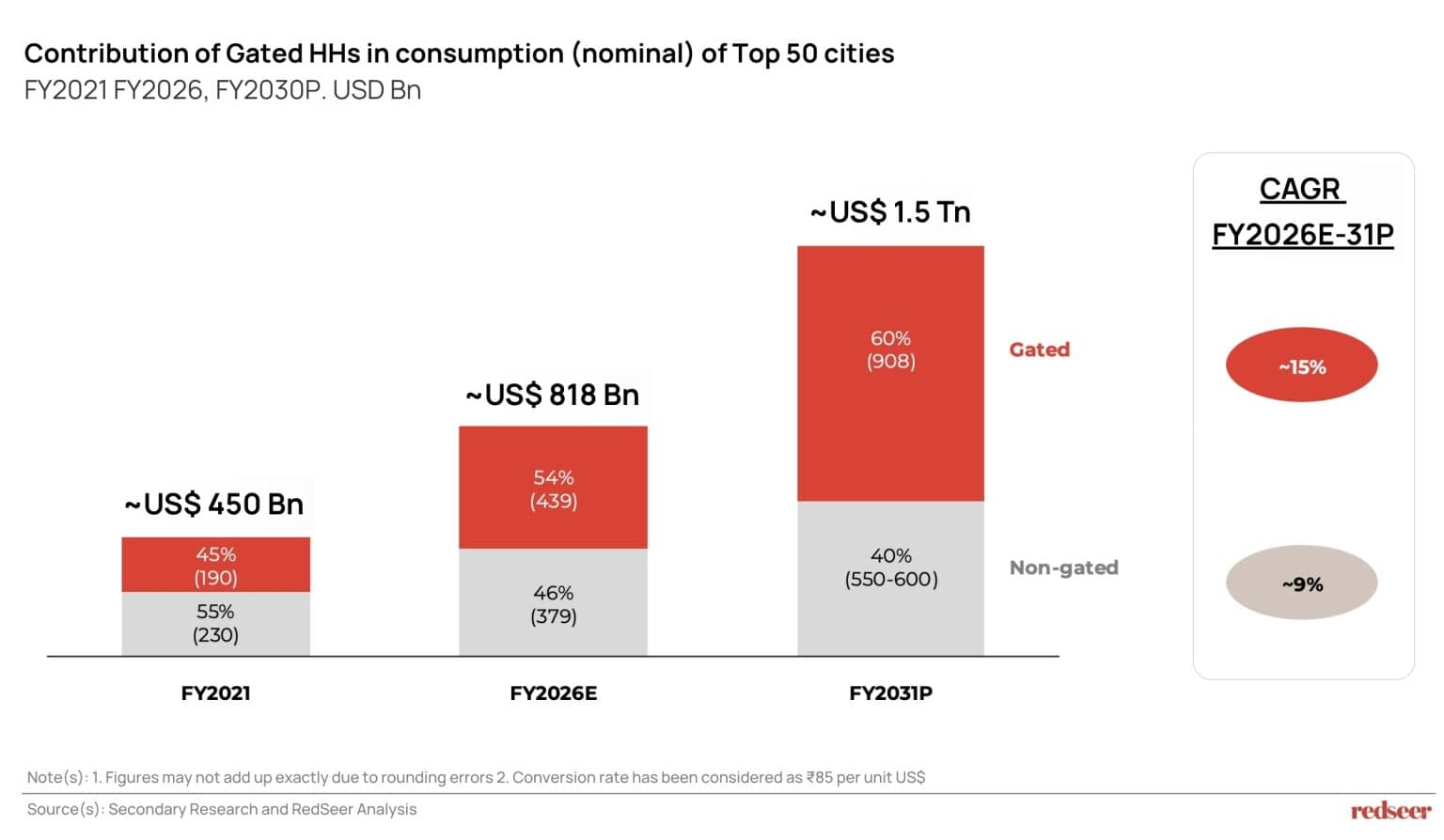
Gated community residents earn $14,000–$15,000 per capita. This is five to seven times the national average. That places nearly 85 million people at income levels comparable to China or Russia today. They are not waiting to become premium consumers. They already spend on categories and experiences that the rest of urban India is still warming up to.
By 2031, these households could drive $900 billion in consumption, growing at 15% annually, versus 9% for the rest of urban India. That six-point gap is where India’s spending is shifting. And it is diverging into a geography that a brand can now reach with a single integrated media plan..
Now look at the scale
India has about 150,000 gated communities today. In the next five years, they will amount to 180,000, housing roughly 32 million families, half of all households across the country’s top fifty cities.
Growth across the country tells the real story.
Metro clusters like Whitefield, Powai, and Gurgaon grow slowly, around 2% a year. Non-metros such as Coimbatore, Surat, Nagpur, Lucknow, Rajkot, and Kochi at 9%. The shift in non-metros is driven by IT parks and industrial corridors. The resident in Bengaluru who won the shaker already has counterparts emerging across these cities. They have the same income, same habits, and same rhythms.
Gated communities are not just a channel. They are infrastructure that are well-scaled, deeply connected, and still underused. Yet, most brands are still treating them as a footnote, diverting their budget to less effective media. Brands that learn to reach them now will do so at a reasonable price. Late entrants will pay more once platforms mature and inventory tightens.
‘We are seeing strong results. So spends will keep flowing into this channel. Platform inventory itself is booming rapidly. It is forecasted that reach and inventory could double. This opens more scalable opportunities for us.’ – Senior Product Manager, FMCG Company
What integrated marketing looks like here
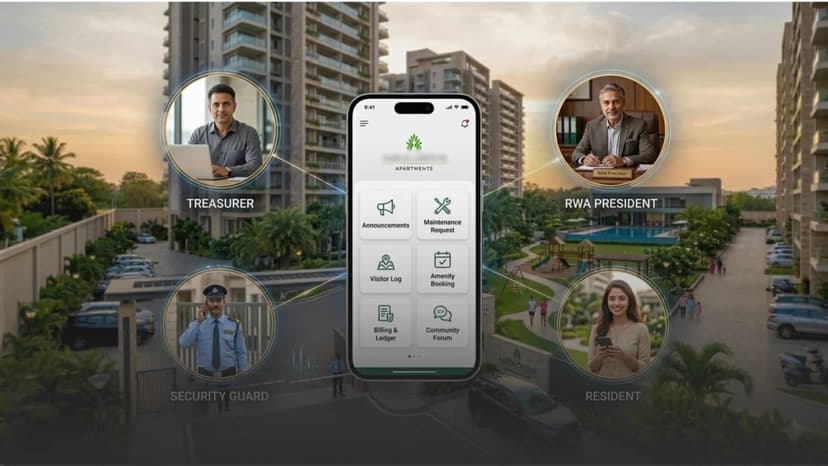
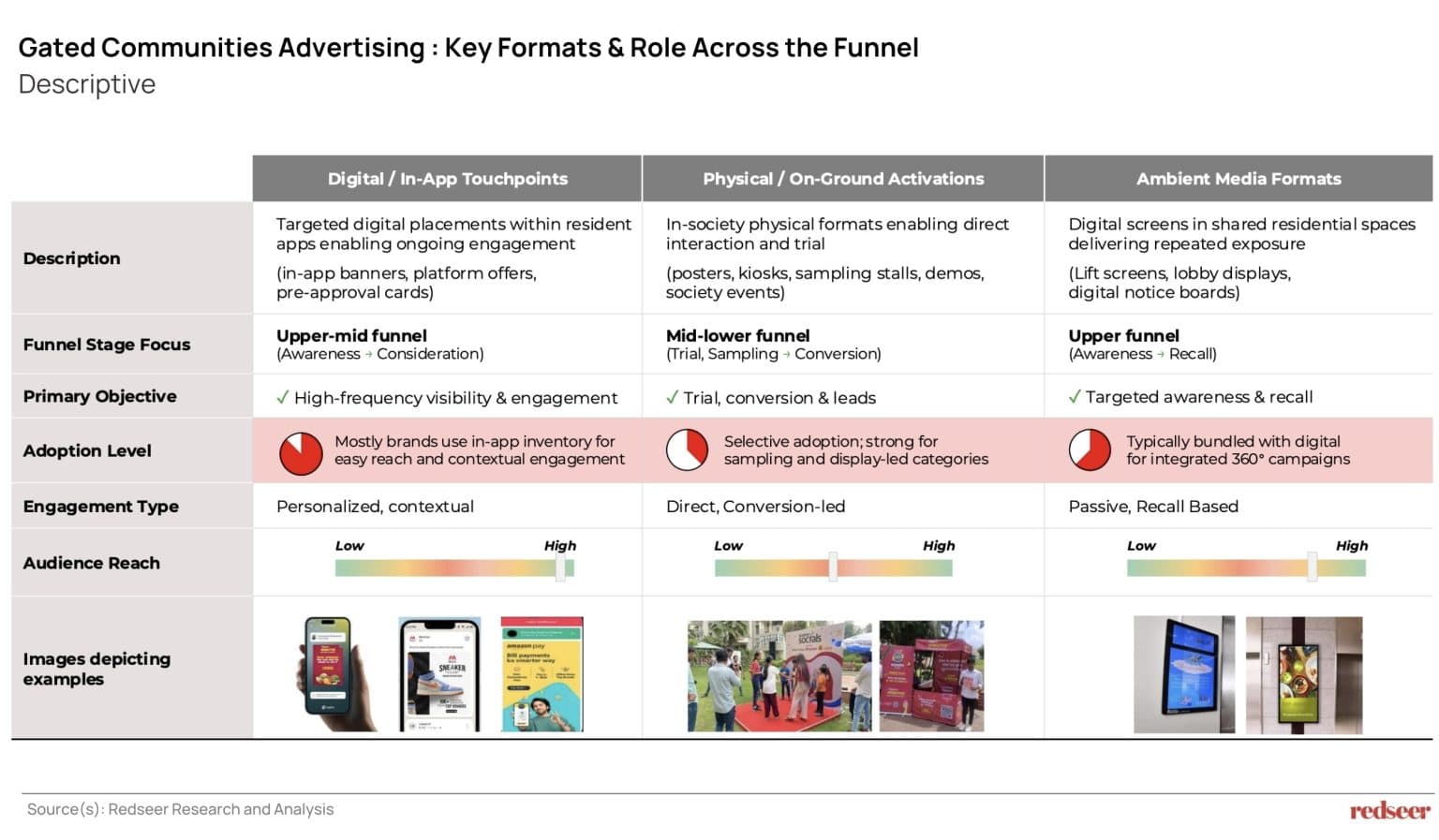
Gated communities generate just $25–30 million in ad spend today, against a $275 million opportunity. The gap is due to a misunderstanding. Most brands see a single channel, usually in-app placements. In reality, this is a three-layer system that works together.
First, ambient. Lift screens, lobby displays, and notice boards help in repeating exposure in low-distraction moments. People aren’t scrolling. They’re simply present. That attention sticks.
Second, digital. Inside resident apps, ads sit within trusted, everyday actions. CTRs hit 12–15% versus 1–3% for standard display. Same audience, same creative but different outcome, driven by context.
Third, physical. Sampling stalls, kiosks, and events turn interest into trial. Conversion runs at 20–25%, helped by proximity. People try the product without stepping outside.
The real power emerges when all three align. Awareness builds in shared spaces, consideration deepens in-app, and trial happens on the ground within days.
This outperforms traditional channels through better targeting. It wins because the entire journey from awareness to purchase unfolds within one connected environment.
Case study: Shifting the Mindset
Redseer stepped into Bengaluru with a simple question. ‘How do gated communities justify rising ad spends, or does the promise of ROI outpace reality?’
The team surveyed more than 650 societies, treating each one like a micro-city with its own behaviour, density, and demand patterns. It studied a leading e-commerce platform focused on hyperlocal conversion and density building. The audience age ranged from 25 to 35 years. The findings show that digital placements carried 50 to 60% of the weight. In-app banners, post-approval ads, and hyperlocal coupons delivered repeated visibility inside resident apps such as Mygate, where attention already existed. Every impression carried a higher probability.
Physical formats completed the circuit. Lift branding and gate posters placed the brand directly into daily routines. It turned passive exposure into a familiar presence.
The results spoke. In-app placements delivered 12 to 15% CTRs, especially during festive peaks. On-ground sampling drove 20 to 25% conversion. Integrated campaigns returned 8x to 12x on ad spend. Each layer of the funnel supported the next, without leakage or drop-off across channels.
‘Nearly ~70% of residents in these societies are already quick commerce or e-commerce users. It means the density of our core target community is significantly higher. So anyone viewing through Mygate is certainly our customer – unlike other digital media like Instagram, Facebook, etc.’ – Senior Manager, Category Growth & Marketing, e-Commerce Platform
The macro lens: scale and testing, together
Returns tell one part of the story. The real shift happens beyond the campaign. A brand can reach many people and run tight experiments at the same time in the same place.
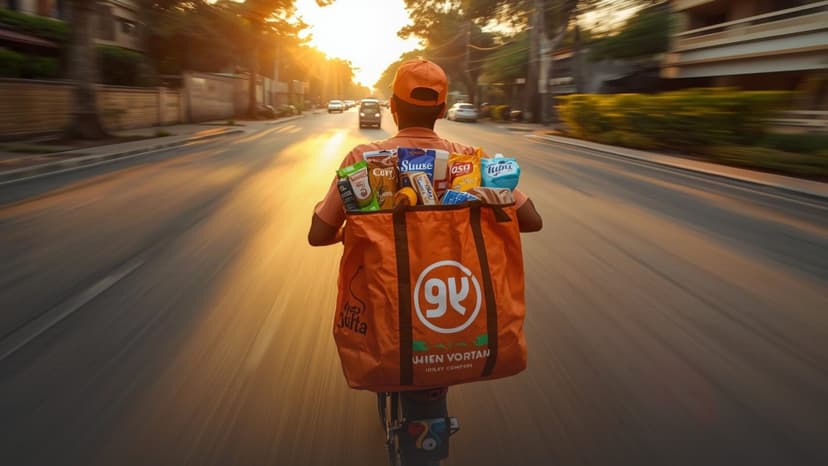
You can see it across sectors. In FMCG and quick commerce, density shapes infrastructure. Gated communities anchor dark store placement and make nearby markets viable. At the same time, they double as test beds. Launch an SKU across a few societies, track it through the resident app, and within weeks, you’ll have clear data on conversion and repeat purchase. No focus group or open digital test offers that mix of real behaviour and clean measurement. If it works here, it is a strong signal that it can work nationally
‘Gated communities are becoming the backbone around which quick commerce operations are planned. Their density gives us confidence to place dark stores and scale serviceability in surrounding areas.’ – Brand Manager, Q-Commerce Platform
In automotive and consumer electronics, the same setup shortens long cycles. A single community can host test drives or demos for hundreds of high-income households in one place. Run these drives across a few societies, and you get faster, richer purchase signals than most surveys at a fraction of the cost.
In BFSI and real estate, trust becomes the edge. Brands reach verified residents in a credible setting, not anonymous users. That lifts response and sharpens testing. A fintech, for instance, can roll out a new feature to a defined cohort, measure adoption, then scale with confidence.
Jewellery brands echo the same sentiment. A senior brand manager reinforces this claim in Redseer’s research. He says the value lies in reaching verified residents, not anonymous users, because ads in trusted residential spaces feel more credible for big decisions.
The platform layer: why now
Five years ago, this barely existed at scale. Ad spend in gated communities has grown from $5–6 million in 2021 to $25–30 million today, against a $275 million opportunity. That gap doesn’t signal weakness. It signals early-stage infrastructure.
Without platforms such as Mygate, NoBrokerHood, and ADDA, communities remain scattered. Altogether, they currently reach about 25% of gated households. That is 6–7 million homes across tens of thousands of communities. By 2031, this penetration could cross 40%, linking over 12 million households into one network.
Without these platforms, communities remain scattered. With them, they become connected, where in-app ads, lift screens, sampling, and re-engagement all run as one plan against a known audience.
Brands entering now aren’t just spending better. They’re learning faster. As inventory expands and demand rises, early movers gain an edge that late entrants will struggle to buy.
And this demand is heading towards $800 million in the next five years. Not from one format. But from a fully integrated system built around the daily life of a high-value consumer. The audience exists. The system is taking shape. The compounding has begun. Are you in?

Written by
Mrigank Gutgutia
Partner
Mrigank leads business research and strategy engagements for leading internet sector corporates at Redseer Strategy Consultants. He has developed multiple thought papers and is regularly quoted in media and industry circles.


India’s Gated Communities: Gateway to $900 Bn Consumption Unlock

The AVOD Imperative: Monetising Serialised Content at Scale in India

Advertising Unlocks Scale for the Next Generation of Consumer Platforms

Value Grocery Commerce: The Bharat Unlock

Reinventing Packaged F&B with Quick Commerce

Micro-Drama’s J-Curve Moment: What Marketers, Platforms, and Investors Need to Know

The Indian Consumer at 2030: Redefining Aspirations, Choices, and Markets

How we helped a global gaming & interactive media investor read the India opportunity.

Value Grocery – Unlocking India’s Next 100 Mn Shoppers

We enabled a leading e-commerce player with decision-grade intelligence on India’s online grocery market

BigBasket’s business growth enabled by Redseer Consulting

India’s leading e-commerce players’ growth execution strengthened by strategy consulting
India’s Gated Communities: Gateway to $900 Bn Consumption Unlock
The AVOD Imperative: Monetising Serialised Content at Scale in India
Advertising Unlocks Scale for the Next Generation of Consumer Platforms
Value Grocery Commerce: The Bharat Unlock
Reinventing Packaged F&B with Quick Commerce
Micro-Drama’s J-Curve Moment: What Marketers, Platforms, and Investors Need to Know