Quick-Com, Value Commerce and GenZ Drive India’s Online Retail Growth in 2026


Quick commerce is pulling spend in from offline retail, and value platforms are bringing in new shoppers from Tier 2+.
– Kushal Bhatnagar, Partner, Redseer
Gen Z, Value Commerce, and Quick Commerce have moved from short-term boosts to structural growth levers for online retail. Quick commerce and value commerce made up 13% of online retail in H1 2023 and 35% in H1 2026, and by Redseer’s analysis delivered more than two-thirds of the GMV online retail added in H1 2026. Quick commerce alone rose from 4% to 22%.
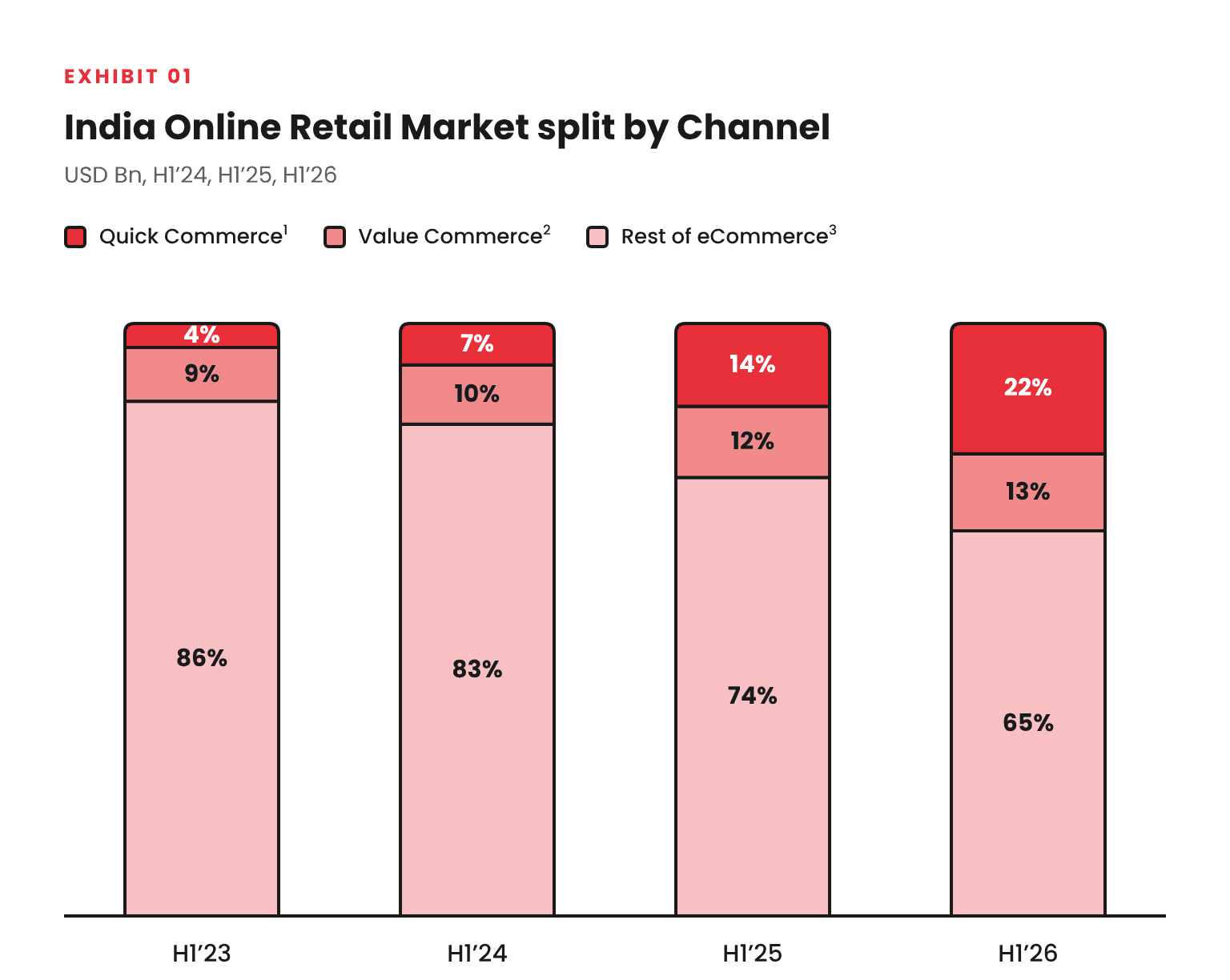
Redseer says each of the three adds demand in its own way, with quick commerce pulling spend in from offline retail, value commerce bringing in new shoppers from Tier 2+, and Gen Z’s share of GMV growing much faster than its share of users. Leading platforms are responding, with Gen Z now central to their growth plans and horizontals expected to route their best festive deals through quick commerce.
1. Gen Z’s contribution to online retail has tripled
Gen Z shoppers, aged 14-29, were about 20% of online retail users in 2022 and are 38-40% in H1 2026. Their share of GMV grew faster, from about 10% to about 35%.
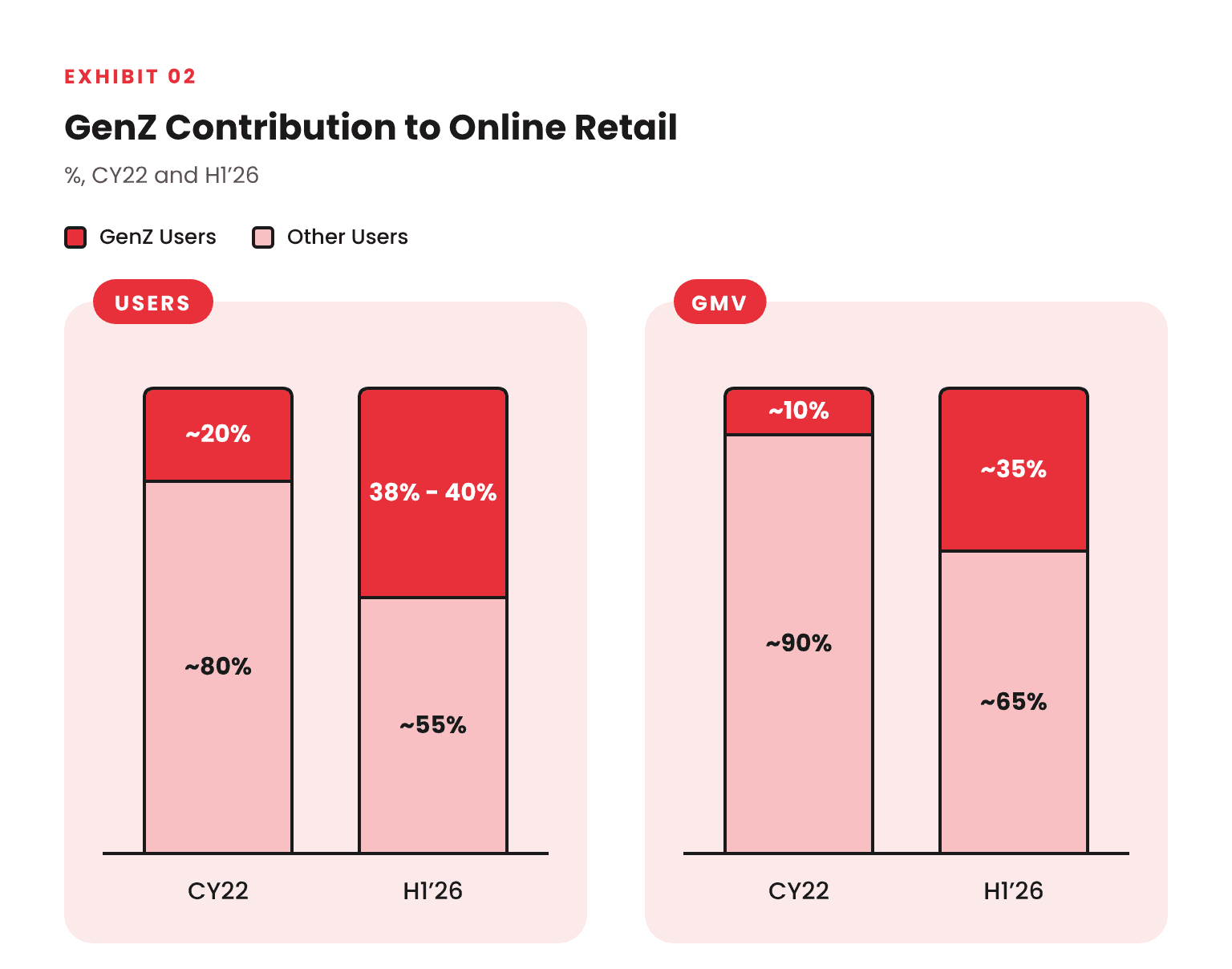
By our analysis, the average Gen Z shopper spent about half as much as the average shopper and now spends about 90% as much. Redseer says Gen Z is now at the core of the growth strategy of leading e-commerce platforms.
2. Tier 2+ now grows faster than metros in fashion and beauty, helped by value commerce and new categories
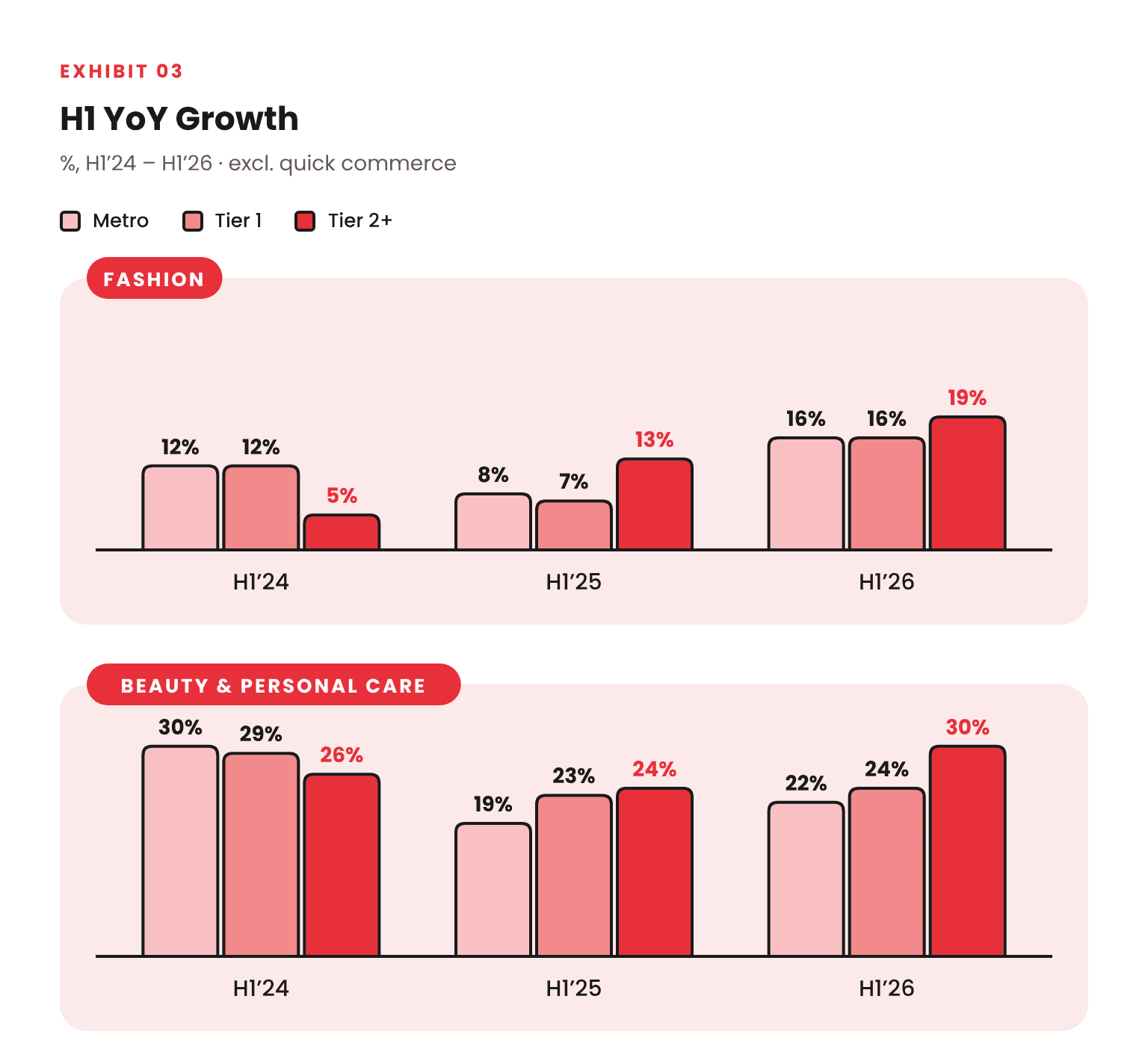
Tier 2+ covers the rest of India outside the top 8 metros and the next 50-55 cities. In H1 2024, it grew more slowly than metros in both fashion and beauty and personal care (BPC), with fashion at 5% against 12% and BPC at 26% against 30%. By H1 2026, the position had reversed: Tier 2+ grew 19% in fashion against 16% for metros, and 30% in BPC against 22%, and it led metros in both categories in H1 2025 and H1 2026, with its BPC lead widening from 5 points to 8.
Tier 2+ covers the rest of India outside the top 8 metros and the next 50-55 cities. In H1 2024, it grew more slowly than metros in both fashion and beauty and personal care (BPC), with fashion at 5% against 12% and BPC at 26% against 30%.
Redseer points to three drivers.
- Value commerce platforms grew over 30% in lifestyle categories in H1 2026, on the back of many new shoppers in Tier 2+.
- Leading horizontals cross-sold lifestyle to their existing Tier 2+ users with affordable and regional selection, vernacular ad campaigns and local influencer-led activations.
- E-commerce brought newly created categories such as face serums and advanced skin-care, along with digital-first brands, within reach of Tier 2+ shoppers for the first time.
Growth in Tier 2+ now comes from affordable selection and from products that are new to these shoppers.
3. Quick commerce has doubled for 3 straight years, and now draws spend from offline
Quick commerce has outgrown the online grocery shoppers it started with, and its new users now come from offline retail. Its market size has grown from about USD 1 Bn in H1 2023 to about USD 9 Bn in H1 2026, roughly doubling every year, and its monthly transacting users (MTUs) have gone from 8 Mn to over 60 Mn.
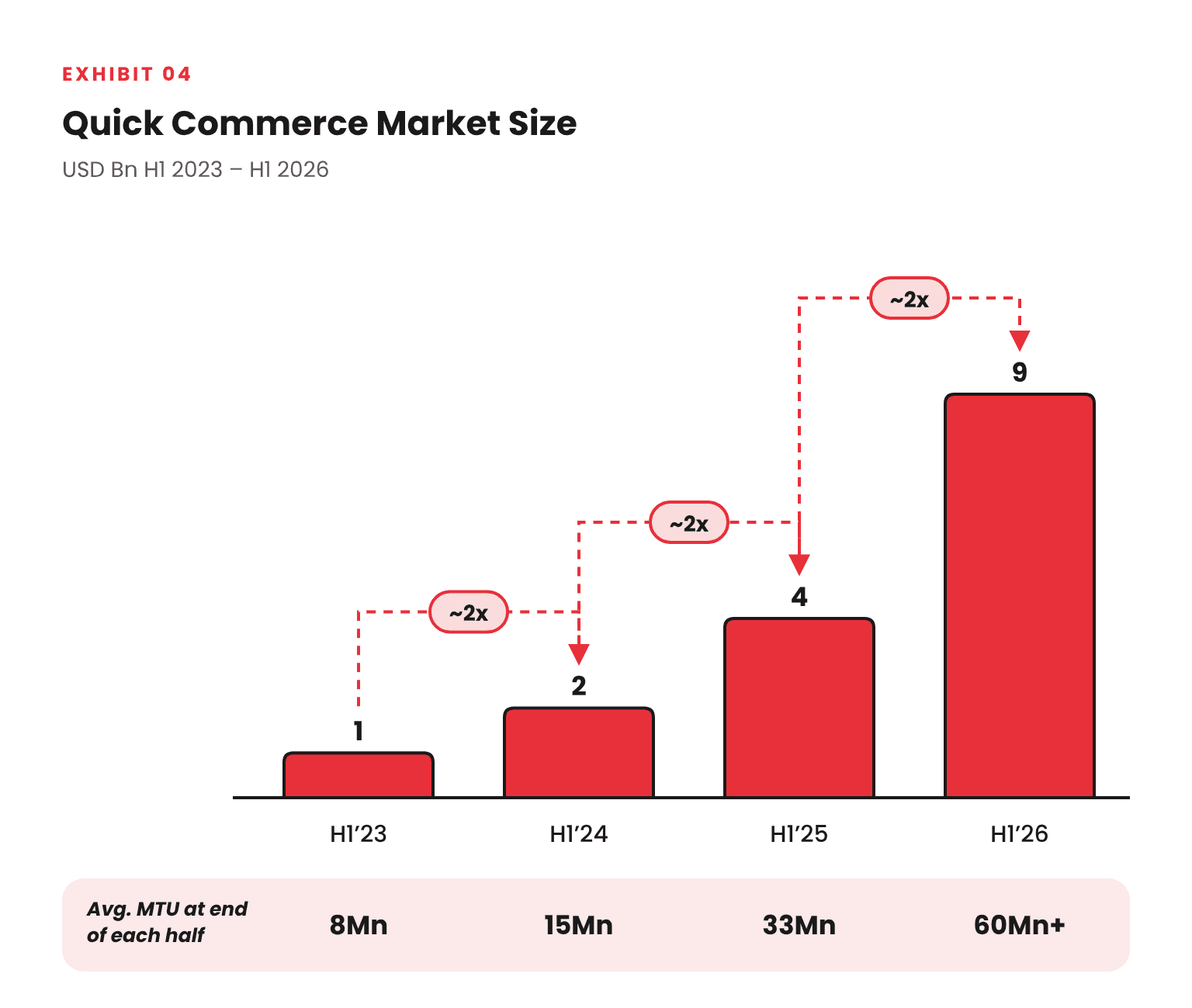
Quick commerce, which delivers within 30 minutes, began by taking shoppers from slotted online grocery, and at over 60 Mn users it has grown well past that pool. It is also creating new reasons to order, with energy drinks, packaged coconut water, dark chocolate and other premium snacks that barely existed online before. Redseer says much of what quick commerce adds is demand online retail did not have before.
4. Quick commerce and value commerce are driving festive momentum in 2026
For the 2026 festive season, Redseer projects quick commerce to grow 110-120%, value commerce 25-30% and the rest of e-commerce 16-18%. Quick commerce goes from 11% of festive GMV in 2025 to 18% in 2026, and the rest of e-commerce falls from 79% to 72%.
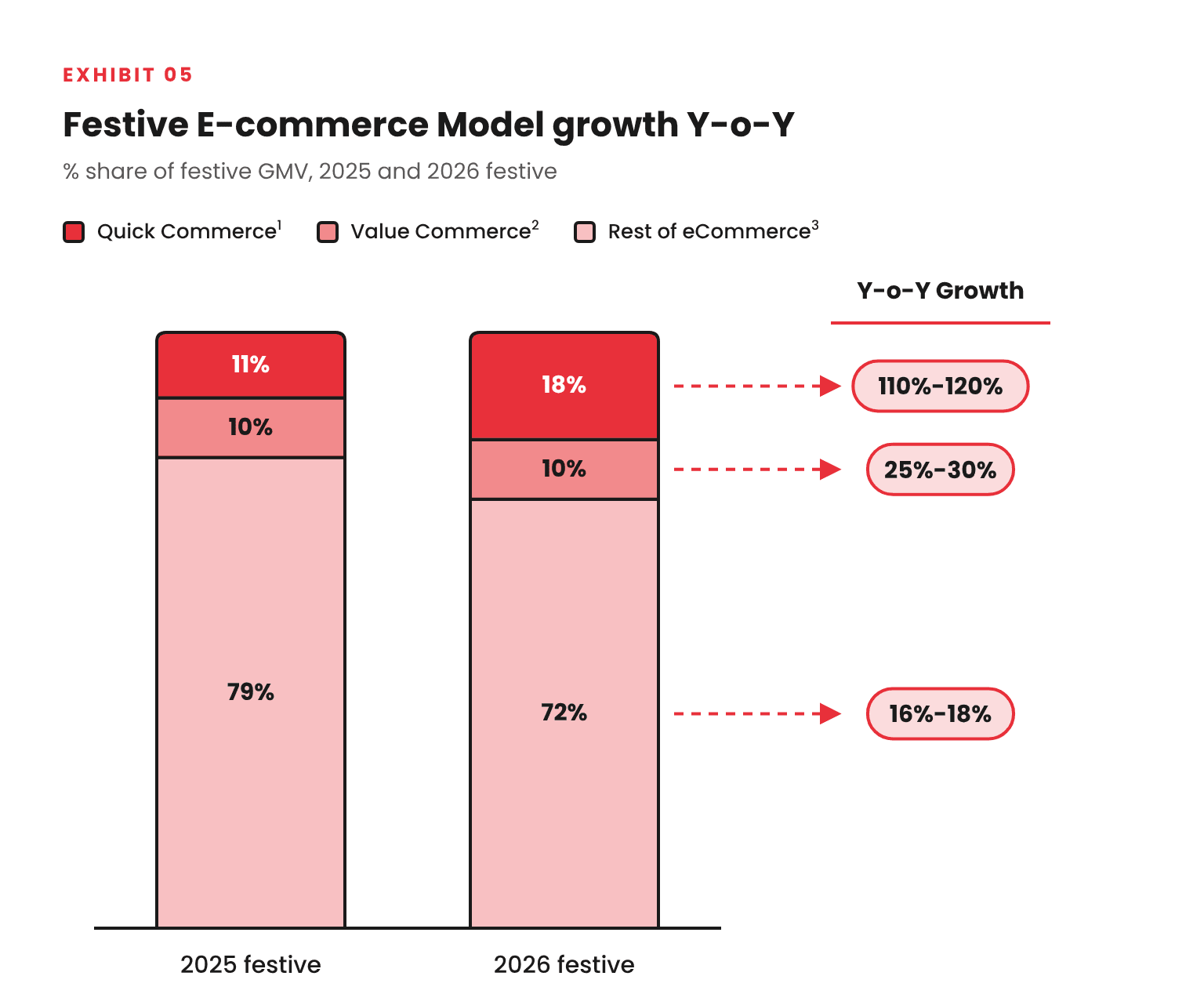
Value commerce is expected to hold its 10% share even on a large base last year. Redseer expects festive deals on low-priced products to bring in new shoppers and unlock spending in Tier 2+ markets.
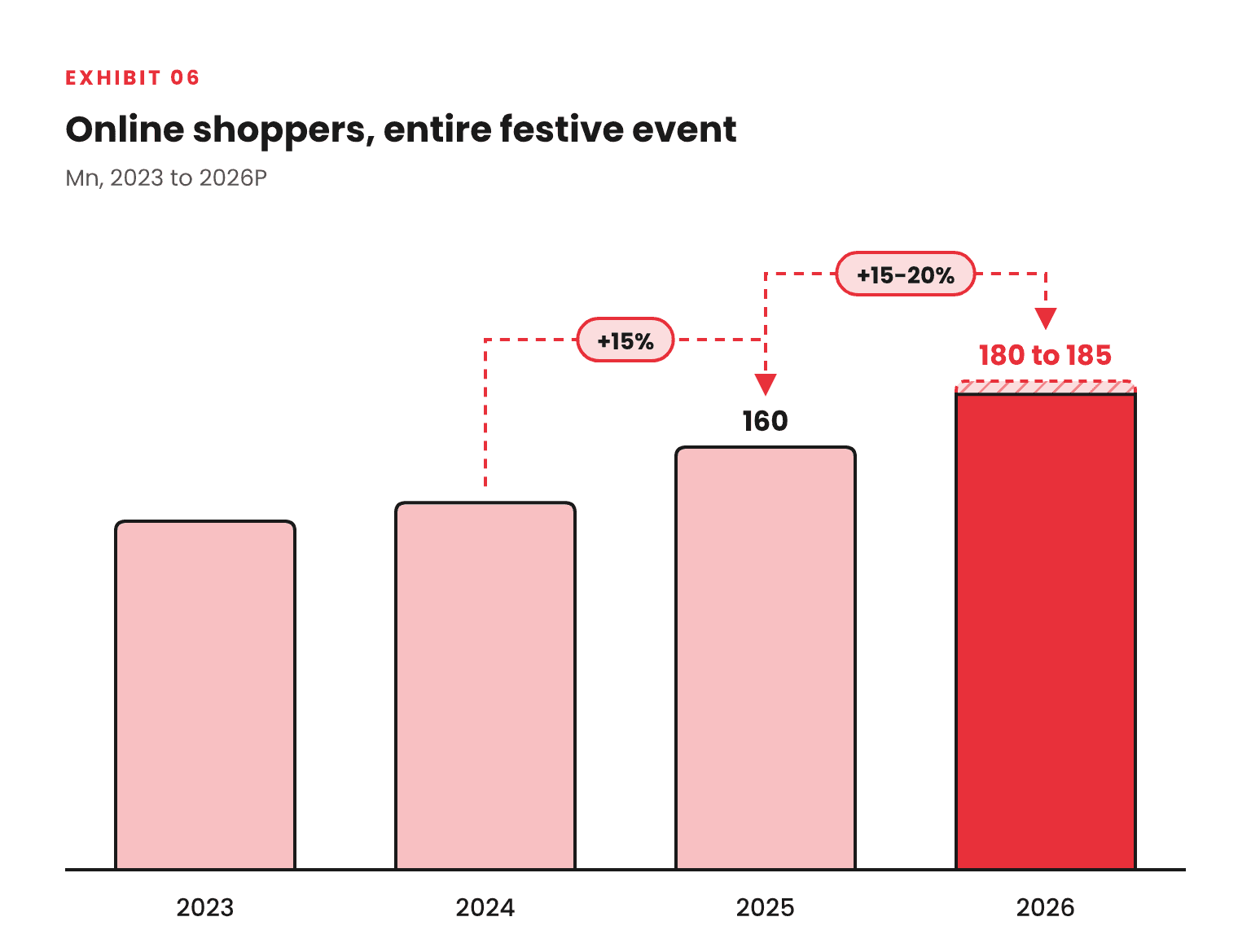
More people are shopping too. Online shoppers in the festive event are projected to grow from 160 Mn in 2025 to 180-185 Mn in 2026.
Redseer Advisory
• For Horizontal Platforms: Redseer expects horizontals to fulfil their best festive deals through their own quick commerce supply chains, which would take mobiles and electronics to 14-15% of quick commerce GMV during the festive season, about twice the usual 7-8%. Quick commerce capacity now belongs in planning beyond grocery.
• For Brands in Beverages and Snacking: Redseer finds quick commerce is creating demand that barely existed online, such as energy drinks, packaged coconut water and dark chocolate. It is a place to build a category as well as sell into one.
• For Lifestyle Brands and Platforms: Tier 2+ has led metros in fashion and BPC for two halves running. New assortment for Tier 2+ shoppers is one of Redseer’s three drivers, alongside value commerce and targeted activation with regional selection, vernacular campaigns and local influencers. Expanding assortment into Tier 2+ belongs in lifestyle growth plans, together with affordable selection and regional activation.
The rest of e-commerce is still 65% of online retail, and leading platforms are adapting by cross-selling lifestyle into Tier 2+, building around Gen Z and, as Redseer expects, routing festive deals through quick commerce.
Written by


Engagement Manager

India Online Retail 2026: The Fastest Year in Five, and the New Engines Behind It

Think Quick Commerce: Unlocking the $90Bn Opportunity

Value Grocery Commerce: The Bharat Unlock

Festive Season 2025: What to Expect? What to Action?

Festive 2024 Insights: Redseer projects 20% YoY E-Commerce Growth

India’s Festive E-Commerce Market 2024: Unveiling Growth Trends and Emerging Opportunities

Online Retail Heads for USD 90 Bn+ in 2026, Its Fastest Growth in Five Years

Two Engines, One Basket: How Quick & Value Commerce are Rewriting India’s Retail Story

Speed in Metro, Scale in Bharat: India’s $80 Bn Online Retail Story

The QC Playbook: How India’s Fastest Growing Channel is Rewriting Packaged F&B Strategy

The Bharat Unlock: India’s Next Grocery Growth Engine Lies Beyond Quick Commerce

Christmas 2025: What a Festive Day Reveals About India’s On-Demand Economy
India Online Retail 2026: The Fastest Year in Five, and the New Engines Behind It
Think Quick Commerce: Unlocking the $90Bn Opportunity
Value Grocery Commerce: The Bharat Unlock
Festive Season 2025: What to Expect? What to Action?
Festive 2024 Insights: Redseer projects 20% YoY E-Commerce Growth
India’s Festive E-Commerce Market 2024: Unveiling Growth Trends and Emerging Opportunities