How Quick Commerce Can Win Bharat


Quick commerce is evolving in non-metro cities at a different pace than in the metros. Outside the top eight cities, it has barely scratched the surface of retail, with far more potential still to unlock than what is currently underway.
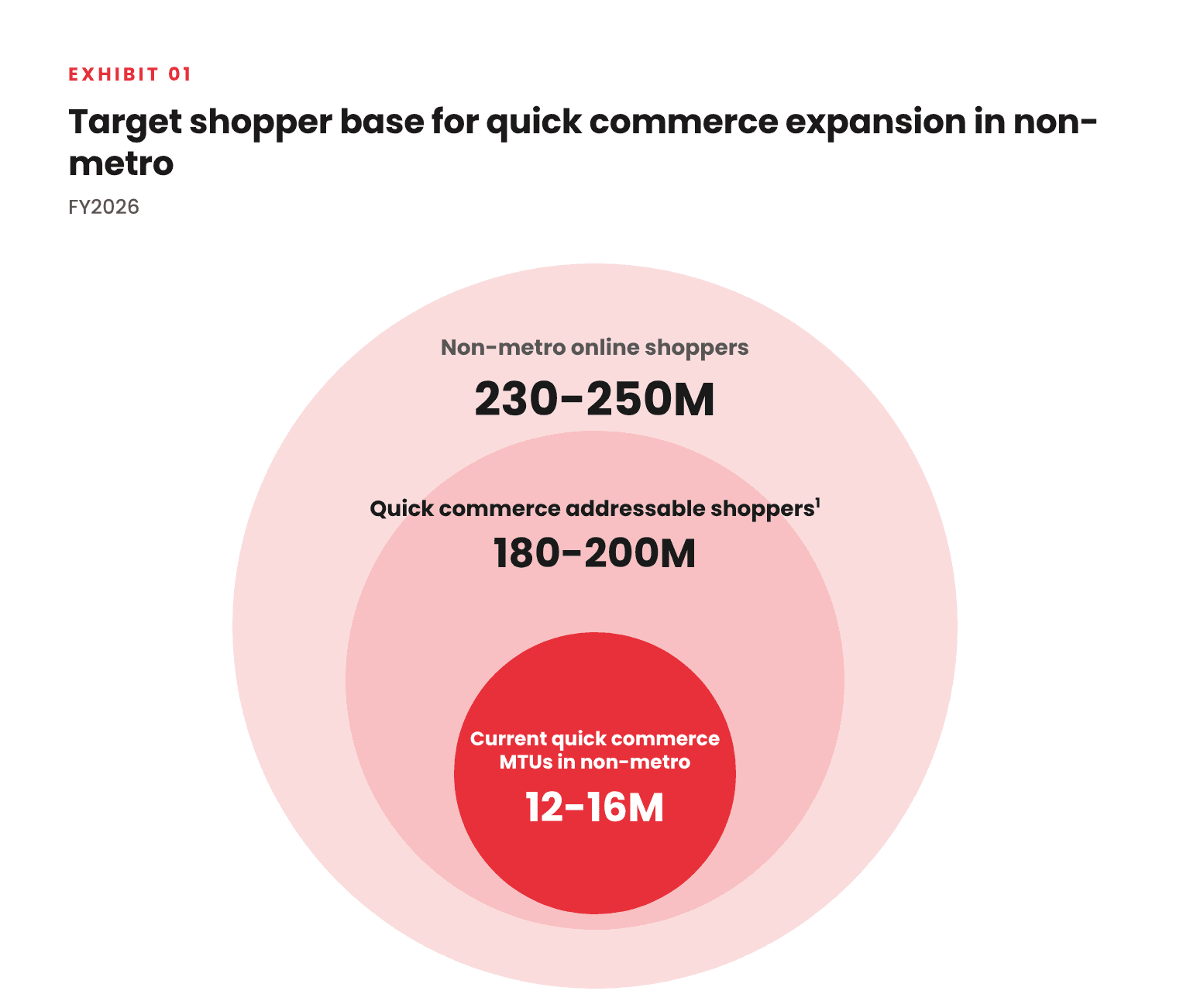
According to a joint report by Redseer and Google, there is ~ 17X shopper headroom yet to be unlocked in the over 300 cities where Quick Commerce platforms are currently present. That puts the addressable base at about 180-200 Mn shoppers, against today’s only 12-16 Mn monthly transacting users.
Redseer’s believes that awareness isn’t the core reason Quick Commerce has stagnated in non-metros. Rather, factors like value consciousness have held its adoption back. According to the report, over 95% of non-users already know that quick commerce platforms exist, and 39% say they would try one if minimum order values were lower. To unlock the next 40-50 million users, Quick Commerce players will have to use a playbook that is different from those in metro cities.
Hurdles throttling growth in Non-Metros
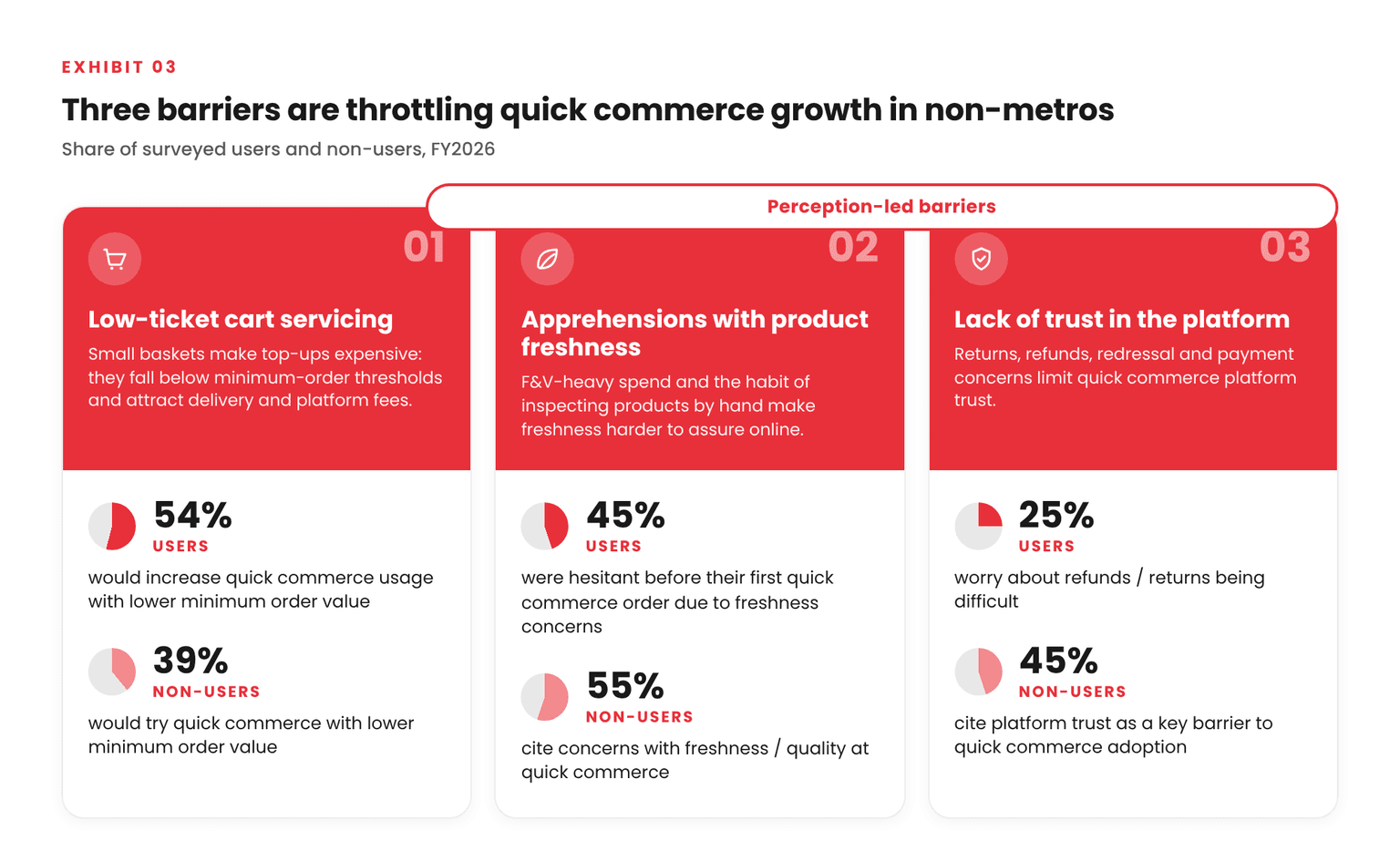
Three distinct barriers are restricting growth in non-metros : cost, freshness, and trust. To understand them deeper, it’s critical to look at how users in non-metros are behaving on platforms.
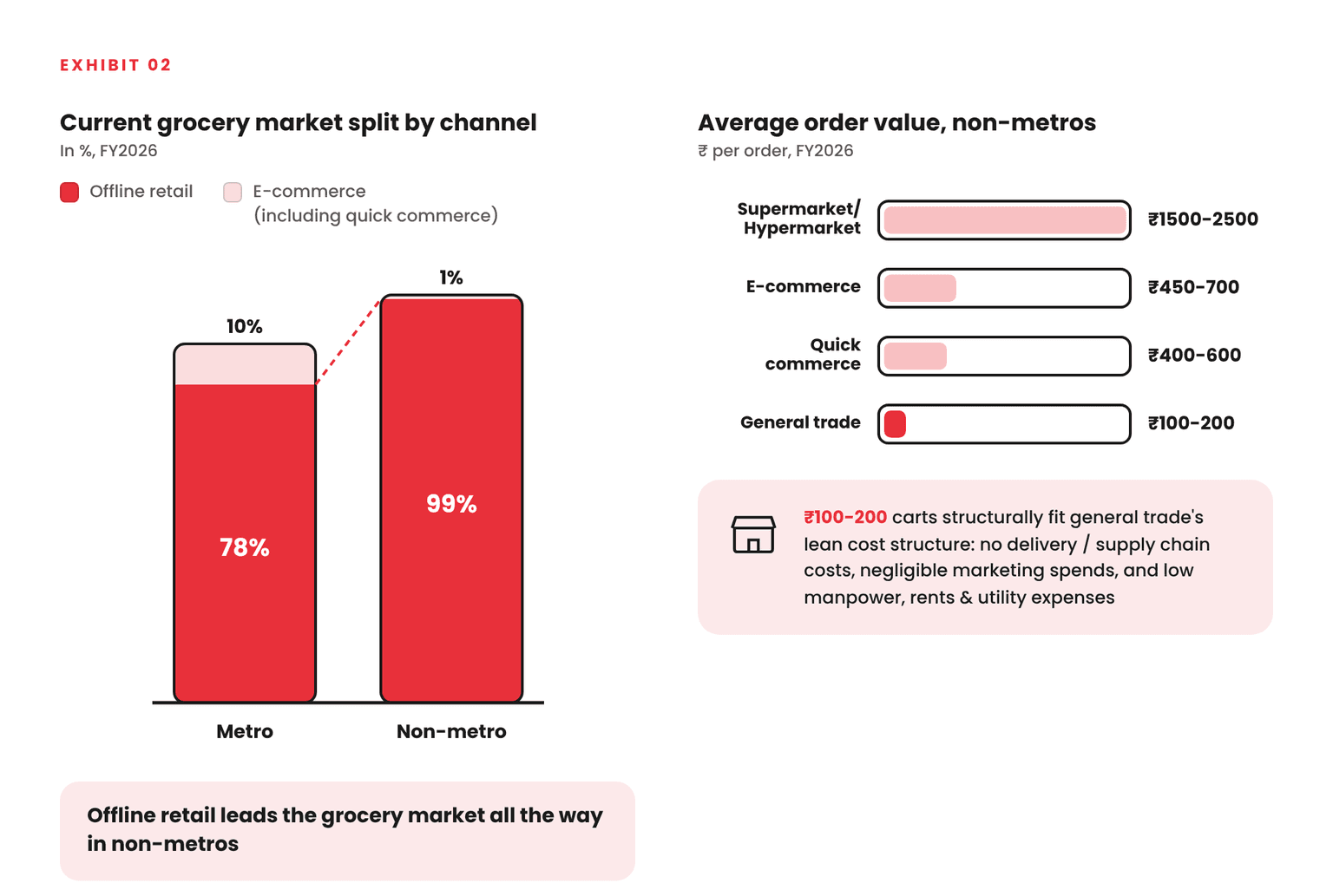
Let’s begin with cost. Non-metro users frequently make need-based purchases driven by lower incomes than those in metro cities, and as a result, they are used to making smaller transactions. This tendency is well-served by General Trade that can structually fit ₹100-200 basket sizes since it isn’t bound by supply chain costs, marketing spends, and overall uses low manpower, rent & utility expenses, in comparison to Quick Commerce.
Another concern is freshness. Among users, 45% were hesitant before their first order over freshness, and 55% of non-users cite freshness or quality concerns.
Separately, weak platform trust, around support, payments, and returns and refunds, holds adoption back.
The third barrier is platform trust. Among non-users, 45% cite it as a key barrier, and 25% of current users worry that refunds or returns will be difficult. The concerns are specific: 57% flag unreliable customer support, 50% flag payment friction (COD is discouraged in the interface), and 47% flag unclear returns and refunds. According to Redseer and Google’s findings, experience, family and friends, word of mouth, and online reviews shape these perceptions.
Working with smaller baskets mean they need a different cost model
The fixes to the obstacles that quick commerce platforms face in non-metros is more structural than promotional. Some of the demand signals are clear. To this end, three models could help bridge these hurdles to access more of the addressable market.
- Demand pooling spreads one pick and one trip across 2-4 consumers. In the case the report cites, a Chinese food delivery platform, the shopper trades about
- 25 minutes of extra wait for zero fees. About 60% of non-metro non-users say they are willing to trade speed for price.
- Wallet top-ups let a user cover the shortfall to the minimum order value and get free delivery.
- Buy now, pay later mirrors the credit relationship shoppers already have with their local stores.
For Quick Commerce to win in Bharat, It Needs to Mirror E-Commerce Behaviour
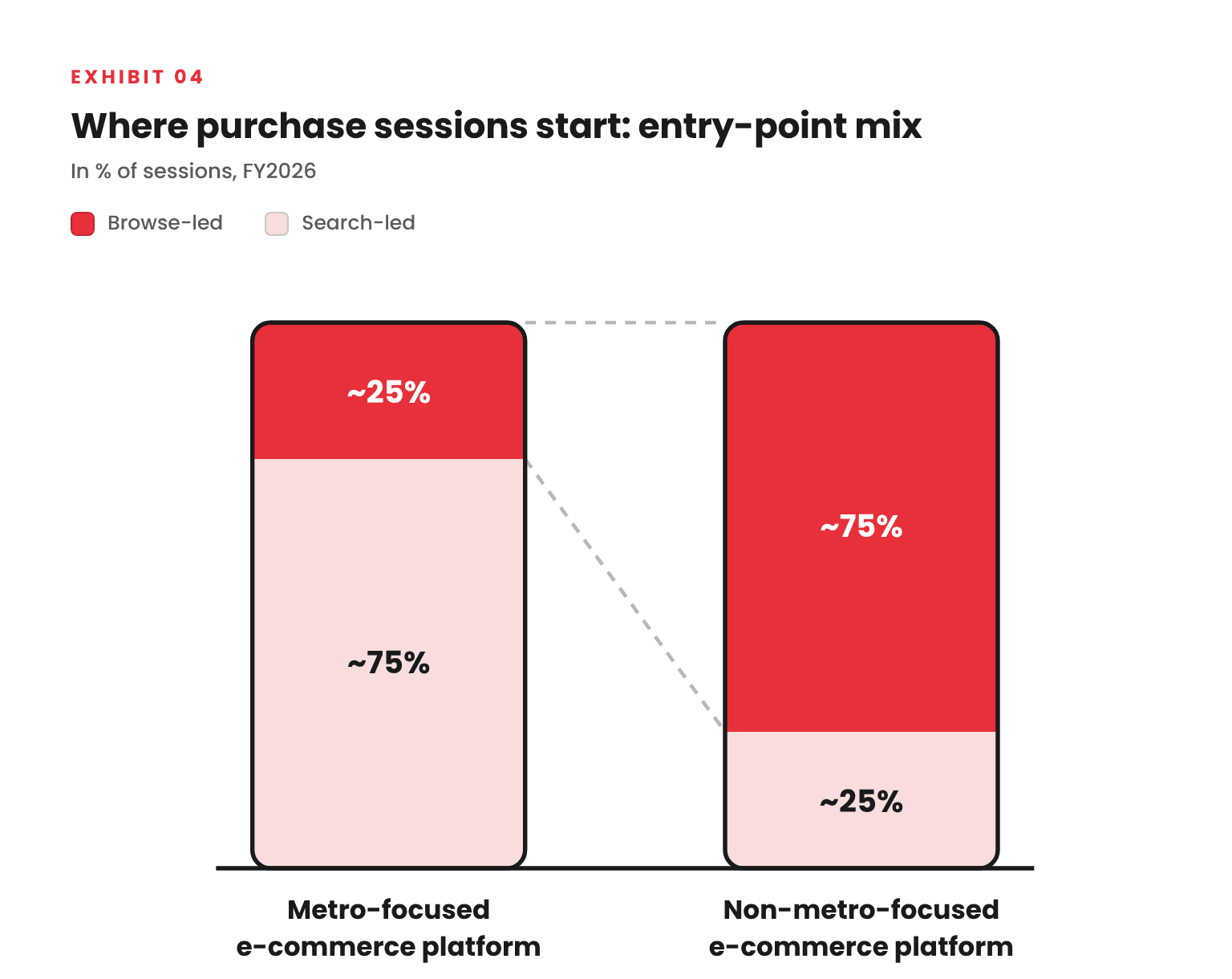
A large part of converting non-users into users of Quick Commerce in these markets is by tapping into their natural behaviour while shopping online. To understand this, it’s as simple as looking at non-metro user behaviour on e-commerce platforms.
Consumers in non-metros don’t gravitate to e-commerce platforms to fulfill a specific need; instead, their behaviour tends to move from browsing feeds, categories, and deals to comparing options and reading reviews, then deciding and buying. For platforms, that means personalised feeds, recommendations and inspiration-led discovery can do more of the work than a search bar.
The next 40-50 Mn monthly transacting users in non-metros will depend on platforms getting three things right: First, they need to make low-value orders viable through demand pooling and wallet top-ups that enable free delivery on smaller carts.
Second, they need to reset perception: assuring freshness through stronger supply-chain controls and visible freshness cues, building platform trust with vernacular support, easier returns, faster refunds and COD-first payments, and educating shoppers through community partners and micro-creators.
Third, they need to adapt the shopping journey to personalised, exploratory discovery.
Redseer Advisory
For platforms, cart economics come first: pooling, wallet top-ups and BNPL so small baskets pay for themselves. Next, build trust the way non-metro shoppers already judge it, through visible freshness assurance, vernacular support, COD-first payments and faster refunds, then add local voices through community partners and micro-creators. Finally, build the journey for browsing, not only searching.
For brands, the report’s “Elevate” priority points to creator-led storytelling as a way to close the perception gap, using trusted, regional-language voices to demonstrate products and build category confidence among shoppers who are still hesitant.
Written by


Engagement Manager

Think Quick Commerce: Unlocking the $90Bn Opportunity

India Online Retail 2026: The Fastest Year in Five, and the New Engines Behind It

Value Grocery Commerce: The Bharat Unlock
Smart clicks to win India’s online groceries & general merchandise basket
Value Grocery – Unlocking India’s Next 100 Mn Shoppers

Quick-Com, Value Commerce and GenZ Drive India’s Online Retail Growth in 2026

Two Engines, One Basket: How Quick & Value Commerce are Rewriting India’s Retail Story

BigBasket’s business growth enabled by Redseer Consulting

Quick Commerce vs Kiranas vs Hypermarkets, who will win the Indian Grocery Market?

Online Retail Heads for USD 90 Bn+ in 2026, Its Fastest Growth in Five Years

The Bharat Unlock: India’s Next Grocery Growth Engine Lies Beyond Quick Commerce

Speed in Metro, Scale in Bharat: India’s $80 Bn Online Retail Story
Think Quick Commerce: Unlocking the $90Bn Opportunity
India Online Retail 2026: The Fastest Year in Five, and the New Engines Behind It
Value Grocery Commerce: The Bharat Unlock
Smart clicks to win India’s online groceries & general merchandise basket
Value Grocery – Unlocking India’s Next 100 Mn Shoppers
Quick-Com, Value Commerce and GenZ Drive India’s Online Retail Growth in 2026