Two Engines, One Basket: How Quick & Value Commerce are Rewriting India’s Retail Story

This article was first published in the October 2026 edition of the Maharashtra Economic Development Council’s Monthly Economic Digest.
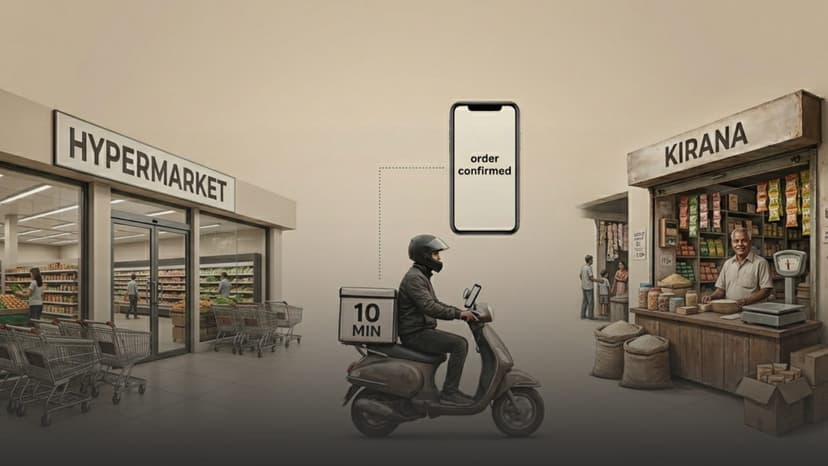
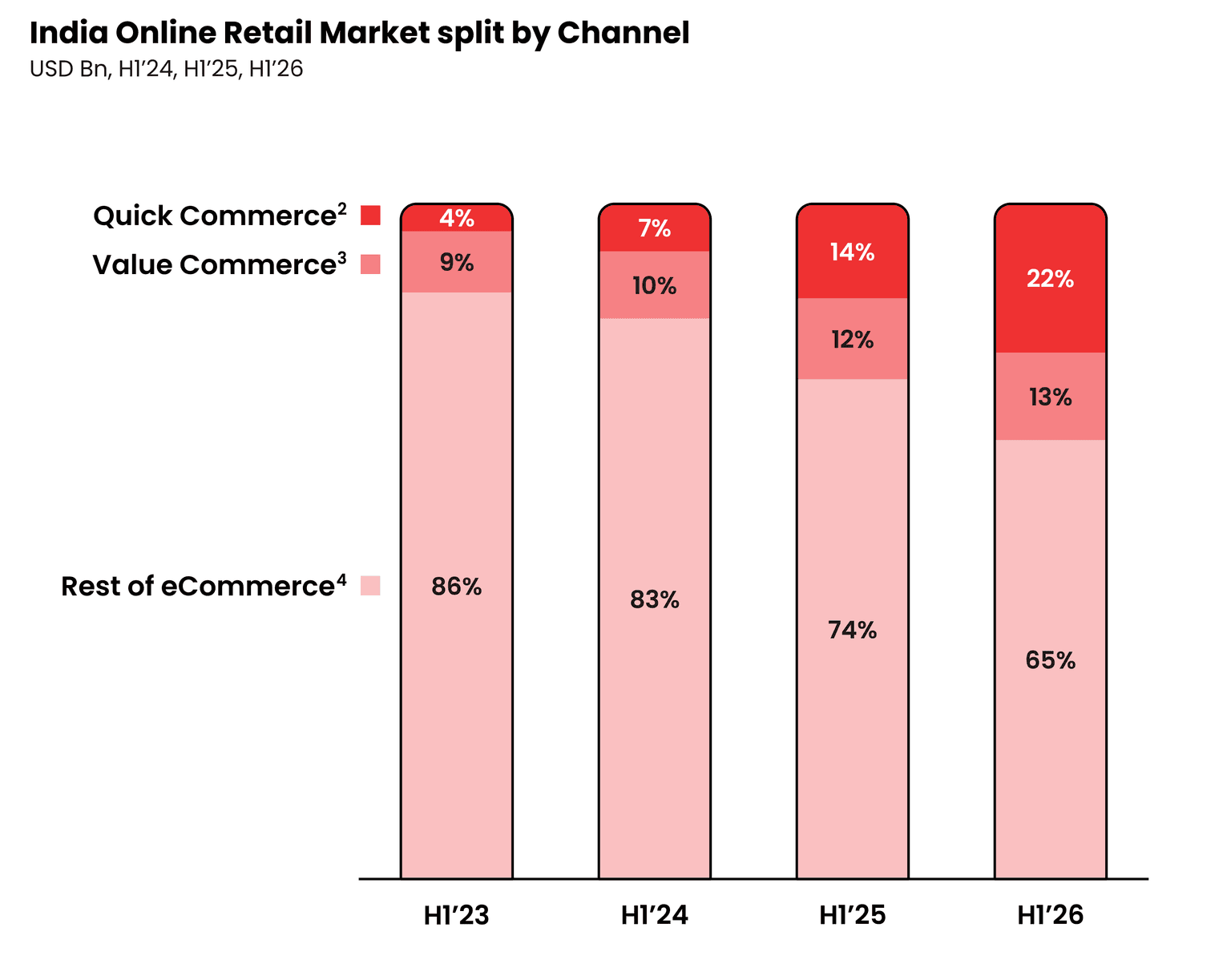
India’s online retail market grew by about 25% in H1’26, its strongest first half in four years, and is on course to cross $90 Bn in CY26 at 22-24%, its fastest growth in five years. The more consequential change lies in where that growth originates, as quick commerce and value commerce; the second defined by low prices and regional or unbranded assortments, rose from 13% of online retail in H1’23 to 35% in H1’26 (Figure 1). One sells speed to affluent metro households and the other sells price and choice to Bharat, yet the consumer behaviour they cultivate is converging, and so is the infrastructure being built to serve it.
Quick commerce has turned urgency into a premium habit in metro India
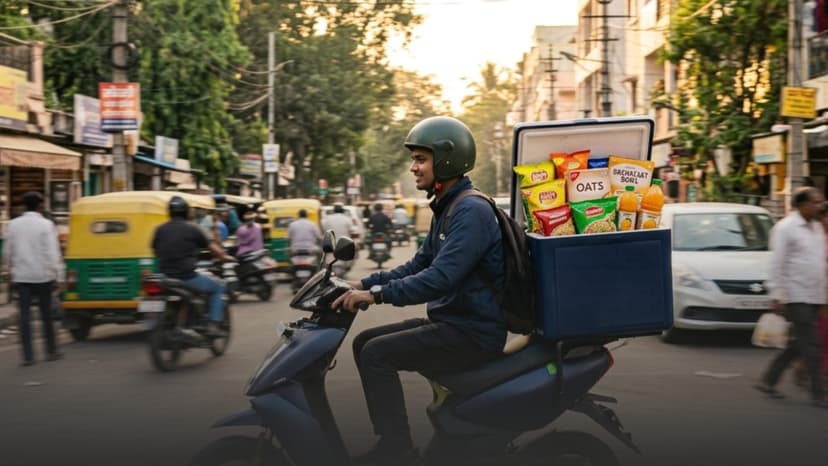
Quick commerce has doubled in size for three consecutive years to about $9 Bn in H1’26, with more than 60 Mn monthly users, by drawing spending out of offline stores and creating occasions that barely existed online, from energy drinks and packaged coconut water to premium impulse snacks. The instinct it serves is the moment of running out, which is why it captures 28% of online oral care sales against 18% for beauty and personal care overall, while makeup, a more considered purchase, trails at 12%. Convenience has also lowered the barrier to premium, with masstige and premium products taking 59% of quick commerce spending in the category against 37% across the overall market.
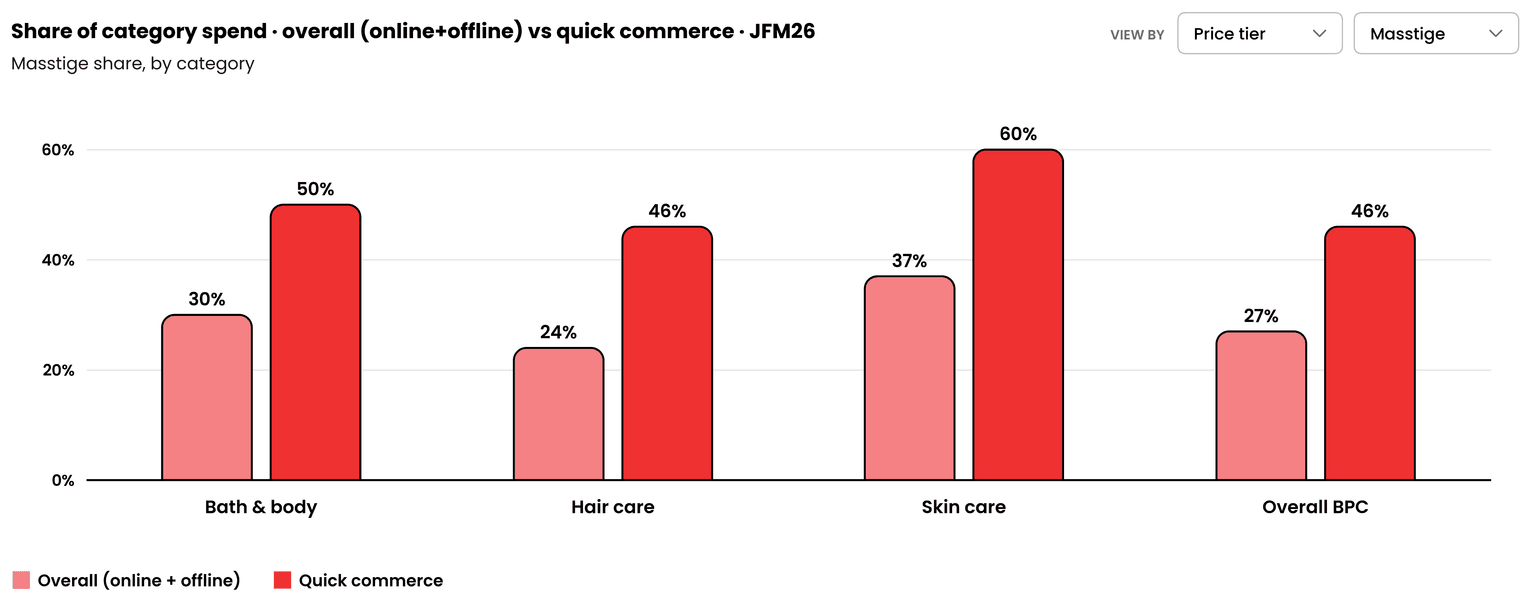
Digitally native brands have reached this shelf by building trust on their own websites, social media and marketplaces first, which is why they hold 17% of beauty and personal care overall but 37% on quick commerce. Established brands have defended their ground through innovation, as one bath and hair care brand did in capturing about 20% of the hair mask category after testing it on its existing quick commerce presence. For newer entrants, availability has proved a lever in its own right, and one home care brand lifted its quick commerce sales by 30-40% after securing deeper dark-store coverage and availability until 3-4 AM.
The channel has made the first ₹100 Cr of revenue cheaper and faster for brands to reach without easing the climb past ₹500 Cr, and investors remain wary of quick commerce look-alikes with no credible route to fivefold growth.
Value Commerce is bringing Bharat’s next 100 Mn shoppers online
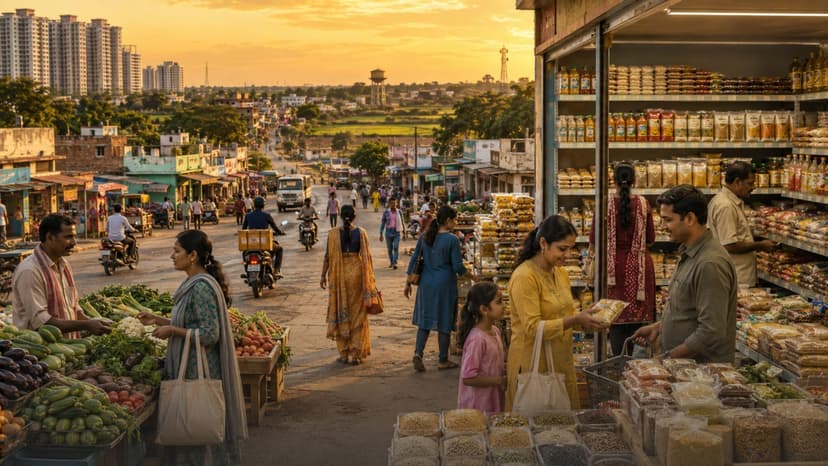
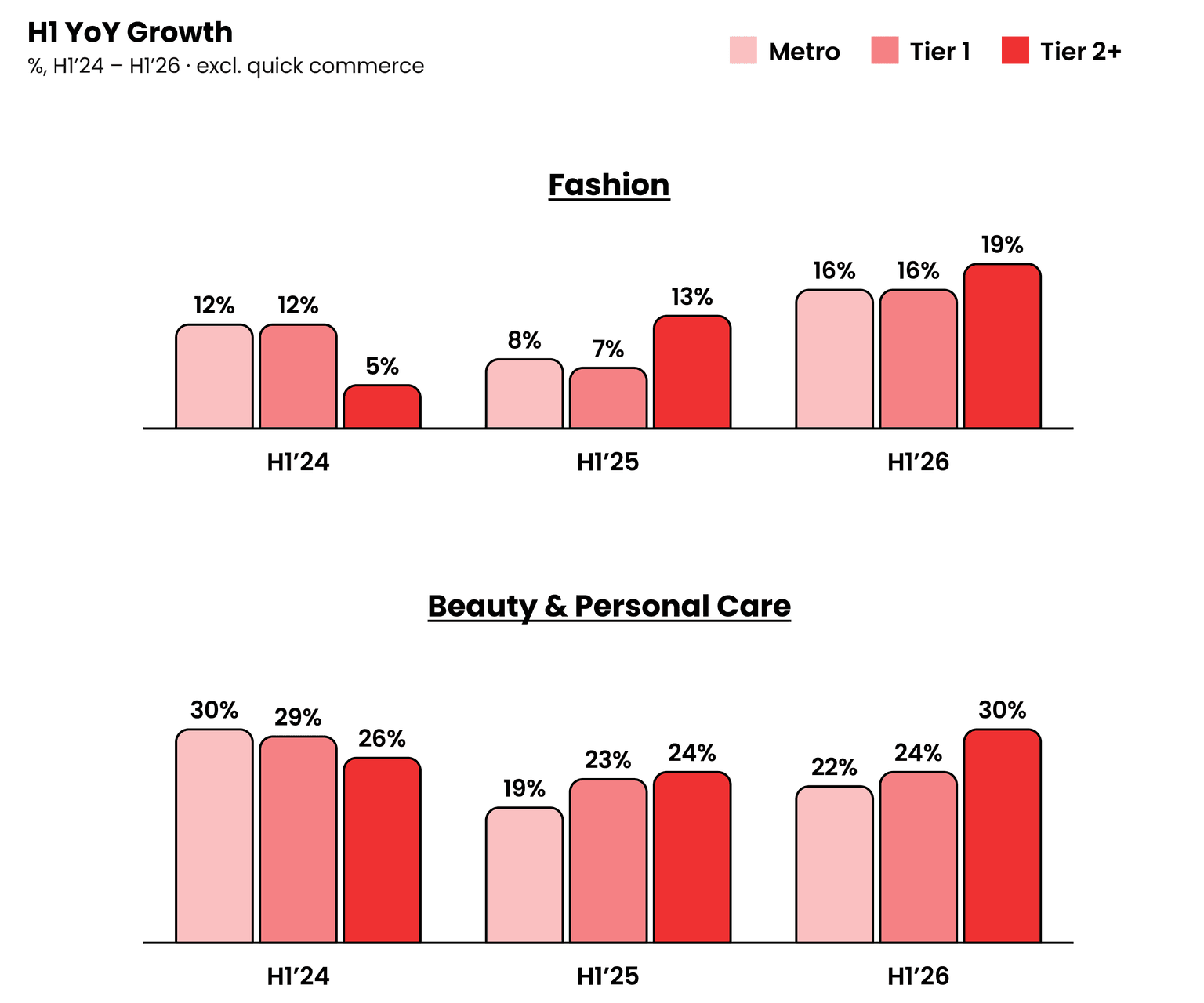
Bharat households, the lower-middle-income segment, are expected to rise from about 31% to about 40% of Indian households and to consume more than $1 Tn of goods and services by FY30. Their move online is already visible in Tier-2+ markets, which grew fashion sales at 5% against 12% in the metros in H1’24 but outgrew them at 19% against 16% in H1’26, with beauty and personal care at 30% against 22% (Figure 3). Platforms have courted them with regional assortments, vernacular advertising and local influencers, and value platforms grew by more than 30% in lifestyle categories in H1’26 through new Tier-2+ users.
The Bharat consumer’s instincts are reshaping the grocery basket above all, as nuclear families create millions of new buyers and hygiene concerns drive a durable shift from loose to branded staples, with packaged edible oil penetration at 70% and packaged atta and rice growing in the high teens. As one 35-year-old mother in a Tier 2 city put it, “Loose atta and dals always made me worry about mixing and hygiene. Now I only buy branded packets.” Bharat consumers will also bear a 10-15% premium for fortified, clean-label products, and established FMCG companies have responded by cutting sugar and sodium and moving to healthier oils.
In a September 2025 analysis of a single Lucknow pin code, one scaled value grocery player drew about 58% of its range from regional and private-label brands against 18-20% for a legacy e-commerce platform and stocked 109 small-pack dal options against 35, while its community partner-led last mile kept delivery costs at ₹50-55 per order, roughly half those of quick commerce. Platforms courting Bharat will need to lead with regional brands, private labels and small packs, aggregate orders so that small baskets stay viable and localise pricing by tier, while national brands will need small packs and fortified propositions to hold share against cheaper private labels.
Both engines are converging on grocery and on smaller, more frequent baskets
From opposite ends of the market, the two engines are converging on the same category and the same habit. Grocery is set to overtake mobiles as the second-largest online category in CY26, growing at 50-53%, and India’s grocery market is projected to expand from $658 Bn in 2025 to about $992 Bn by 2030, with e-commerce’s share rising from 3% to 7% while kiranas still hold 86%. Both models win this basket with small packs, one because its shoppers buy for the moment and the other because they buy to a budget, and between FY22 and FY26 the average online order fell while order frequency rose subsequently (Figure 4)
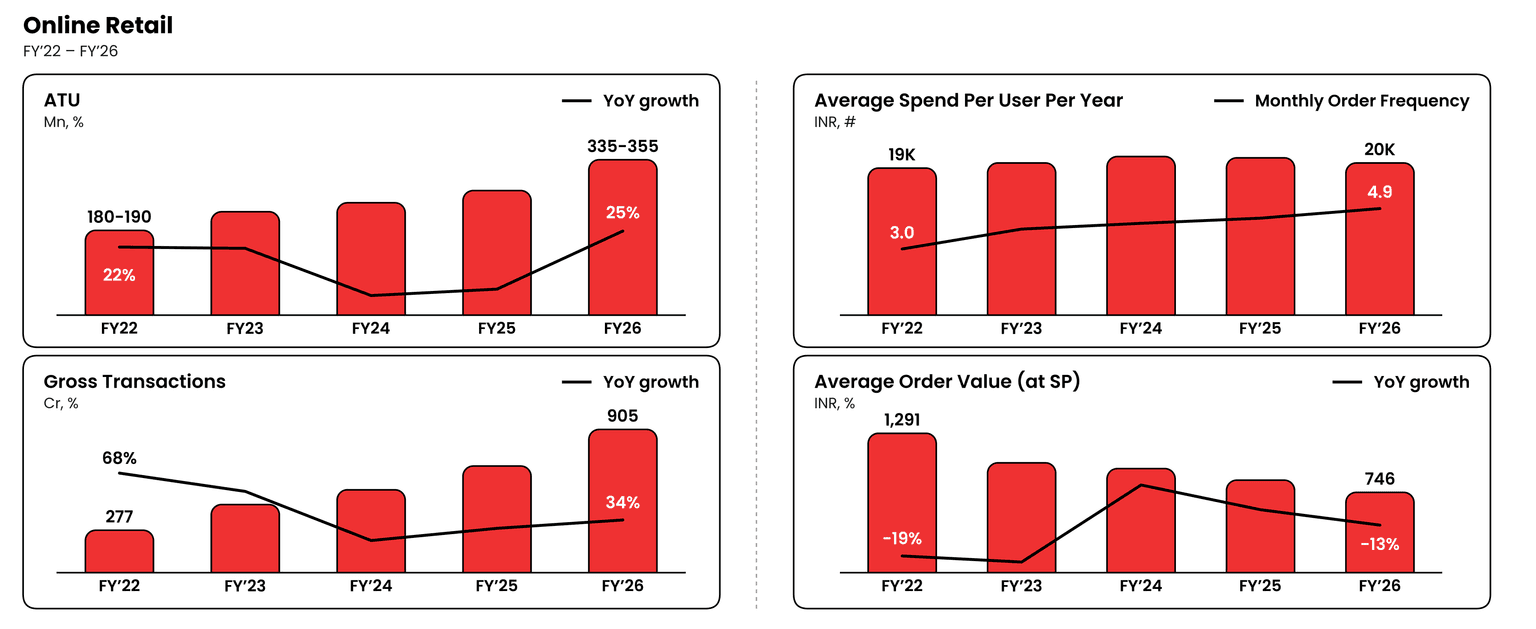
Exhibit 4: India is shopping online in smaller baskets, more often
For brands, a single national playbook no longer suffices, since the pack, price and range that win a ten-minute metro basket differ from those that win a budget-led Bharat basket. The brands scaling fastest match each channel to the purchase it serves, design packs for trial and refill and build depth in a few hero products before widening, although beyond ₹300-500 Cr in revenue it is distribution reach, readiness for general and modern trade, and working capital that separate those that graduate from those that stall.
Every additional order is creating work behind the basket
Growth led by transactions places more work on every rupee of sales, since each order must be picked, packed, sorted and delivered, and the value grocery cost structure alone shows three layers of that work, costing ₹20, ₹11 and ₹22 an order across the first, middle and last mile.
India’s gig internet workforce across delivery, ride-hailing and home services is projected to grow from about 6 Mn monthly active workers in 2025 to 17-21 Mn by 2030, with delivery, which spans quick commerce, food delivery and e-commerce logistics, rising from about 2.4 Mn to 5-7 Mn, and these estimates exclude warehouse and dark-store roles altogether.
About 54% of surveyed gig workers were not in paid work before their current role, and platforms are now extending into emerging consumption centres beyond the metros, following value commerce into Bharat. Against the Government of India’s estimate that about 8 Mn non-farm jobs will be needed each year by 2030, gig internet platforms could meet about 70% of the requirement.
One basket, Two Playbooks
Convenience and value are therefore two routes to the same destination, a more branded, more frequent and more digital Indian basket, and brands and platforms that treat India as a single market risk losing ground in at least one of its halves.
The less visible consequence lies behind the basket, because growth driven by transactions places more work on every rupee of sales as each order is picked, packed, sorted and delivered. The value grocery cost structure alone shows three layers of that work, from first-mile processing to a last mile, while festive peaks, with quick commerce expected to grow by 110-120% this season, deepen the requirement further.

Written by
Mrigank Gutgutia
Partner
Mrigank leads business research and strategy engagements for leading internet sector corporates at Redseer Strategy Consultants. He has developed multiple thought papers and is regularly quoted in media and industry circles.


Think Quick Commerce: Unlocking the $90Bn Opportunity

India Online Retail 2026: The Fastest Year in Five, and the New Engines Behind It

Value Grocery Commerce: The Bharat Unlock

Digital Disruption in Home Category: Whitespace to Market Leadership
Reinventing Packaged F&B with Quick Commerce
Smart clicks to win India’s online groceries & general merchandise basket

Value Grocery – Unlocking India’s Next 100 Mn Shoppers

Quick Commerce vs Kiranas vs Hypermarkets, who will win the Indian Grocery Market?

The Bharat Unlock: India’s Next Grocery Growth Engine Lies Beyond Quick Commerce
Value Grocery – Unlocking India’s Next 100 Mn Shoppers

Speed in Metro, Scale in Bharat: India’s $80 Bn Online Retail Story
The QC Playbook: How India’s Fastest Growing Channel is Rewriting Packaged F&B Strategy
Think Quick Commerce: Unlocking the $90Bn Opportunity
India Online Retail 2026: The Fastest Year in Five, and the New Engines Behind It
Value Grocery Commerce: The Bharat Unlock
Digital Disruption in Home Category: Whitespace to Market Leadership
Reinventing Packaged F&B with Quick Commerce
Smart clicks to win India’s online groceries & general merchandise basket