From Local Fashion Brands to Regional Consumer Leaders

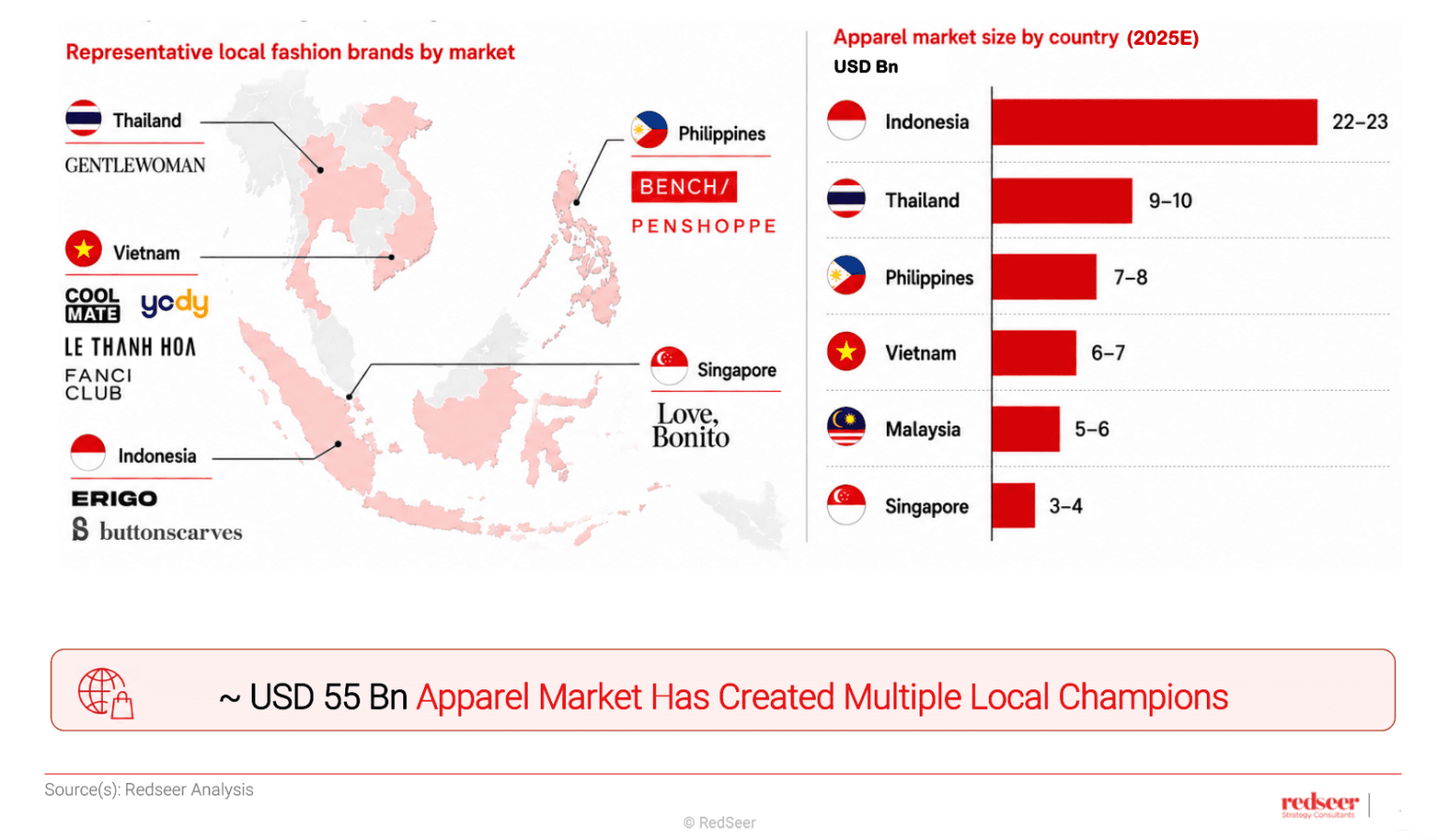
Southeast Asia’s USD 55 Bn apparel market is producing more homegrown fashion brands, but only a few are building businesses beyond their domestic markets.
Digital commerce, creator-led discovery, faster production cycles, and stronger payments and logistics infrastructure have made it easier to launch and scale fashion brands. Businesses that understand local sizing, climate, cultural preferences, and price points have also built stronger domestic demand.
However, domestic success does not automatically translate into regional growth. Expanding across Southeast Asia requires stronger inventory control, omnichannel execution, product adaptation, and local management teams.
This note examines why more local fashion brands are emerging, the operating models behind their growth, and the capabilities required to expand across Southeast Asia.
Southeast Asia’s USD 55 Bn apparel market is creating a new generation of local fashion brands
Southeast Asia’s large apparel markets have created space for homegrown brands to build substantial domestic businesses.
The opportunity differs by country. Consumer preferences, income levels, retail channels, and price points vary across the region. This gives local companies room to design products and brand propositions around specific customer groups.
The region now has a wider pool of credible fashion brands. However, far fewer have built a sustained presence outside their home markets.
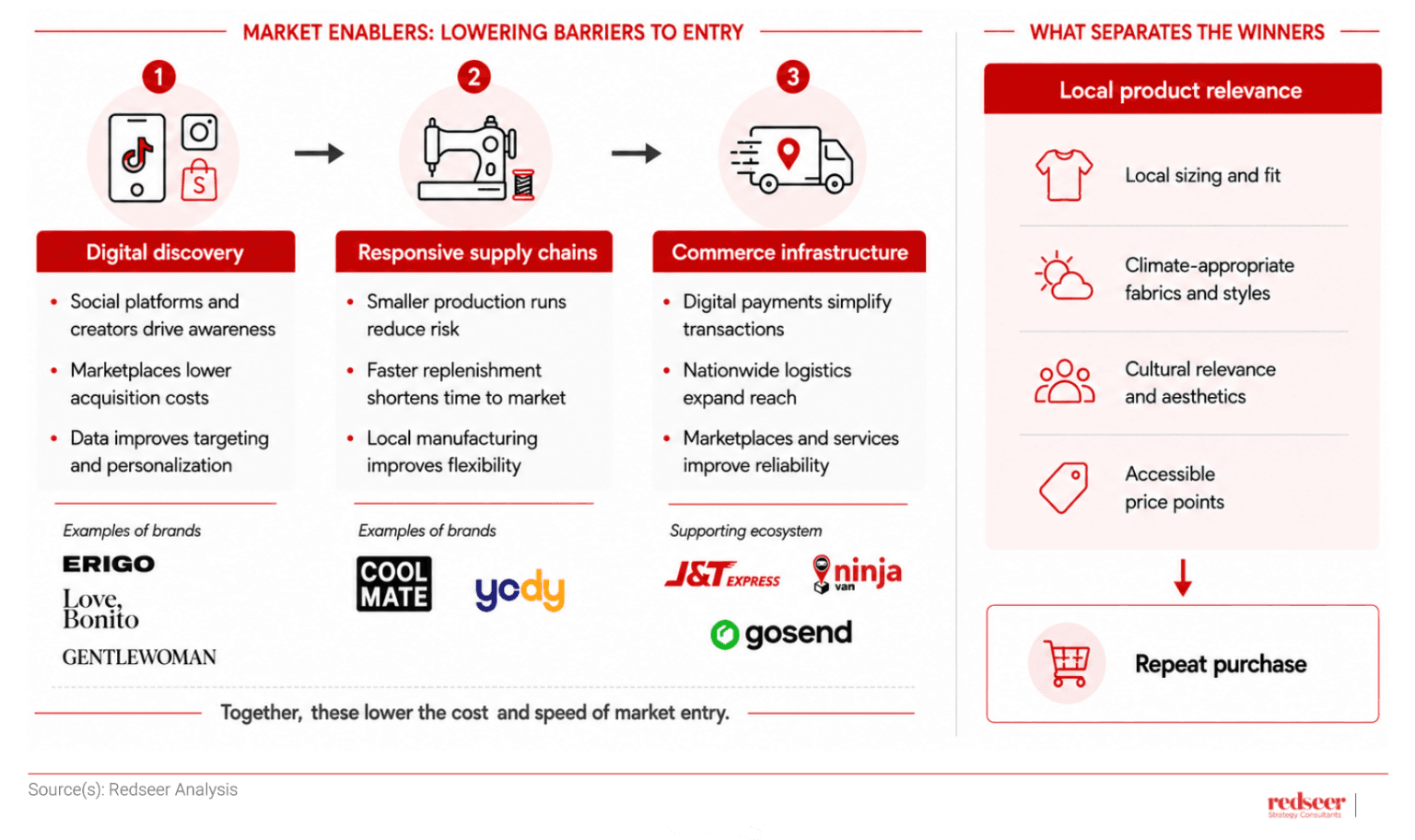
Lower barriers to entry have helped more brandsemerge, but local relevance still drives growth
The cost of launching and distributing a fashion brand has fallen over the past decade.
Marketplaces, social platforms, digital payments, creator marketing, and improved logistics give smaller companies access to customers without a large store network. Shorter production runs and faster replenishment also allow brands to test demand with less inventory exposure.
These advantages increase the number of new entrants. Continued growth still depends on products that fit local needs and generate repeat purchases.
The strongest brands have built differentiated operating models that are difficult to replicate
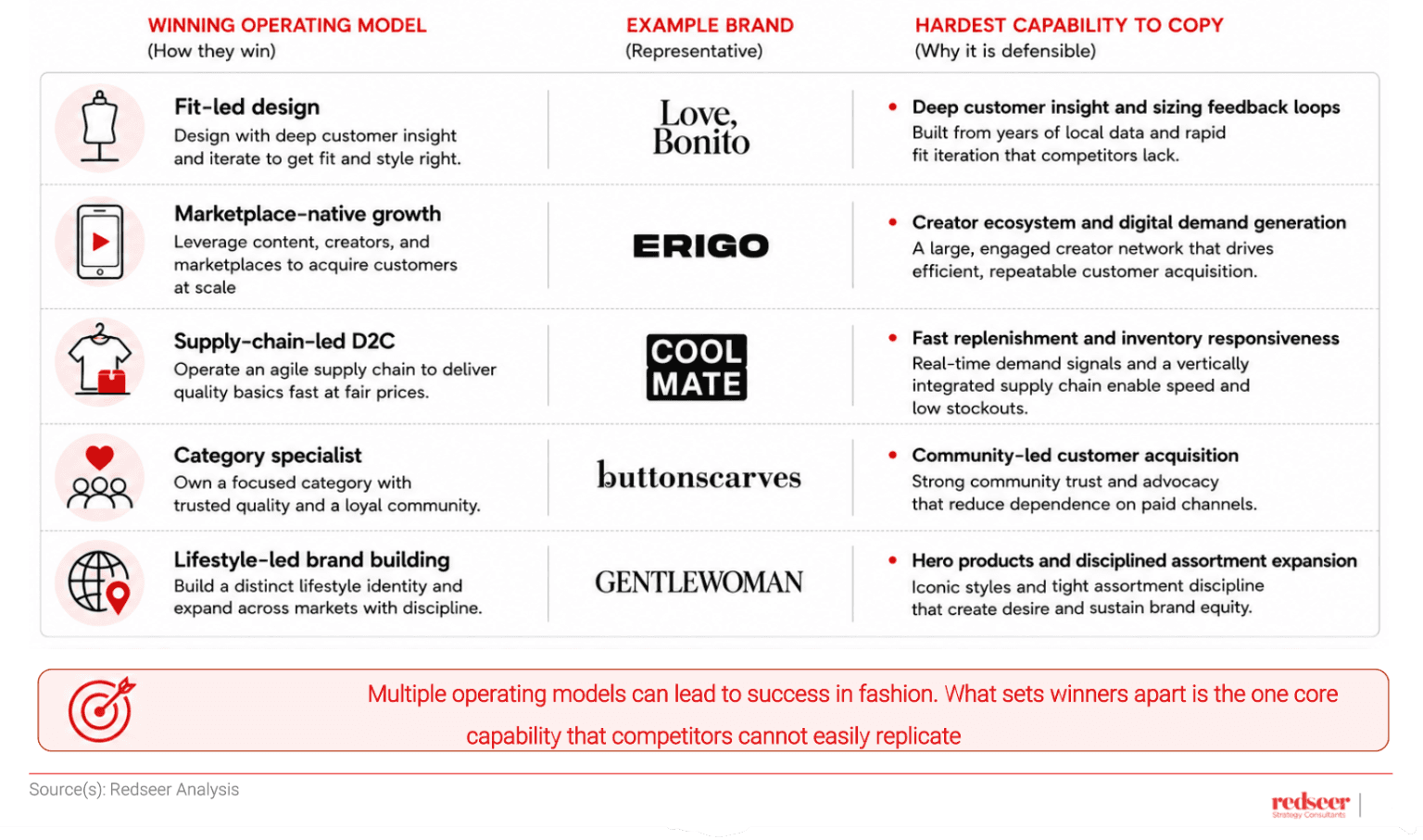
Southeast Asia’s leading fashion brands have grown through different operating models.
Some focus on fit and design. Others rely on social commerce, manufacturing control, category depth, or a distinctive lifestyle identity. Each route requires a capability that takes time to build and is difficult for competitors to copy.
This widens the opportunity for founders and investors. A localbrand does not need to replicate an international fast-fashionmodel, but it does need a clear source of advantage and consistent execution.
Successful local brands are emerging across multiple fashion segments
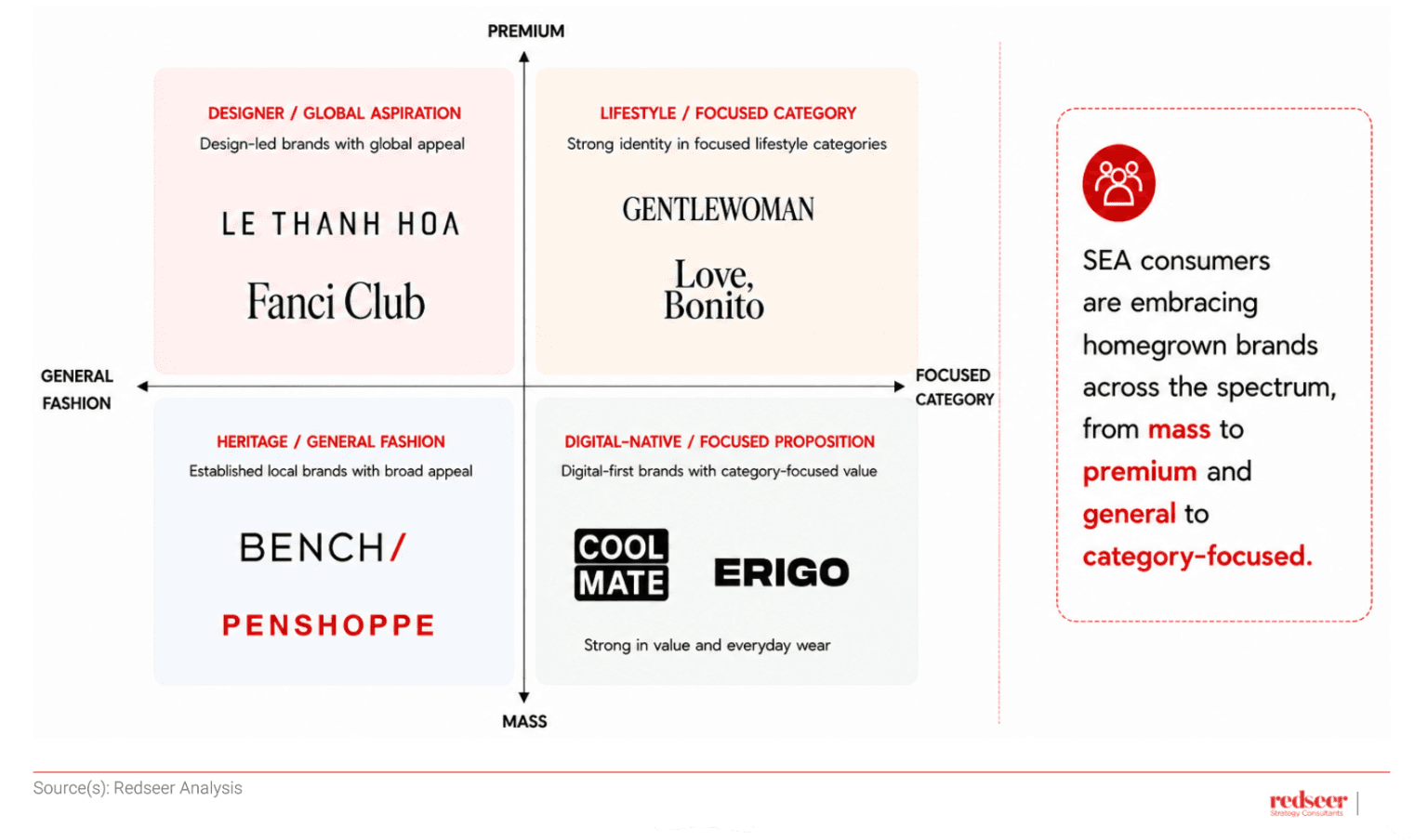
Homegrown brands are succeeding across several parts of the fashion market.
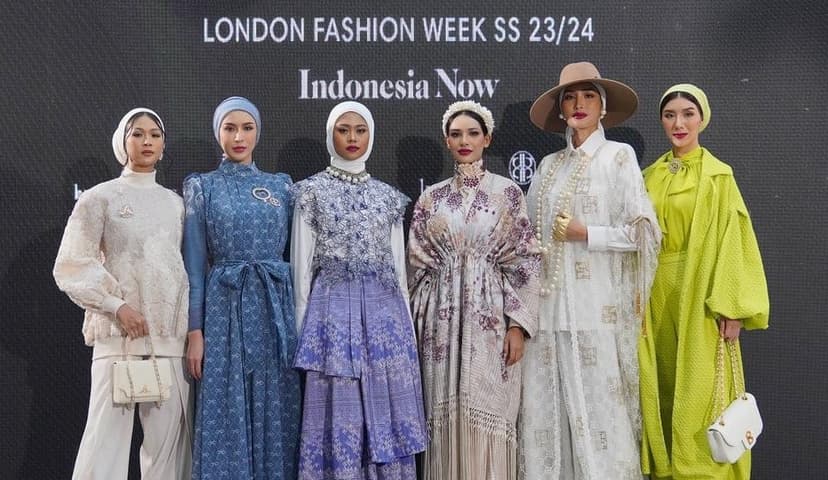
Heritage retailers continue to serve broad customer groups. Digital-first brands are building positions in everyday wear and focused categories. Designer labels and lifestyle brands are also finding demand among premium customers.
This variety gives investors several routes into the sector. It also raises the need to assess each company against the economics and customer expectations of its own segment.
However, strongest brands scale capabilities before pursuing regional expansion
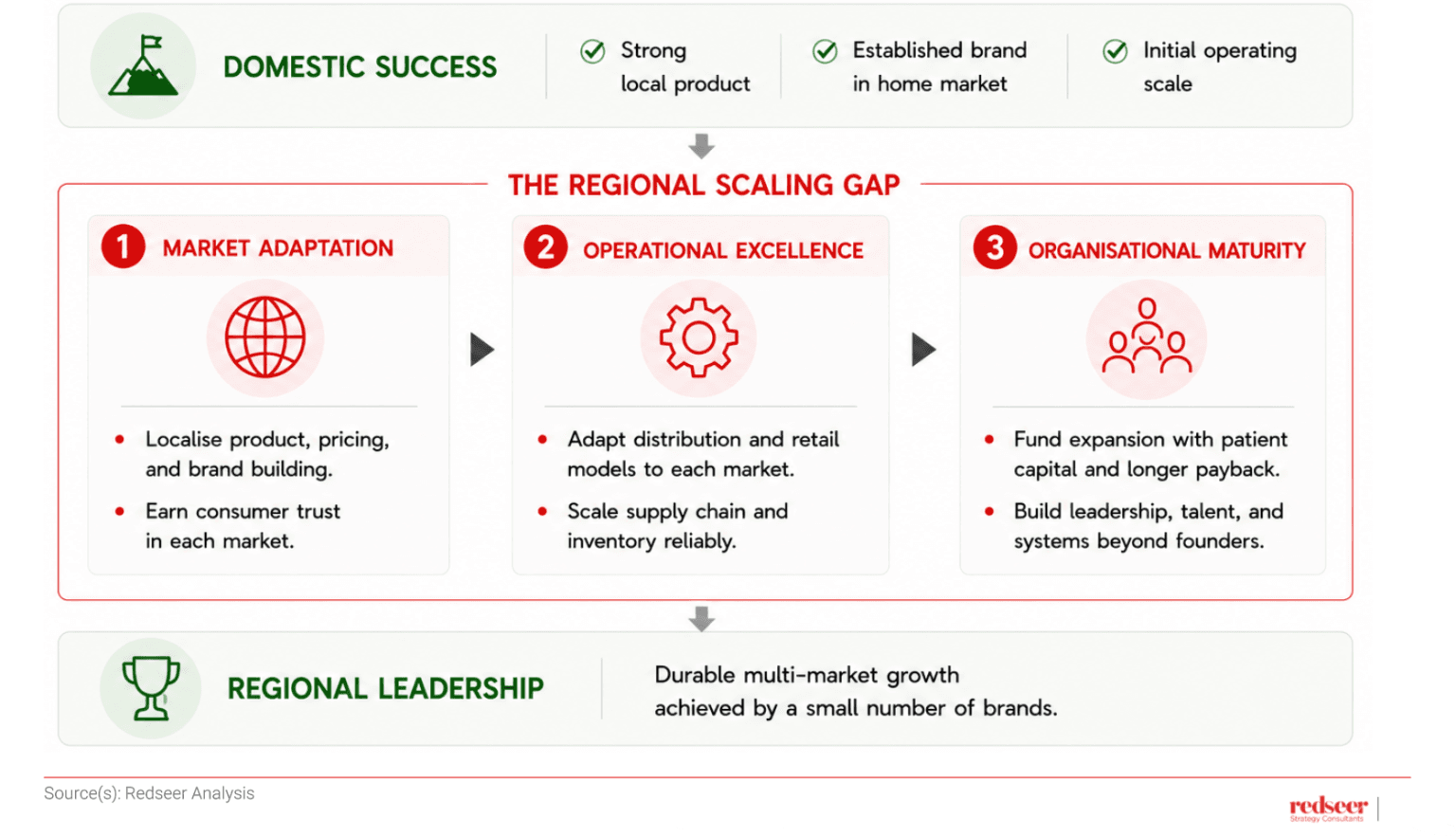
Domestic success does not automatically prepare a brand for regional expansion.
Each new country requires decisions on product, pricing, marketing, distribution, and inventory. Retail structures differ. Working-capital needs rise. Management teams must also coordinate more markets without losing speed or control.
Many brands therefore stall between a strong home-market position and a durable regional business. The gap is usually caused by several constraints appearing at the same time.

Written by
Roshan Behera
Partner
Roshan is a Partner based in Singapore and focuses on Southeast Asia. His sector coverage includes e-commerce, logistics, fintech, eB2B, on-demand services, and other emerging sectors.


Capability Is the New Brand: How Beauty’s Moat Moved Down the Value Chain

The Singapore Launchpad: When local proof is enough to build an overseas consumer brand

Rebuilding the Restaurant P&L: Reimagining Southeast Asian F&B

Quick Commerce: Winning SEA through Categories, Channels and Occasions

Inside discount retail: Winning on thin margins

Dancing with Dragons: Southeast Asia’s Guide to Competing and Collaborating with Chinese Giants

Southeast Asia Beverage’s Selective- Spending Moment

SEA Eyewear: Clear Vision For A ~USD 11 Bn Market

Singapore Fashion: What a successful launch looks like

SEA BNPL: Superior Unit Economics Powering Sustainable Growth

Bali To Bangkok: Travel Pulse SEA

Not so Modest opportunity in Modest Fashion
Capability Is the New Brand: How Beauty’s Moat Moved Down the Value Chain
The Singapore Launchpad: When local proof is enough to build an overseas consumer brand
Rebuilding the Restaurant P&L: Reimagining Southeast Asian F&B
Quick Commerce: Winning SEA through Categories, Channels and Occasions
Inside discount retail: Winning on thin margins
Dancing with Dragons: Southeast Asia’s Guide to Competing and Collaborating with Chinese Giants